Best Log Splitters UK 2026: Electric, Manual and Kinetic Tested
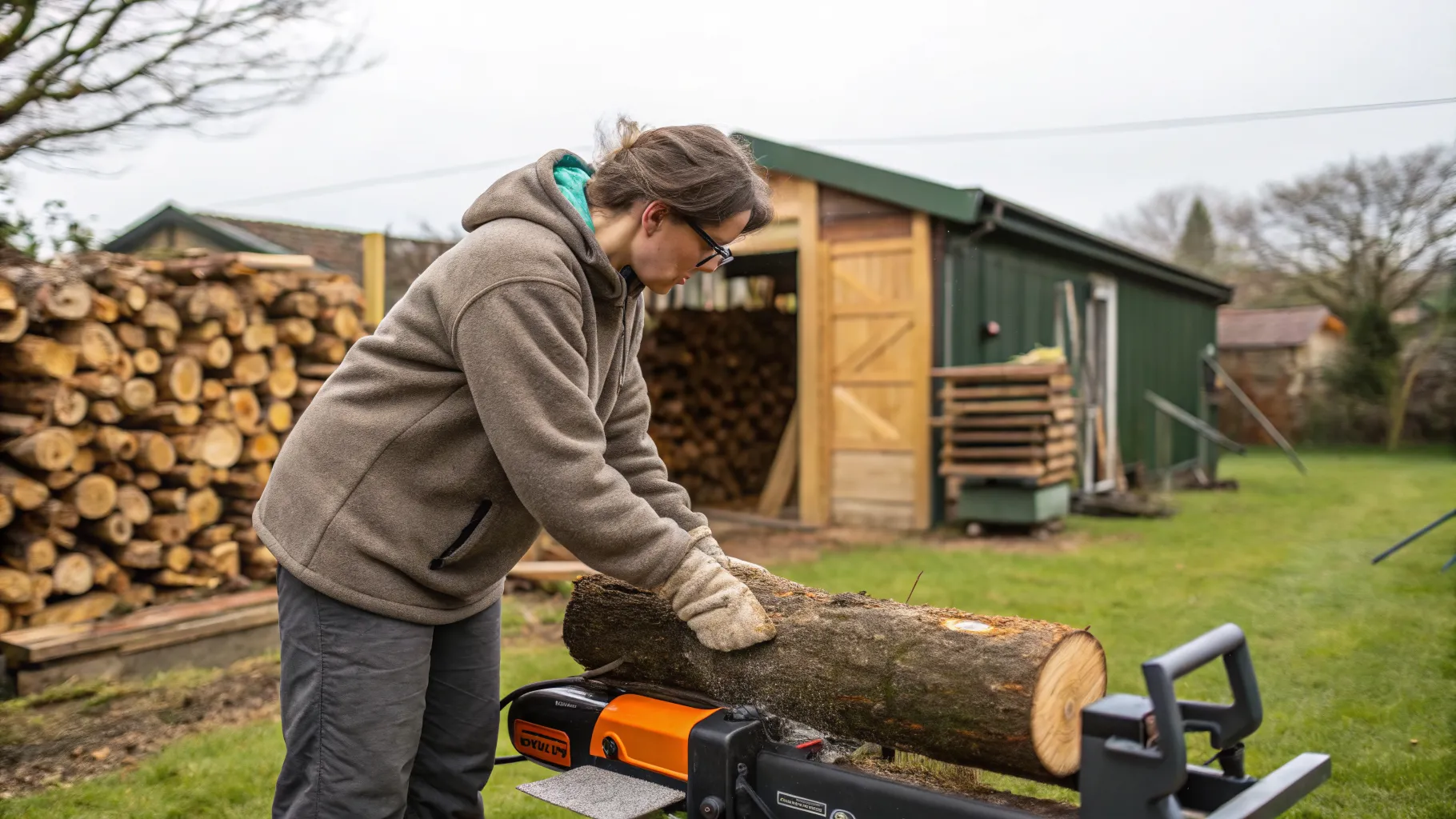
Most wood burner owners reach the point where buying split logs by the dumpy bag stops making sense, and a log splitter pays for itself. The problem is the market is full of confusing claims, and the single worst one is tonnage badging: a Forest Master “FM8” is not an 8 tonne machine, it produces 5 tonnes of force. We compared the electric, manual and kinetic splitters worth buying in the UK in 2026, and we explain the specs that actually decide whether a machine will split your logs or stall on them: force, maximum log length and diameter, and whether your wood is green or seasoned.
How much splitting force do you actually need?
Tonnage is the spec people fixate on, and the one most often misjudged. The answer depends on three things: log diameter, wood type, and how dry the wood is.
For occasional splitting of normal firewood, around 4 tonnes is enough. For regular use on harder or larger logs you want 6 to 8 tonnes or more. As a rough guide, 5 tonnes will split logs up to about 30 cm in diameter.
Wood type matters as much as size. Hardwood needs far more force than softwood: a 6 inch hardwood log can demand around 10 tonnes against roughly 4 tonnes for the same size in softwood. A useful rule of thumb is diameter in inches multiplied by 1.2 to 1.5 to get an approximate tonnage.
Dryness is the spec buyers forget. Green, unseasoned wood needs more force than seasoned wood of the same dimensions, because seasoned wood is more brittle and splits more cleanly. If you plan to split green rounds straight after felling, size up on force. If you are working with wood that has already dried for a season or two, a smaller machine copes fine. For help estimating how much wood you actually need to split each year, our firewood calculator does the maths.
| Job | Suggested force |
|---|---|
| Occasional seasoned softwood, logs under 25 cm | 4 tonnes |
| Regular home firewood, mixed wood to ~30 cm | 5 tonnes |
| Hardwood, knotty rounds, larger or green logs | 7 tonnes and up |
There is more detail on matching force to your wood in our guide to what tonnage log splitter you should buy.
What the model number really means (tonnage badging trap)
Before you compare anything, learn this: Forest Master’s model names do not equal tonnes. The “FM8” badge does not mean 8 tonnes. The FM8T-TC is rated at 5 tonnes of force, and both the Forest Master product page and the Amazon listing title confirm “5 Ton”. The FM5T-TC is also a 5 tonne machine. Only the “-7” variants, such as the FM10T-7, are genuinely 7 tonnes.
Many rival roundups simply repeat the model number as if it were the tonnage. It is not. Always check the stated force in the specification, not the name on the badge.
Electric vs petrol vs manual: which type is right for you?
Most home firewood users want an electric splitter. It is the right fit for roughly up to 10 m³ of wood a year, runs on a normal 230 V supply, and is far quieter and cleaner than petrol. Once you are processing more than about 12 m³ a year, petrol starts to make sense for its higher throughput and freedom from a cable.
Manual splitters (hydraulic hand pumps or foot pumps) need no power and make no noise. They suit off-grid use, low volumes, and anyone who would rather not store fuel or trail a cable across the garden. The trade-off is effort and speed.
Kinetic splitters are the speed option, covered in their own section below.
Kinetic (flywheel) vs hydraulic: is the speed worth it?
Standard electric and petrol splitters are hydraulic: a pump drives a ram, which is strong but slow. A full cycle on a hydraulic machine takes roughly 12 to 15 seconds (the Hyundai below quotes 12 seconds forward and 7 seconds to retract).
Kinetic splitters work differently. A motor spins heavy flywheels that store energy, then release it into the ram in a fast impact. Cycle times drop to around 3 seconds on typical kinetic units, and the standout UK machine, the Portek Charger, cycles in under a second. If you split large volumes and value speed over outright force on the gnarliest logs, a kinetic unit moves through a stack far faster. The downsides are price and that the brute hydraulic squeeze can be better suited to the most stubborn knotty pieces. Forest Master publishes a useful kinetic log splitter explainer if you want the mechanism in detail.
The specs that catch buyers out: log length and diameter
Force gets the attention, but the spec that actually sends machines back is capacity. A 5 tonne splitter is useless to you if your logs are too long to fit on the bed. Check the maximum log length and maximum diameter against the wood you actually burn before anything else.
| Model | Type | Force | Motor | Max log length | Max log diameter |
|---|---|---|---|---|---|
| Draper 81203 (LS4T) | Electric hydraulic | 4 tonnes | 1500 W | 370 mm | 50 to 250 mm |
| Forest Master FM5T-TC | Electric hydraulic | 5 tonnes | 2200 W | 300 mm | 250 mm |
| Forest Master FM8T-TC | Electric hydraulic | 5 tonnes | 2200 W | 370 mm | 300 mm |
| Forest Master FM10T-7 | Electric hydraulic | 7 tonnes | 2200 W | 450 mm | 400 mm |
| Hyundai HYLS7000HE | Electric hydraulic | 7 tonnes | 2300 W | 520 mm | 250 mm |
| Portek Charger | Kinetic (flywheel) | 8.5 tonnes | 1500 W | 400 mm | 300 mm |
| Logmaster foot-operated | Manual foot pump | 1.2 tonnes | none | 457 mm | 254 mm |
Note how the trade-offs play out. The Hyundai takes the longest logs here at 520 mm but only 250 mm diameter, while the Forest Master FM10T-7 takes a fatter 400 mm log over a 450 mm length. Match this to your own wood, not to the headline tonnage.
The best log splitters we recommend
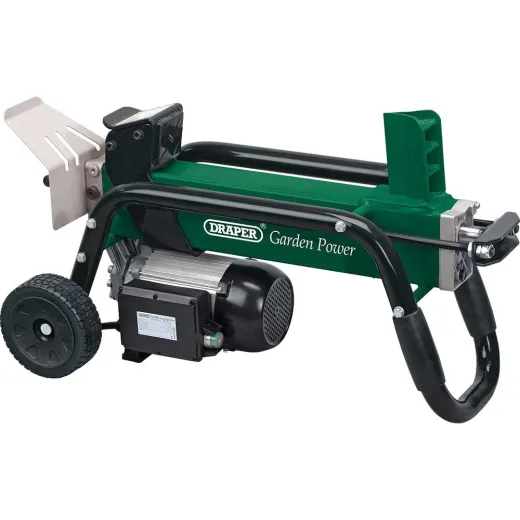
Best budget / occasional use: Draper 81203 (LS4T)
The cheapest credible entry point. It is a 4 tonne, 1500 W horizontal electric machine running on standard 230 V, taking logs up to 370 mm long and 50 to 250 mm in diameter. That is enough force for seasoned logs up to around 25 cm, which covers a lot of normal firewood. If you split a modest amount of already dried wood and want the lowest outlay, this is the sensible starting point. Do not ask it to crack green hardwood rounds; it is not built for that.
Best for small and medium wood burners: Forest Master FM5T-TC
Fast, light and portable, from Forest Master, which bills itself as the UK’s number one log splitter brand. It is a 5 tonne machine with a 2200 W motor and a quick cycle of around 9 seconds, taking logs up to 300 mm long and 250 mm in diameter. Forest Master notes it is best suited to softer or green wood. If you burn a small to medium amount of firewood and want something you can move around the garden easily, this is the pick.
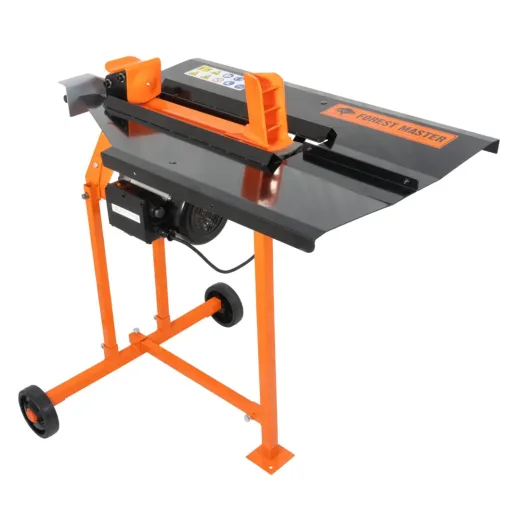
Best all-rounder for regular home use: Forest Master FM8T-TC
Despite the “FM8” name, this is a 5 tonne machine, not 8 (the Amazon title confirms 5 Ton). What you are paying for is the package: a 2200 W motor, a workbench, a guard and a stand, and it arrives pre-filled with hydraulic oil. It takes logs up to 370 mm long and 300 mm in diameter, which is more generous than the lighter FM5. For someone splitting firewood regularly through the season who wants a stable, guarded setup at a sensible height, it is the best balance of capacity and safety here.
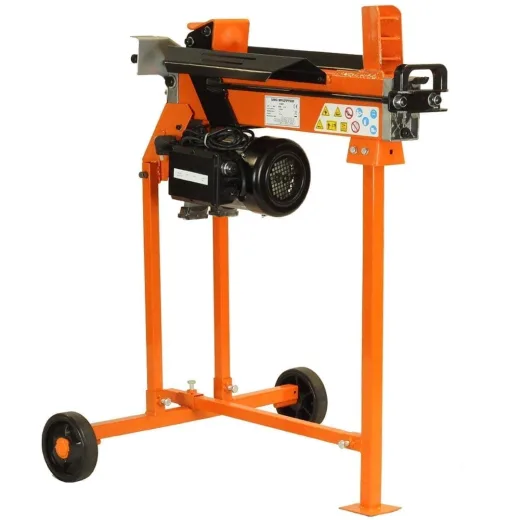
Best for hardwood and heavy use: Forest Master FM10T-7
This is a genuine 7 tonne machine, and the one to choose if you split hardwood or knotty rounds. The Duocut twin-ended blade splits from both ends, so it tackles awkward, knotty wood and handles larger diameters: up to 400 mm diameter and 450 mm length. It weighs around 67 kg with its cage, and a ramstop shortens the return stroke on short logs to save time. The bed sits 860 mm off the ground for comfortable working. If your wood is hard, big or stubborn, this is the Forest Master to buy.
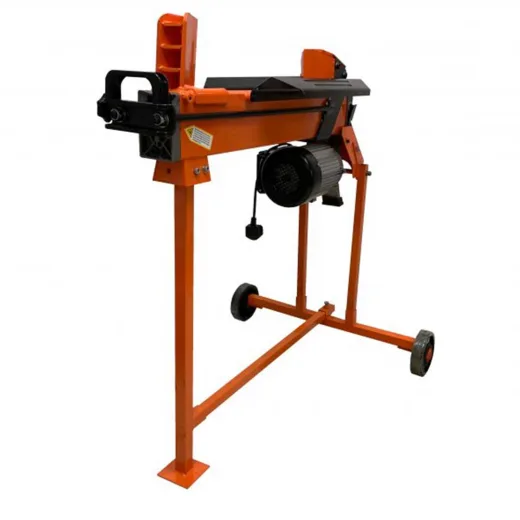
Best value 7 tonne: Hyundai HYLS7000HE
Seven tonnes of force with a 2300 W motor and a 3 year home-use warranty, and the longest log capacity in this lineup at 520 mm (though diameter tops out at 250 mm). Hydraulic pressure is 24.2 MPa, the cycle is 12 seconds forward and 7 seconds to retract, it weighs around 60 kg, runs through a steel cage with two-hand control, and the listed noise is 78.8 dB with no load rising to 89.8 dB under full load. For a lot of force, a long bed and a long warranty, this is the value choice. The cable is short at 1.8 m, so read the extension lead section below.
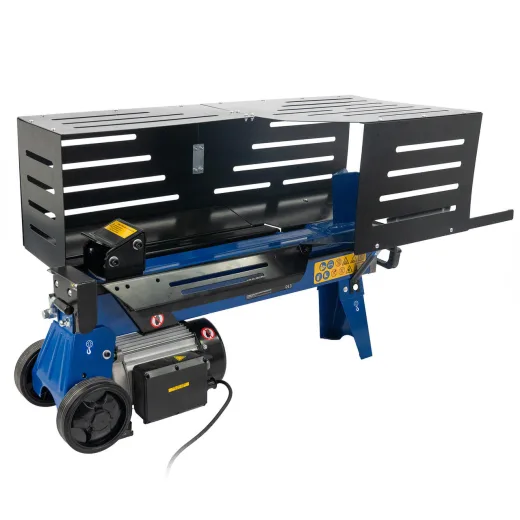
Best manual / off-grid: Logmaster foot-operated splitter
The pick the bigger roundups underweight. It is a 1.2 tonne foot-operated hydraulic splitter with no power, no fuel and no noise, taking logs up to 457 mm long and 254 mm in diameter. It is light to carry and built from powder-coated steel. For low volumes, off-grid sites, or anyone who simply does not want a motor and a cable, it is a genuinely useful tool that the force-obsessed comparisons skip over.
Best kinetic: Portek Charger
If outright speed is the goal, the Portek Charger is the UK standout. It is an 8.5 tonne kinetic (impact) splitter using twin flywheels driven by a 1.5 kW motor, with a cycle time under one second, the fastest on the UK market. It takes logs up to 400 mm long and 300 mm in diameter, sits on wheels and a chassis, and Portek describes it as the only impact splitter compliant with CE standards. It is sold mainly through specialist dealers rather than on Amazon, so buy it from a Portek stockist; you can confirm the current specification on the Portek Charger product page.
For more electric-only options and a deeper look at the powered machines, see our best electric log splitter UK guide.
Vertical vs horizontal: which for home firewood?
Most home electric splitters are horizontal: the log sits on a bed and the ram pushes it into a wedge. This is fine for the log sizes a domestic wood burner needs and is easier to load for small to medium rounds.
Vertical splitters let you stand a heavy round on end so you do not have to lift it onto a bed. They earn their keep with very large, heavy logs you would struggle to manhandle. For typical home firewood at the diameters covered here, horizontal is the practical choice; go vertical only if you are routinely splitting rounds too heavy to lift.
Running it off an extension lead or a generator
Electric splitters draw a serious current on startup, and a long, thin extension lead starves the motor and can cause it to stall or overheat. Forest Master’s guidance is clear: keep the extension lead under 10 m and use a minimum conductor cross-section of 2.5 mm². The short 1.8 m cable on machines like the Hyundai means most people will need an extension, so buy the right one. A heavy-duty 2.5 mm² lead, fully unwound from its reel, is the safe choice. The same applies to a generator: it must comfortably exceed the motor’s startup load, not just its running watts.
Safety and the law: two-hand operation is mandatory
This is the section almost no rival roundup covers, and it matters. In the UK, log splitters should use two-hand control: both controls have to be operated together, and the machine must not be able to run with one hand. This is not optional. The Health and Safety Executive’s bulletin on firewood processing machines cites BS EN 609-1, and the risks are real: amputation and crush injuries.
Two practical points follow. First, do not defeat or tie down a control to run the machine one-handed; that removes the protection the design exists to provide. Second, only one person should operate the machine. If a second person is feeding or removing wood, their hands are unprotected by the two-hand controls, which is exactly the scenario the HSE warns against. You can read the official guidance in the HSE safety bulletin on firewood processing machines.
Should you buy or hire?
Hiring makes sense for a one-off job: clearing a fallen tree, a single big delivery of rounds. But rental costs add up fast, and the breakeven comes quickly. If you use a splitter more than around 6 to 7 days a year, buying works out cheaper, and you have the machine on hand the moment you need it. For regular firewood production through the season, buying is almost always the right call.
Maintenance and troubleshooting
The most common complaint with hydraulic splitters is the ram not returning, or returning slowly. The usual causes are air in the hydraulic system, low oil, debris on the glide rail, or, on a brand-new machine, the shipping plug (bleed screw) not being loosened before use. Work through those in order before assuming a fault.
Hydraulic oil is the other maintenance point people skip. Check the level before every use; it should sit about an inch from the top of the reservoir. Use an AW-class hydraulic oil as specified by the manufacturer, and keep the glide rail clean. Forest Master publishes a troubleshooting guide for electric log splitters that walks through these checks. If your machine will not start or the ram will not return, our log splitter won’t start, ram won’t return guide covers the fixes step by step.
Frequently asked questions
How many tonnes of splitting force do I need? For occasional splitting of seasoned softwood, around 4 tonnes is enough; 5 tonnes handles most home firewood up to about 30 cm in diameter. Step up to 7 tonnes or more for hardwood, knotty rounds, larger logs, or green wood. As a rough guide, multiply the log diameter in inches by 1.2 to 1.5 to estimate the tonnage you need.
Why does an “8 ton” Forest Master only quote 5 tonnes of force? Because the model name is a badge, not a force rating. The Forest Master FM8T-TC is rated at 5 tonnes, which both the manufacturer’s product page and the Amazon listing confirm. Only the “-7” variants, like the FM10T-7, are genuinely 7 tonnes. Always read the stated force in the specification rather than trusting the model number.
Can I split green or unseasoned wood with an electric splitter? Yes, but you need more force. Green wood needs more force than seasoned wood of the same size, because seasoned wood is more brittle and splits more cleanly. If you regularly split green rounds, choose a 7 tonne machine; lighter 5 tonne splitters cope best with softer or already seasoned wood.
Vertical or horizontal: which is better for home firewood? Horizontal is the practical choice for typical home firewood. It is easier to load for the small to medium rounds a domestic wood burner uses. Vertical splitters earn their place only with very large, heavy logs you cannot comfortably lift onto a bed.
Can I run a log splitter off an extension lead? Yes, if it is the right lead. Keep the extension under 10 m and use a minimum conductor cross-section of 2.5 mm², fully unwound from the reel. A long, thin lead starves the motor on startup and can cause it to stall or overheat. The same caution applies to generators: the supply must exceed the motor’s startup load.
Why won’t the ram return on my log splitter? The usual causes are air in the hydraulic system, low oil, debris on the glide rail, or, on a new machine, the shipping or bleed plug not being loosened before use. Check the oil level (about an inch from the top of the reservoir), clean the rail, and confirm the bleed screw is open before assuming a mechanical fault.
Is it cheaper to buy or hire a log splitter? Hiring suits a one-off job, but rental costs mount quickly. The breakeven comes at roughly 6 to 7 days of use a year; beyond that, buying is cheaper and the machine is always on hand. For regular seasonal firewood production, buying almost always wins.
Want the seasoning calendar and our log-price watch in your inbox?
Join the Kindling List