Best Logs for Pizza Ovens and Fire Pits UK: Oak vs Ash
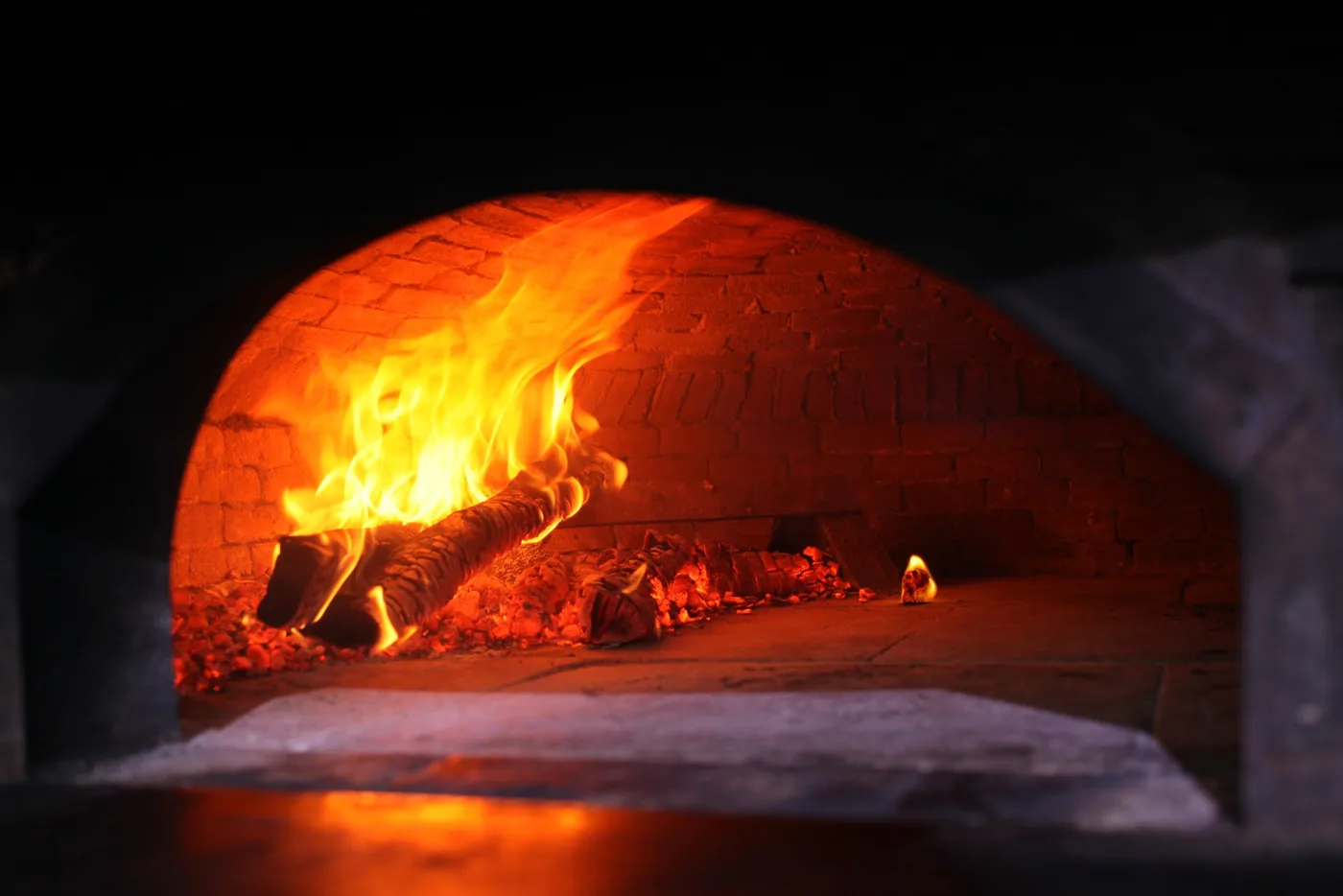
Choosing the best logs for a pizza oven is not the same problem as choosing logs for a fire pit, and neither is the same as choosing logs for a stove. A pizza oven needs a live rolling flame and a stone floor at around 500°C. A fire pit needs long, low, sociable heat and no sparks landing on the decking. The wood that does one job well is often mediocre at the other, and the wood that ruins a pizza oven can be perfectly acceptable in an open fire.
This guide covers what to burn in each, what to keep well away from both, and the one legal rule that applies to anything you buy in a bag.
The rule that comes before species: under 20% moisture
Nothing about species matters until the wood is dry. Wet wood in a pizza oven will not reach cooking temperature at all, because the fire spends its energy boiling water out of the log instead of heating the dome. In a fire pit it hisses, smoulders and produces the acrid smoke that gets you complained about.
There is a legal floor under this in England. Under the Air Quality (Domestic Solid Fuels Standards) (England) Regulations 2020, wood fuel sold in volumes under 2m³ must be certified Ready to Burn as having a moisture content of 20% or less. Woodsure is the Defra-appointed certification body. If you are buying nets, boxes or crates from a garage, supermarket, garden centre or online, the Ready to Burn mark should be on the packaging, and its absence is a red flag rather than a bargain.
The 2m³ threshold is worth understanding, because it is where the rules change. Loose wood sold in quantities of 2m³ or more does not have to be certified, but the supplier is required to give you advice on how to store and season it. In plain terms: a bulk load may legitimately arrive wet, and the drying is then your job. Our guide to seasoning firewood under 20 per cent covers how long that takes, and a moisture meter settles the argument in ten seconds.
For a pizza oven, aim lower than the legal minimum. Kiln-dried hardwood in the 12 to 18 per cent band lights fast, burns with a clean flame and gets the stone up to temperature without a long smoky warm-up phase.
The four species worth buying
Ash is the lighting wood. It catches quickly and burns with a steady, consistent heat, and its flavour contribution is close to neutral. That combination makes it the ideal wood for the first half hour, when the only thing you care about is getting the dome and stone hot.
Oak is the cooking wood. Dense, slow-burning, and it produces a deep bed of long-lasting embers that hold the oven at a stable temperature while pizzas go in and out. Oak is what keeps a Karu or a brick oven sitting in the 450 to 500°C range rather than sagging between bakes. It is also the best fire pit wood in the UK for the same reason: it lasts.
Beech burns cleanly and evenly when properly kiln-dried, with a softer, slightly sweet smoke. If flavour matters to you and you are cooking things more delicate than a margherita, beech is the one to reach for. It is also a good all-rounder for a fire pit.
Birch lights very readily and burns bright, which makes it excellent kindling and a good starter alongside ash. The trade is that it goes quickly, so it is a wood to start with rather than to cook on.
The practical answer used by most people who cook on wood regularly is a combination: ash or birch to bring the oven up, then oak or beech to hold it there.
What never goes in either
Softwood: pine, spruce, fir, larch. This is the one hard no. Softwoods are full of resin. They burn hot and fast, throw sparks, deposit creosote on the dome and in the flue, and leave a sharp piney taste on anything cooked over them. Ooni’s own guidance for its multi-fuel ovens is to avoid softwood, treated wood and wet wood. In a fire pit, softwood is less catastrophic but the spark-throwing is a genuine hazard on a decked terrace.
Pallets, offcuts, painted or treated timber. Treated wood releases compounds you do not want near food, and pallet wood may have been heat-treated or chemically fumigated with no way for you to tell which. Not in a pizza oven, and honestly not in a fire pit either.
MDF, chipboard, plywood. Bonded with adhesives, and the smoke is unpleasant and worse than unpleasant.
Driftwood. Salt-laden, and it releases chlorine compounds when burned.
Anything green or unseasoned. Freshly felled wood can be over 50 per cent moisture. It will not get a pizza oven anywhere near temperature.
Where pizza ovens and fire pits genuinely differ
Flame versus embers. A pizza oven cooks the top of the pizza by radiant heat from flame rolling across the roof of the dome, and the base from the stone. You need a live flame at the side of the oven throughout the bake, not a glowing bed. A fire pit is the opposite: once it settles into embers it is doing its best work, giving out steady heat with little smoke.
Log size. This is the practical difference most people meet first. Compact ovens such as the Ooni Karu range take small split logs and generously sized kindling rather than full-length firewood, and boxed kiln-dried logs are usually cut short enough to suit. A garden fire pit or a full brick oven will take standard 25cm firewood without trouble. Check the fuel chamber before ordering a crate of anything.
Briquettes. Compressed heat logs and briquettes are excellent value in a fire pit, burn long and produce very little ash. They are the wrong fuel for a pizza oven, because they are designed to burn steadily and low rather than throw the tall live flame the dome needs. Our best wood briquettes roundup covers them properly, and kiln-dried logs versus briquettes sets out where each wins.
Smoke tolerance. Nobody is standing over a fire pit for two minutes at a time. In a pizza oven you are opening the door repeatedly and leaning in, so a wood that smokes is a wood you will be breathing.
What temperature you are actually aiming for
For proper Neapolitan pizza the target is around 500°C, which is 950°F, and at that temperature a 12-inch pizza cooks in roughly 60 seconds. Ooni’s Karu multi-fuel ovens are built around that figure, and the Fyra 12 reaches it on hardwood pellets in about 15 minutes.
That number explains everything else on this page. Getting a stone to 500°C and holding it while cold dough repeatedly lands on it takes dense, dry hardwood and a continuous flame. Damp wood cannot do it. Softwood does it briefly and then dies. Briquettes do not produce the flame shape. Oak, on dry ash embers, does.
If you are running a fire pit rather than an oven, forget 500°C entirely. You want the fire to settle and stay settled, which is a different and much more forgiving job.
Buying: boxes, nets and crates
Boxed kiln-dried hardwood is the convenient option for pizza ovens. It is dry on arrival, cut short, and it stores indoors without fuss. It is also the most expensive way to buy wood per kilo, which matters less when a pizza night burns a fraction of what a stove does in an evening.
Nets from a garage or supermarket are fine for occasional use and must carry the Ready to Burn mark. Quality varies enormously between brands.
A bulk crate or loose load makes sense if you also run a stove or use the fire pit regularly. Remember the 2m³ rule: above that threshold the wood does not have to be certified, so buy from someone reputable, ask what species you are getting, and check it with a meter before you assume it is ready.
Prices move constantly and vary by pack size, species and delivery, so check current prices with the retailer rather than trusting a figure in an article. Our firewood buying guide covers the wider market and how to store firewood dry covers keeping it that way once it arrives.
The legal position on burning outdoors
If you live in a smoke control area, the restrictions apply to smoke from a chimney, not to open outdoor fires. GOV.UK is explicit that you can use outdoor barbecues, chimineas, fireplaces and pizza ovens in smoke control areas. The exception is a structure whose chimney is attached to a building, such as a summerhouse, where the normal fuel rules apply unless the appliance is Defra-exempt.
Two things still constrain you. The penalties in a smoke control area run to £300 for releasing smoke from a chimney and up to £1,000 for buying unauthorised fuel for a non-exempt appliance in England. And garden bonfires sit under separate nuisance rules entirely, enforced by your council’s environmental services team, so persistent heavy smoke drifting into a neighbour’s garden is a problem regardless of where you live. Burning dry hardwood rather than damp rubbish is the whole answer to that. Our page on the Ready to Burn firewood rules goes through the regulations in full.
Frequently asked questions
What are the best logs for a pizza oven in the UK? Kiln-dried oak or beech for the cooking, with ash or birch to light it and bring the oven up to temperature. All of it needs to be under 20 per cent moisture, and 12 to 18 per cent is better. Softwood should never go in a pizza oven.
Can I use kiln-dried logs from the supermarket in a pizza oven? Yes, if they carry the Ready to Burn mark and they physically fit. The usual problem is length rather than quality: standard firewood is often too long for a compact oven’s fuel chamber, so look for boxes sold specifically as pizza oven logs or as short-cut kiln-dried hardwood.
Why can’t I burn pine in a pizza oven? Resin. Softwoods burn fast and dirty, spit sparks, coat the dome and flue in creosote, and leave a sharp taste on the food. It is the single most common reason a wood-fired pizza tastes wrong.
Are briquettes any good for a fire pit? Very good. They burn long and steadily, produce little ash and are usually cheaper per hour of heat than logs. They are the wrong fuel for a pizza oven, where you need a tall live flame rather than a slow steady burn.
Does the Ready to Burn rule apply to pizza oven wood? Yes. The regulations cover wood fuel sold in volumes under 2m³ regardless of what you burn it in, so bagged and boxed logs for a pizza oven must be certified at 20 per cent moisture or less. Loose wood sold in 2m³ or more is exempt from certification but must come with seasoning and storage advice.
Can I have a fire pit in a smoke control area? Yes. GOV.UK confirms that outdoor barbecues, chimineas, fireplaces and pizza ovens are all permitted in smoke control areas, because the restrictions apply to smoke from a chimney. Separate bonfire and nuisance rules still apply, and your council enforces them.
How much wood does a pizza night use? Far less than an evening’s stove burning, because you are heating a small insulated chamber for a couple of hours rather than a room all night. A boxed crate of kiln-dried hardwood will typically cover several sessions, which is why the higher per-kilo price of boxed wood matters less here than it does for a stove.
Should I use hardwood pellets instead? Only if the oven is designed for them. Pellet-fed ovens such as the Ooni Fyra are built around hardwood pellets and reach temperature quickly with almost no tending. Pellets are not a substitute for logs in a log-burning oven, and logs are not a substitute for pellets in a pellet one.
Want the seasoning calendar and our log-price watch in your inbox?
Join the Kindling List