How to Season Firewood to Under 20% Moisture
Learning how to season firewood properly is the single biggest thing you can do for a clean, hot, efficient fire. Wet wood wastes most of its energy boiling off water instead of heating your room, produces far more smoke, and coats your flue in creosote. The target in the UK is simple: get your logs below 20% moisture before you burn them. This guide covers how to do that at home, how long it takes, and how to confirm you have hit the number with a moisture meter.
Why under 20% is the number
Below 20% moisture is not an arbitrary figure. It is the threshold in the UK’s Ready to Burn scheme, and any firewood sold in volumes under 2 cubic metres must legally meet it. Burn wood wetter than this and two things happen: much of the heat goes into evaporating water rather than warming the room, and unburnt gases condense in your chimney as creosote, which is the main cause of chimney fires. Dry wood lights faster, burns hotter and keeps your glass and flue cleaner. HETAS, the UK body for solid-fuel appliances, sets out the same target in its guide to seasoning firewood.
How long firewood takes to season
Seasoning is just controlled drying, and time is the main ingredient. How long depends on the wood:
- Hardwoods (oak, ash, beech, birch) generally need 18 to 24 months of drying. Oak is the slowest of all; ash is one of the more forgiving.
- Softwoods (pine, spruce, larch) dry faster and can be ready in 6 to 12 months.
Freshly felled “green” wood can hold 50% or more moisture, so there are no shortcuts: buying green wood in autumn to burn the same winter simply does not work. If you want dry logs for this season and have not planned that far ahead, buy kiln-dried logs and season your own for future winters.
Step by step: seasoning firewood at home
1. Split the logs
Split wood dries far faster than whole rounds because you expose the inner faces and break the bark’s water-resistant seal. Split to the sizes you actually burn: thinner pieces dry quickest. Our guide on how to split logs by hand covers the technique and kit.
2. Stack for airflow
Airflow is what carries moisture away, so stack to let air move through the pile:
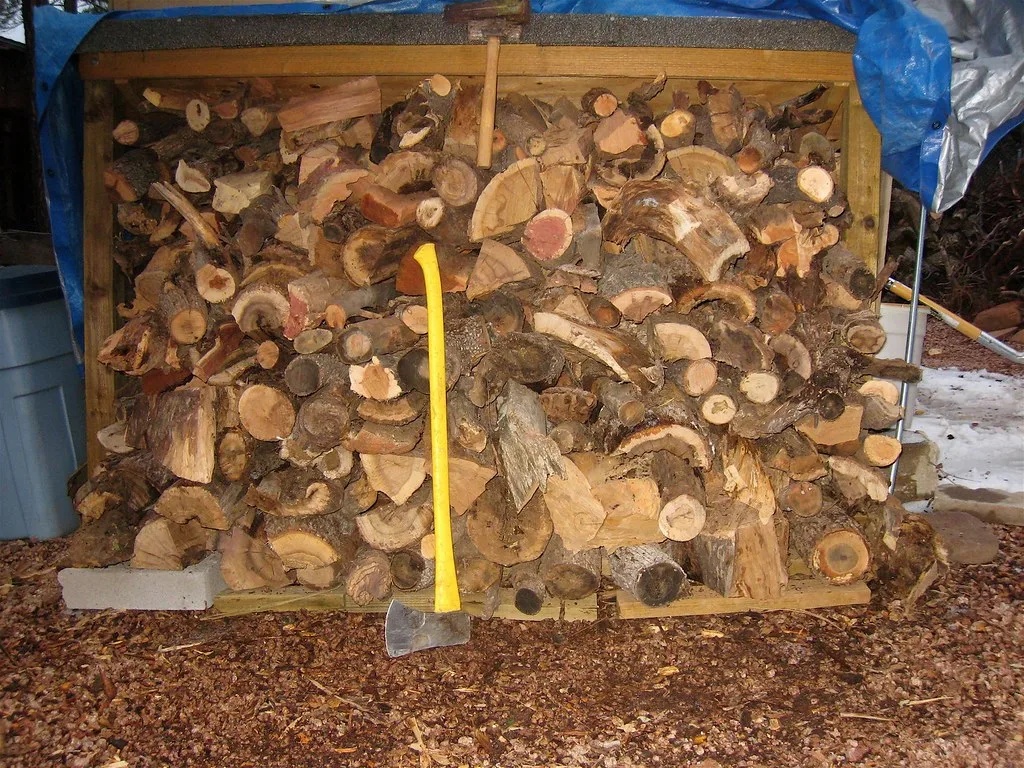
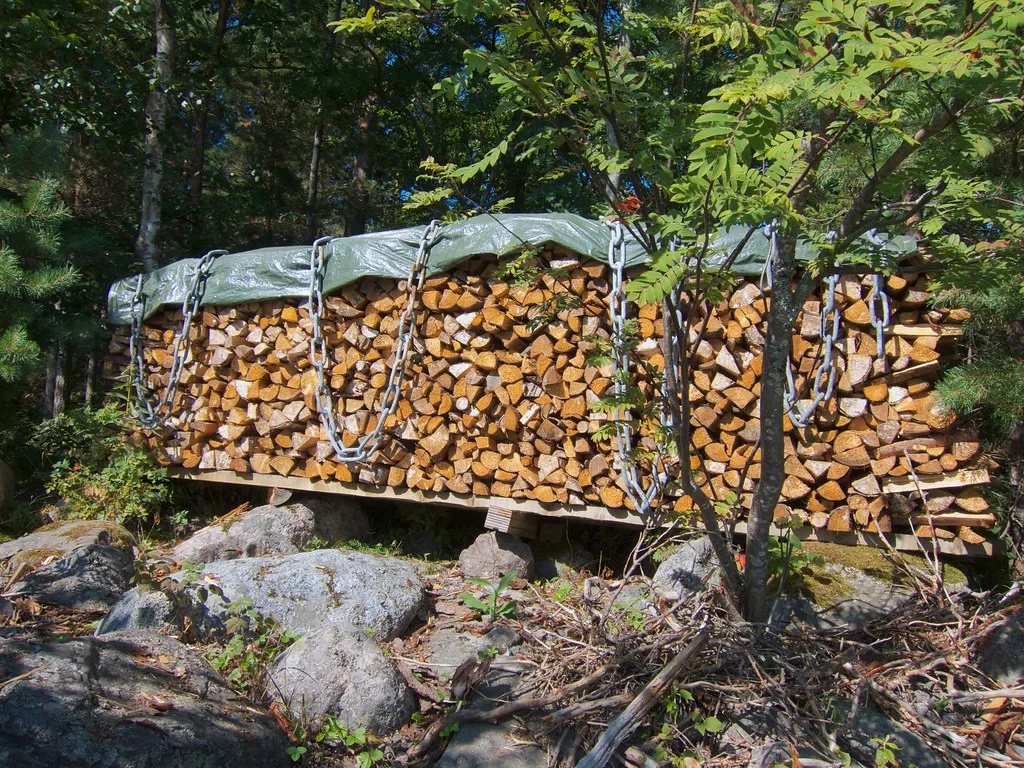
- Keep the stack off the ground on pallets, battens or a log store, so ground damp cannot wick back up.
- Leave gaps between logs rather than packing them tight. A loose, criss-cross pattern at the ends of the stack holds it up while letting air through.
- Site the stack somewhere sunny and open to the wind, not tucked against a damp wall or in a still corner.
3. Cover the top only
This is where people go wrong. Cover the top of the stack to keep rain off, but leave the sides open. Wrapping the whole pile in a tarp traps moisture inside and can leave wood wetter than when you started. A purpose-built log store with a sloped roof and open sides is ideal; a sheet of corrugated roofing weighted down over the top works too.
4. Wait, then check
Give the wood the seasoning time above, then test before you burn rather than guessing. Well-seasoned logs are lighter, often show cracks (checks) across the end grain, and knock together with a hollow ring rather than a dull thud. Those signs are useful, but the only reliable proof is a moisture reading.
How to check moisture with a meter
A moisture meter is the definitive test, and a decent one costs very little. To measure correctly:
- Bring a log indoors to roughly room temperature (cold, damp-surfaced wood reads inaccurately).
- Split the log and test a freshly exposed inner face, not the outside. The surface can read dry while the core is still wet.
- Push the pins in along the grain and take a few readings across different logs.
You are aiming for a reading under 20%. If the inner face reads higher, the wood needs more time. For choosing and using a meter, see our firewood moisture meter buying guide and our roundup of the best firewood moisture meters in the UK. If you are unsure which type to buy, our guide to pin vs pinless meters explains the difference.
Common mistakes that keep wood wet
- Stacking green wood against a wall or in shade. No sun and no wind means it barely dries.
- Tarping the whole pile. Traps evaporating moisture against the wood.
- Leaving logs whole. Unsplit rounds can take years longer than split wood.
- Testing the outside of a log. Always split and test the fresh inner face.
- Trusting the calendar over the meter. A wet summer or a shaded spot can leave “two-year” wood still above 20%.
Get the basics right, split early, stack high and airy, cover only the top, and most wood will comfortably reach burning condition within its expected window. The meter turns that from a hopeful guess into a certainty.
Frequently asked questions
How long does firewood take to season to under 20%? Hardwoods such as oak, ash and beech usually need 18 to 24 months, while softwoods like pine and spruce can be ready in 6 to 12 months. Splitting the wood and stacking it in a sunny, airy spot speeds things up.
Can you season firewood in one summer? Softwood split small and stacked in a sunny, windy spot can sometimes get close over a single warm summer, but most hardwood cannot. For reliably dry logs this winter, buy kiln-dried and season your own for future years.
Do you cover firewood while seasoning? Cover only the top of the stack to keep rain off, and leave the sides open for airflow. Wrapping the whole pile in a tarp traps moisture and can keep the wood wet.
How do I know when firewood is seasoned? Seasoned logs are lighter, often have cracks across the end grain and sound hollow when knocked together. The only reliable check is a moisture meter reading below 20% taken on a freshly split inner face.
Where should I test firewood with a moisture meter? Split a log and press the pins into the freshly exposed inner face, not the outside. The surface can read dry while the core is still damp, so always test the inside at around room temperature.
Why does firewood need to be under 20% moisture? Below 20%, wood burns hotter and cleaner, gives more usable heat and produces less smoke and creosote. It is also the UK Ready to Burn legal threshold for firewood sold in small volumes.
Want the seasoning calendar and our log-price watch in your inbox?
Join the Kindling List