Cheap vs Expensive Moisture Meter: Is a Branded One Worth It?
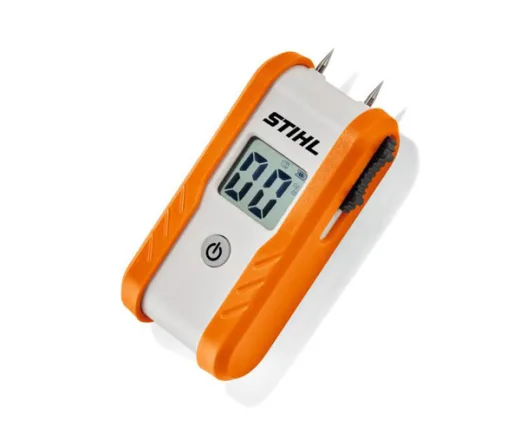
The cheap vs expensive moisture meter debate is really one question dressed up as many: does a branded firewood meter, like the Stihl at three times the price, actually tell you anything a £12 generic does not? Having used both against the same logs, the honest answer is no, not for the job that matters. Both are pin-type meters measuring electrical resistance between two prongs, and both will tell you whether your wood is above or below the 20% moisture you care about. But there are a couple of real differences worth knowing before you spend, or save, your money.
What both types actually do
Every handheld firewood moisture meter, cheap or dear, works the same way. You push two metal pins into a freshly split face of the log, and the meter measures the electrical resistance between them, which changes with moisture, then shows a percentage. That is the whole trick. A £12 meter and a £40 branded one use the same basic method, which is why their readings on the same split log are usually within a percent or two of each other. For firewood, where you only need to know if you are safely under 20%, that is close enough. If you are still choosing, our roundup of the best firewood moisture meters in the UK weighs up the field.
Where the cheap meters win
The obvious win is price. A generic pin meter costs a fraction of a branded one and does the core job perfectly well. For most wood burner owners checking their own log store, that is the sensible buy, and it is why a cheap meter tops our best cheap moisture meters under £20 roundup.
The catch with the cheapest end is consistency, not accuracy. Quality control on sub-£15 generics is variable: most are fine, but the odd unit has a flimsy battery cover, stiff pins or an optimistic factory calibration. Because they are cheap, the fix is simple, buy one, sanity-check it against a known-dry offcut, and return it if it reads oddly.
If you want the cheap route, point your money at the generics rather than a mid-priced name, and keep the change for a bag of kiln-dried logs.
Where the branded meters win
The Stihl and similar branded meters earn their price in three smaller ways rather than one big one. Build quality is better, so the case, pins and battery door feel more durable if the meter lives in a coat pocket or a damp log shed. The displays and controls are generally clearer and better laid out. And some branded units add extras like an ambient temperature readout or a slightly wider measuring range.
None of that changes the moisture number on a split log. What you are paying for is a nicer, tougher tool, not a more truthful one. If you check a lot of wood, sell logs, or simply prefer kit that will outlast a few winters, the branded meter is a reasonable buy. Our full Stihl wood moisture meter review covers exactly what you get.
The verdict: is a branded meter worth 3x the price?
For the average wood burner owner, no. A cheap generic meter reads your firewood accurately enough to keep you the right side of the 20% “Ready to Burn” line, and that is all a firewood meter needs to do. Spend the difference on better wood or a decent log store instead.
Buy the branded meter only if you value the sturdier build and clearer display, use it heavily or professionally, or want a tool you will not have to think about replacing. It is a better object. It is not a better measurement, and on firewood the measurement is the only thing that counts.
Whichever you pick, remember the target: firewood should read 20% or less before you burn it, ideally lower. That is not just good practice, it is the Ready to Burn standard behind the UK rules on selling wood fuel. Check the current price on Amazon UK for whichever meter suits you, and put the reading, not the brand, first.
Frequently asked questions
Is an expensive moisture meter more accurate than a cheap one? Not meaningfully, for firewood. Both cheap and branded meters use the same pin-type resistance method, and on the same split log they typically read within a percent or two of each other. For checking whether wood is under 20% moisture, a cheap meter is accurate enough. You pay more for build quality and display, not a truer reading.
Is the Stihl moisture meter worth the money? Only if you value its sturdier build, clearer display and extras like a temperature readout, or if you use a meter heavily. For occasional checks of your own log store, a sub-£15 generic gives you the same moisture reading for far less, so most owners do not need to spend three times as much.
What moisture reading should firewood be? Firewood should be at or below 20% moisture before burning, and lower is better, with 15% or so giving the best heat and cleanest burn. Any decent meter, cheap or branded, will tell you whether you have hit that target on a freshly split face of the log.
Why do my cheap and expensive meters give different readings? Small differences usually come down to where and how you test, not the meters. Always split the log and test the fresh inner face, press the pins in firmly, and test several logs. If a cheap meter reads wildly off against a known-dry piece of wood, it may be a duff unit, which is easy and cheap to return.
Do I need a moisture meter for firewood at all? If you season or buy wood to burn, yes, a meter is the only reliable way to know it is under 20% rather than guessing. It is one of the cheapest pieces of wood-heat kit you can own, and even a budget model pays for itself by stopping you burning wet wood that wastes heat and dirties your flue.
Want the seasoning calendar and our log-price watch in your inbox?
Join the Kindling List