Electric vs Manual Log Splitter: Which Is Right for Your Wood Pile?
The electric vs manual log splitter question comes down to one honest answer: how much wood do you actually split, and how often? An electric splitter does the hard work for you and chews through a winter’s worth of logs without leaving you aching. A manual splitter costs a fraction of the price, never needs a socket, and doubles as a workout. Neither is “better” in the abstract; the right one depends on your wood pile and your back. This guide lays out the real trade-offs so you can pick with confidence.
If you are weighing log splitters more broadly, our individual reviews, including the Logmaster kinetic log splitter, go deeper on specific models.
How each type works
An electric log splitter uses a motor to drive a hydraulic ram that pushes a log onto a fixed blade. You load the log, press the controls, and the machine generates the force. Most domestic models are rated between 4 and 10 tonnes, run off a normal 13-amp socket, and have an automatic ram return.
A manual log splitter covers a few different tools. There are hand or foot-operated hydraulic splitters, which use a pump and lever to build pressure slowly, and drop-weight splitters, where you raise a weighted blade and let gravity and a sharp downward action drive it through the log. Both rely on your muscle, but they multiply your effort cleverly: a good geared manual splitter can handle logs you would struggle to split with an axe.
Electric log splitters: the case for
Electric is the choice if you split a lot of wood or want to save your body.
- Far less effort. The machine supplies the force, so you can split for longer without tiring, which matters if you process a trailer-load at a time.
- Quiet and fume-free. Unlike petrol splitters they make little noise and produce no exhaust, so you can run one in a garage or close to the house.
- Consistent power. A 7-tonne electric model will pop seasoned logs that a manual tool would labour over, time after time.
The downsides are real but manageable: they cost more than a basic manual tool, they must be near a power source, and the cheaper ones can stall on big, knotty or unseasoned hardwood. For most UK households burning a steady supply, a mid-range electric splitter around the 7-tonne mark is the sweet spot.
A solid, widely available example is the Forest Master FM10T-7 Duocut, a 7-tonne electric splitter with a twin-blade head that gets through domestic logs comfortably.
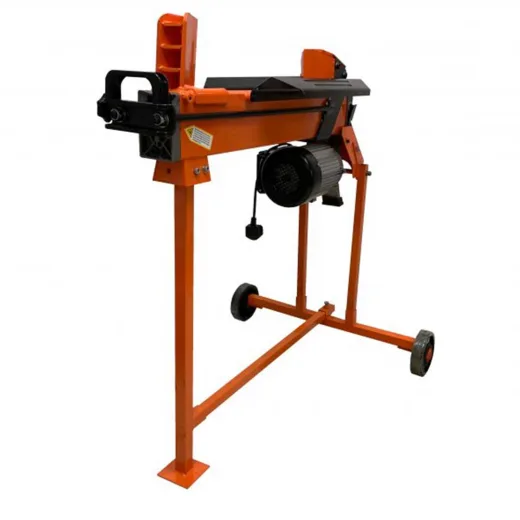
For a hands-on take, see our Forest Master FM10D review, which covers the same family of machines in detail.
Manual log splitters: the case for
Manual is the choice if your wood pile is modest, your budget is tight, or you simply have nowhere to plug in.
- Cost. A manual splitter costs a fraction of an electric one, with nothing to service and no electricity to pay for.
- Go anywhere. No cable, no socket, no fear of a power cut. You can split at the woodshed, the allotment or a remote cabin.
- Surprisingly capable. Well-geared manual hydraulic units reach high tonnages, and drop-weight splitters are fast on straight-grained logs once you find the rhythm.
The catch is effort. Splitting a large pile by hand is genuinely tiring, and the manual route suits people who split smaller amounts on an irregular basis, or who actively enjoy the exercise.
For a manual tool that goes beyond an axe, the Forest Master Smart Splitter is a popular drop-weight design that splits logs and kindling safely with no swinging of a sharp blade.
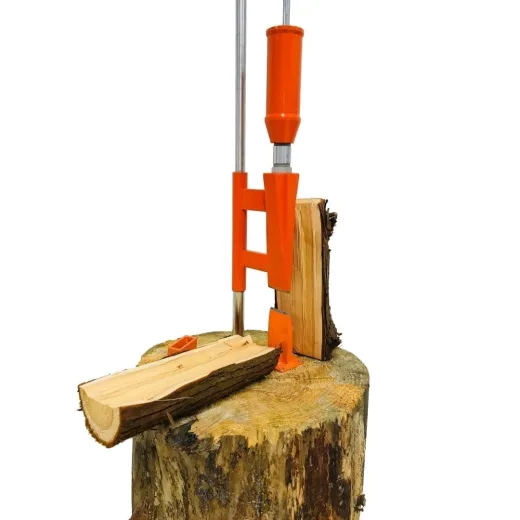
Our Forest Master Smart Splitter review explains how it works in practice, and if you are happy with a traditional tool, the Fiskars X27 review covers the best-known splitting axe.
Which should you choose?
Match the tool to your wood pile:
- High volume, regular splitting, mains nearby: an electric splitter. The time and effort saved over a season is worth the extra cost.
- Small or occasional pile, tight budget, or no power: a manual splitter. It is cheaper, portable, and perfectly capable for limited amounts.
- Big, knotty hardwood rounds: lean electric (or even petrol for serious volume), as manual tools struggle most with awkward grain.
- You want the exercise and a quiet workflow: a manual drop-weight or maul is honest, satisfying and silent.
Whatever you choose, sizing matters. Around 6 to 8 tonnes covers standard firewood, while large hardwood logs are happier with 8 to 10 tonnes. Forest Master’s own guide to electric log splitter tonnage is a useful reference, and our sizing article covers it for UK conditions.
The bottom line
An electric log splitter buys you speed and saves your back for a higher upfront cost and the need for a socket. A manual log splitter saves money, goes anywhere, and asks for your muscle in return. Decide by volume: regular, sizeable wood piles justify electric, while small or occasional splitting is well served by a good manual tool. Get the tonnage right for the wood you burn and either will serve you for years.
Prices change often, so check the current price on Amazon before buying rather than relying on any figure quoted elsewhere.
Frequently asked questions
Is an electric or manual log splitter better? Neither is universally better; it depends on how much wood you split. An electric splitter is better for regular, high-volume splitting because it does the hard work for you, while a manual splitter is better for small or occasional piles, tight budgets, or places with no power.
How many tonnes do I need in a log splitter? For standard firewood logs, around 6 to 8 tonnes is enough. For large or tough hardwood logs, look for 8 to 10 tonnes. Higher tonnage handles bigger, knottier rounds but costs more, so match it to the wood you actually burn.
Can a manual log splitter handle hardwood? Yes, within reason. A well-geared manual hydraulic splitter can reach high tonnages and split most domestic hardwood, though large, knotty rounds are slow and tiring by hand. For frequent hardwood splitting, an electric or petrol machine is far less effort.
Are electric log splitters safe to use indoors or in a garage? Electric splitters are quiet and produce no fumes, so they can be used in a well-ventilated garage or close to the house, unlike petrol models. Always follow the manufacturer’s safety guidance, use the two-handed controls as designed, and keep the work area clear.
Do I need a log splitter, or will an axe do? For small amounts of straight-grained, well-seasoned wood, a good splitting axe or maul is often enough and cheaper. A log splitter, manual or electric, earns its place when you process larger volumes or tougher logs where an axe becomes slow and tiring.
Want the seasoning calendar and our log-price watch in your inbox?
Join the Kindling List