Best Stove Fan UK: 6 Heat-Powered Fans and Who Each Suits
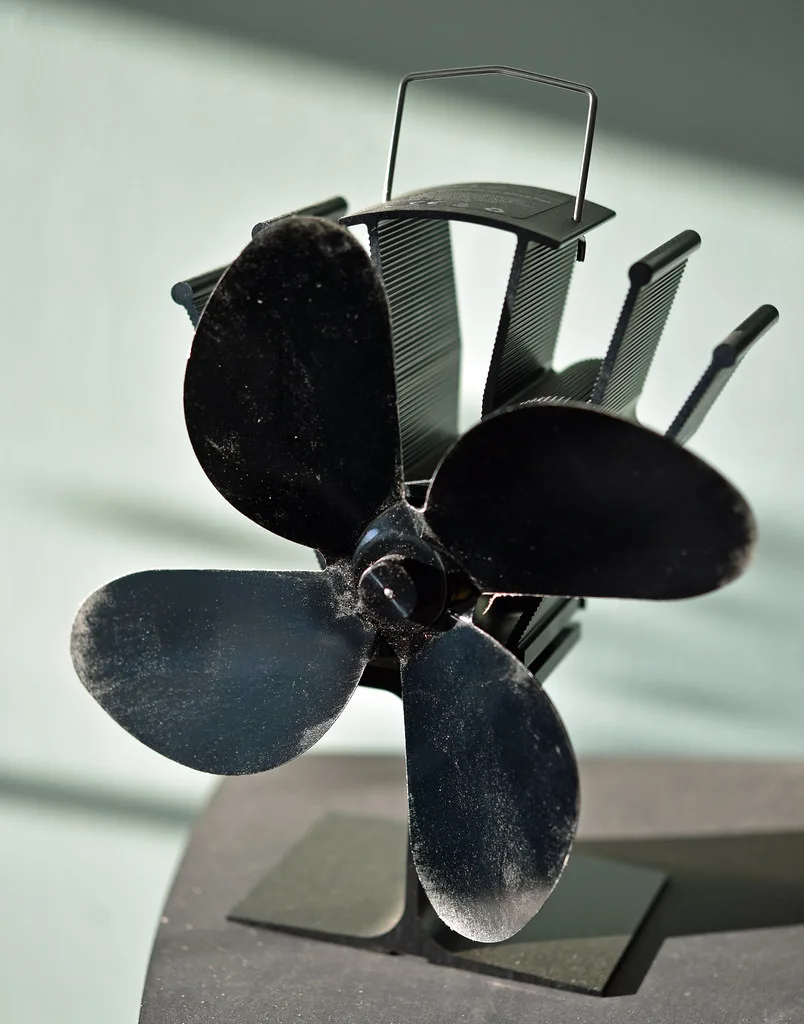
The best stove fan in the UK for your room is the one that matches how hot your stove top actually gets, not the one with the most blades. A heat-powered fan makes its own electricity from the difference between the hot stove under its base and the cooler air around its fins, so a fan built for a fierce old cast-iron stove can sit almost still on a modern clean-burning stove with a cooler top. And a fan designed for low temperatures can be damaged on a hot one. Below are six fans from the two brands with published specifications behind them, Ecofan and Valiant, sorted by the job each does best, plus how to place one so it actually moves the heat.
The six fans at a glance
| Fan | Airflow | Stove top range | Height | Best for |
|---|---|---|---|---|
| Ecofan AirMax 812 | 175 CFM | 85 to 345°C | 25.4cm | Larger rooms, hot wood stoves |
| Ecofan UltrAir 810 | 125 CFM | 100 to 345°C | 22.9cm | Average rooms, less headroom |
| Ecofan BelAir 806 | 140 CFM | 75 to 200°C | 24.1cm | Cooler-topped and gas stoves only |
| Ecofan Original Mini 815 | 85 CFM | 110 to 345°C | Compact | Small stoves with little top space |
| Valiant Premium IV | Not published in CFM | Starts at about 50°C | 19.9cm | Low headroom, cool-topped stoves |
| Valiant Vanquish 250 | Not published in CFM | Not published | 25cm | Larger rooms, plenty of headroom |
Ecofan figures are from Caframo’s product pages, the Canadian maker of Ecofan; Valiant figures are from Valiant Fireside’s own store and UK retailer listings. CFM is cubic feet of air per minute. Ecofan says its airflow figures are tested to ANSI/AMCA standards. Valiant does not publish a CFM figure, so the two brands cannot be compared head to head on airflow.
Ecofan AirMax 812: best for larger rooms
The AirMax is the highest-airflow fan in Ecofan’s classic range at 175 CFM, and Caframo sizes it for rooms of more than 240 square feet, roughly 22 square metres. It also has the lowest starting point of the classic wood stove models, working from a stove top of 85°C up to 345°C, so it keeps turning for longer as the fire dies down. It stands 25.4cm tall, so check the gap between your stove top and any mantel or alcove shelf first.
Caframo claims fuel savings of up to 18% for the AirMax. Treat that as the maker’s best case rather than a guarantee; the real gain depends on your room layout and how you burn. It comes with a two-year warranty, and replacement motors are sold separately, which matters on a fan you expect to run for many winters.
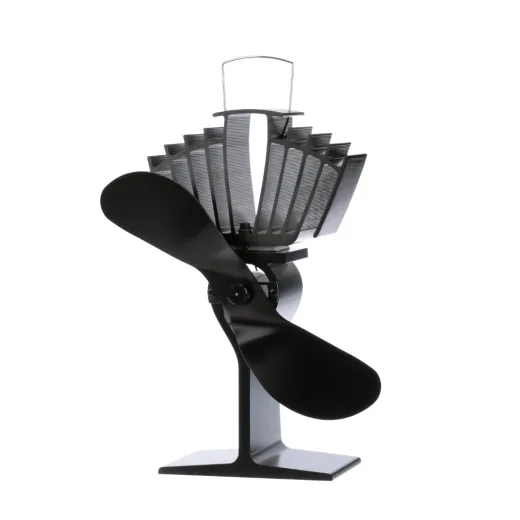
Ecofan UltrAir 810: the mid-size all-rounder
The UltrAir is the AirMax’s smaller sibling: 125 CFM, sized for rooms of 120 to 240 square feet, and 22.9cm tall. It needs a slightly hotter stove top to get going, 100°C, and runs to the same 345°C ceiling. For a typical lounge this is the sensible Ecofan, and the lower height suits stoves set into a fireplace opening.
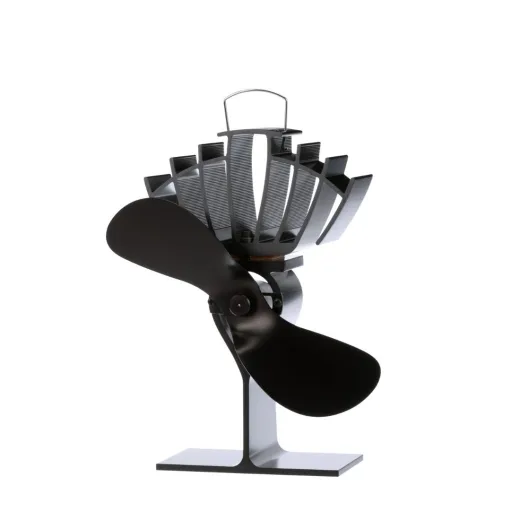
Ecofan BelAir 806: only for cooler stoves
The BelAir is the one to read carefully. Caframo designs it for gas, pellet and contemporary stoves, with an operating range of 75 to 200°C, and it pushes 140 CFM. The low starting point makes it useful on stoves whose tops never get very hot. But 200°C is its limit, and a wood burner running well can go past that on the top plate. Only buy the BelAir if you have checked your stove top temperature with a thermometer and it stays below 200°C.
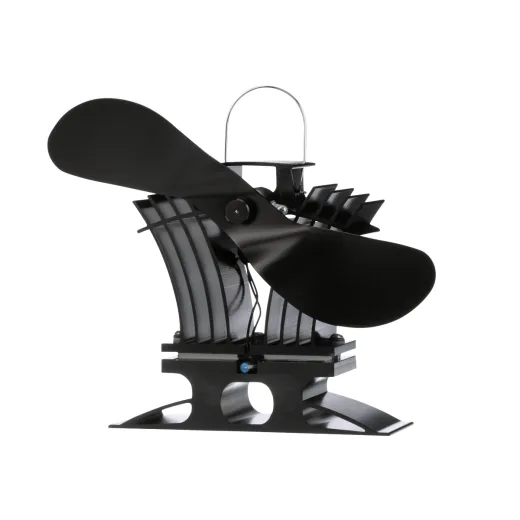
Ecofan Original Mini 815: for small stoves
The Original Mini moves 85 CFM and needs a hotter top to start, 110°C, but it has a small footprint for compact stoves where there is barely room for a kettle. It is the least powerful fan here, so it suits a small room or a narrowboat stove rather than a large open-plan space.
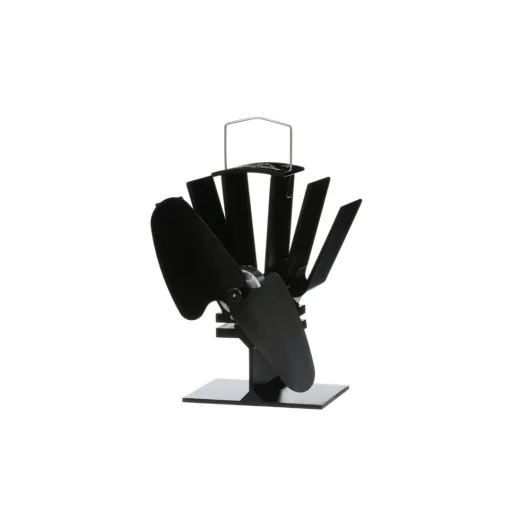
Valiant Premium IV: best for low headroom and cool-topped stoves
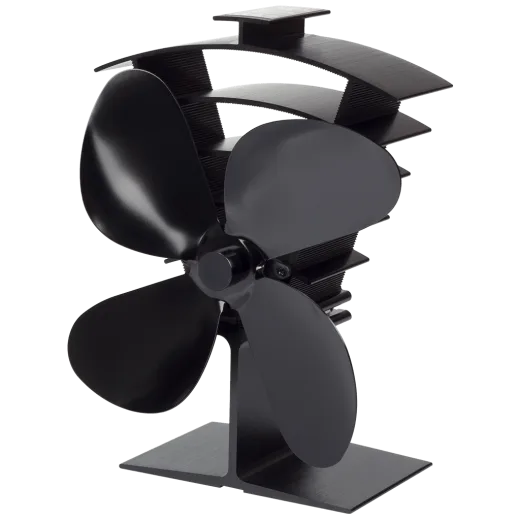
The Premium IV has the most customer ratings of the six on Amazon UK, and it has two real advantages. It is only 199mm tall including the blades, the lowest of the six, so it fits under tight mantels. And Valiant says it starts at about 50°C, which suits modern stoves with a cooler top plate. It has four blades, a quoted noise level of 30dB, and B&Q’s listing notes an inbuilt protection system to stop the fan overheating. Valiant says it can also be used on kitchen ranges and narrowboat stoves. It is sold with a magnetic stove thermometer as a pack as well, which is the cheapest way to get both.
Valiant Vanquish 250: the tall option for big rooms
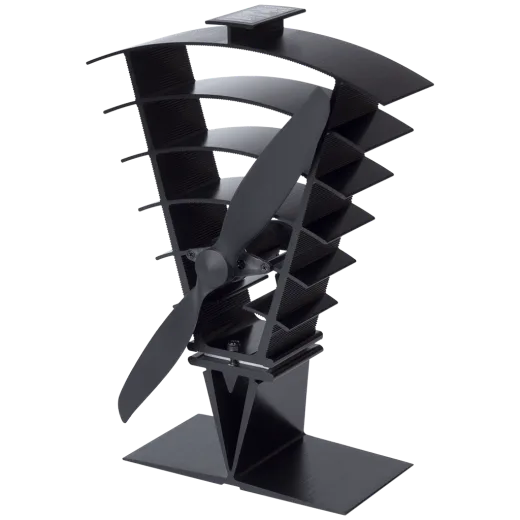
The Vanquish 250 is the tallest fan in Valiant’s range at 250mm, with long, slender blades. Valiant pitches it at larger than average rooms and claims up to 90% more airflow than other designs, though it publishes no CFM figure to check that against. Pick it over the Premium IV only if you have the headroom and a big space to heat.
What about the cheap multi-blade fans?
Search Amazon for a stove fan and most of the results are unbranded fans with six, eight or even twelve blades, often with a thermometer included. Many have thousands of good reviews. The problem is that almost none publish an airflow figure, a tested operating range or a maximum temperature, and several sellers list identical-looking fans under different names. More blades do not mean more air: blade shape and motor matter more. If you buy one, treat the thermometer as the useful part and the fan as a bonus, and never leave it on a stove top hotter than the seller states.
How to place a stove fan so it works
- Put it at the back of the stove top, to one side of the flue pipe. The fan needs cooler room air drawn over its fins from behind. Placed in front of the flue pipe or at the front of the stove, it overheats; Ecofan’s UK distributor warns this can damage the motor and module. If there is less than 150mm between the back of the stove and the wall, move it forward along one side and angle it slightly inwards.
- Keep the base flat on the plate. A rough or curved top, or a fan perched on a trivet, cuts the heat transfer and the fan barely turns.
- Never let it overheat. Every fan has a top temperature. Exceed it and the motor or the thermoelectric module inside fails. A magnetic stove thermometer next to the fan tells you where you are.
- Lift it off when you reload a roaring fire. If you open the air fully to get a fresh load going, the top plate can spike. Move the fan aside with a glove for a few minutes.
- Do not expect miracles in a draughty room. A fan spreads the heat you already make. It will not fix a stove that is too small for the room or wet logs that never burn hot. Our guide to the best wood to burn and the Ready to Burn rules cover the fuel side.
Do stove fans actually work?
Yes, in the sense that matters. A wood burner throws heat upwards, so it pools at the ceiling while the far side of the room stays cold. A fan pushes that warm air out across the room at seating height, so you feel the stove from the sofa rather than only beside it. What a fan cannot do is create heat, and the fuel savings quoted on boxes are the makers’ figures, not independent results. If you burn overnight, a fan will slow down and stop on its own as the stove cools; see our page on keeping a wood burner in overnight for banking the fire properly.
Which should you buy?
- Hot wood stove, large room: Ecofan AirMax 812, or the Valiant Vanquish 250 if you prefer the brand.
- Average room, standard stove: Ecofan UltrAir 810.
- Low mantel or a modern stove with a cooler top: Valiant Premium IV.
- Gas, pellet or a stove that stays under 200°C: Ecofan BelAir 806.
- Tiny stove or a narrowboat: Ecofan Original Mini 815.
Check current price on Amazon UK before you buy, as stove fan stock moves quickly once the weather turns.
Frequently asked questions
What is the best stove fan in the UK? For most wood burners, the Ecofan UltrAir 810 or AirMax 812 for a larger room. If your stove top runs cool or you have little headroom, the Valiant Premium IV starts at about 50°C and is only 199mm tall.
Do stove fans need batteries or a plug? No. A heat-powered fan uses a thermoelectric module that turns the temperature difference between its hot base and its cooler fins into electricity for the motor.
What temperature does a stove fan start working at? It depends on the model. The Valiant Premium IV starts at about 50°C, the Ecofan BelAir at 75°C, the AirMax at 85°C, the UltrAir at 100°C and the Original Mini at 110°C.
Can a stove fan get too hot? Yes. Most Ecofan wood stove models are rated to 345°C, and the BelAir only to 200°C. Going past the limit can ruin the motor, so keep a stove thermometer next to the fan.
Where should a stove fan sit on the stove? At the back of the stove top, to one side of the flue pipe, so it draws cooler air from behind and pushes warm air forward into the room.
Are cheap stove fans with lots of blades any good? Some work well enough, but most publish no airflow figure or temperature limit. More blades do not mean more airflow; the motor and blade shape matter more.
Want the seasoning calendar and our log-price watch in your inbox?
Join the Kindling List