Keep a Wood Burner In Overnight: the 30-Minute Rule
Ask two of Britain’s best known stove makers whether you should keep a wood burner in overnight and you get two different answers, both in writing, both on their own websites. That is not a gap in the advice. It is the actual state of the question, and once you understand why they disagree you can decide properly for your own stove, your own chimney and your own postcode.
Here is the short version. Charnwood publishes a method for reduced burning and puts it in its stove manuals. Stovax says plainly that it does not recommend slumbering a stove at all. The difference between them is mostly about what happens in the flue, and about whether you live in a smoke control area.
What each manufacturer actually says
Stovax’s position is unambiguous. On its own troubleshooting page it writes: “We do not recommend slumbering the stove”, and gives two reasons. Slumbering causes a build-up of soot and tar in the flue, and burning wood at a low temperature produces more smoke and more pollutants. It adds a third point that matters more than people realise: a modern Ecodesign stove needs heat in the flue to create its natural draught, and slumbering for long periods can cool the flue enough to weaken the draught that carries flue gases out of the building.
Charnwood takes the practical route. Its C4 stove manual has a section headed Reduced Burning, and the instruction is specific:
When burning wood in areas that are not smoke controlled, load some large logs on the fire and allow to burn for half an hour before closing the air control (this will help to reduce tar deposits in the chimney).
Read the two together and they are not really in conflict. Stovax is describing what happens when you choke a stove down from cold or from a weak fire. Charnwood is describing a controlled procedure that gets the load properly alight first, so that what sits in the firebox overnight is charcoal and embers rather than a smouldering, tar-producing log.
The half hour is the whole thing. It is the difference between a stove that is banked and a stove that is smouldering.
The words most people skip: “in areas that are not smoke controlled”
Charnwood’s instruction carries a qualifier, and it excludes a large share of urban Britain.
Most English towns and cities are smoke control areas. In one, you may not emit smoke from a chimney unless you are burning an authorised fuel or using a Defra exempt appliance, and exempt appliances are exempted on the condition that they are operated in line with the manufacturer’s instructions. Since the Environment Act 2021 changes, emitting smoke in a smoke control area in England is dealt with by a civil penalty rather than a criminal prosecution, with a minimum of £175 and a maximum of £300 per notice.
A stove running with the air closed down for eight hours is the single easiest way to put visible smoke out of a chimney. If you are in a smoke control area, the honest answer is that overnight slumbering is not available to you, and what you should be aiming at instead is the ember bed described further down, which produces very little smoke because there is very little volatile matter left to burn.
Check your address with your council before you assume either way. Some areas are designated street by street.
The method, if your stove and your area allow it
Taken from Charnwood’s own manual rather than from folklore, the sequence is:
- Get the fire genuinely hot first. The manual is explicit that the air control stays at maximum after refuelling until flames are established above the fire, and that you allow the fire to become hot before adjusting the air control at all.
- Refuel onto a hot bed of ash. The manual says it is best to refuel onto a hot bed of ash, and that when relighting you should leave the ash on the base if you are burning wood, unless it is becoming too deep. The ash bed insulates the fire and holds heat. Emptying it out every night is a mistake.
- Load large logs, not small ones. Small split logs give up their volatiles fast and then have nothing left. What you want overnight is mass and density.
- Burn them with the air open for half an hour. This drives off the moisture and the volatile gases while there is enough heat and oxygen to burn them cleanly, so they do not condense in the flue later.
- Then close the air control down, with the door shut. The manual notes that for reduced burning the fire door must be closed, and that some experimentation is needed to find the right setting for your fuel and your chimney draw.
- Do not shut the air off completely. Most Ecodesign stoves have a minimum air position for exactly this reason. If yours will close fully, do not use the last part of the travel overnight.
In the morning, the manual’s revival sequence is to riddle the fire, open the air control to maximum, and add fuel once it is burning well. On a wood fire you leave the ash and rake the embers forward rather than emptying the pan.
Fuel is what decides whether it works
You cannot bank a fire with wet wood. A log at 30% moisture spends the first part of the night boiling water out of itself, which cools the firebox and coats the flue.
Get the moisture below 20%, which is the level the Ready to Burn rules are built around and which our guide to seasoning firewood under 20% covers, and check it rather than trusting the label, using the method in how to use a moisture meter on firewood.
Then choose for density. Ash, oak, beech and hornbeam hold a fire far better than birch or softwood, which is one of the main points in the best wood to burn. Oak in particular is slow to get going and slow to give up, which makes it a poor first log and a good last one.
Compressed products are the other route, and they are genuinely better at this specific job than logs are. Night briquettes are made for it: dense, low-moisture, and designed to burn down slowly rather than flame. We have tested the main UK options in the best night briquettes, with the detail on one of them in our Lekto night briquettes review, and the general comparison in kiln-dried logs vs briquettes.
The flue is the thing you are risking
Everything above is about tar. Burning wood cool and slow condenses unburnt volatiles onto the inside of the flue as creosote, and creosote is what burns in a chimney fire.
This is where the two Charnwood sources part company, and it is worth knowing about. The company’s news article on burning at night says to have the chimney swept at least once a year. The C4 stove manual, which is the document that ships with the appliance, says: “The chimney should be swept at least twice a year.”
Take the manual. Twice a year is the right figure for a stove burning wood through a British winter, and if you are banking it overnight regularly, treat that as the floor rather than the target. A sweep will also tell you what the deposits look like, which is direct feedback on whether your overnight routine is working. Dry, flaky soot is fine. Shiny black tar is the stove telling you to stop.
Put a carbon monoxide alarm in the right place
If you are going to sleep with a fire in, the alarm is not optional, and where it goes is specified rather than a matter of taste.
Approved Document J requires that where a new or replacement fixed solid fuel appliance is installed in a dwelling, a carbon monoxide alarm is provided in the room where the appliance is located. It should comply with BS EN 50291-1:2018. On position, paragraph 2.36 is precise: in the same room as the appliance, on the ceiling at least 300mm from any wall, or if wall mounted then as high up as possible above any doors and windows but not within 150mm of the ceiling, and between 1m and 3m horizontally from the appliance.
The alarm should be battery powered with a battery designed to last the working life of the alarm, or a mains-powered fixed-wiring Type A alarm with a sensor failure warning. Plug-in types are not accepted as the alternative. Approved Document J adds the line worth repeating: providing an alarm should not be regarded as a substitute for correct installation and regular servicing.
When not to do it at all
- On the first fires of the season, before you know the chimney is clear and drawing properly.
- In a smoke control area, unless you have satisfied yourself that your appliance and fuel are compliant and that no visible smoke is produced.
- If your flue is short, external or cold. Weak draught plus a closed air control is the combination Stovax warns about.
- If the glass blackens overnight. That is unburnt tar landing on the nearest cold surface, and the same thing is happening in the flue.
- If you have to shut the air off completely to make it last until morning. The stove is telling you the fuel is wrong, not that the technique is.
What you are actually aiming for
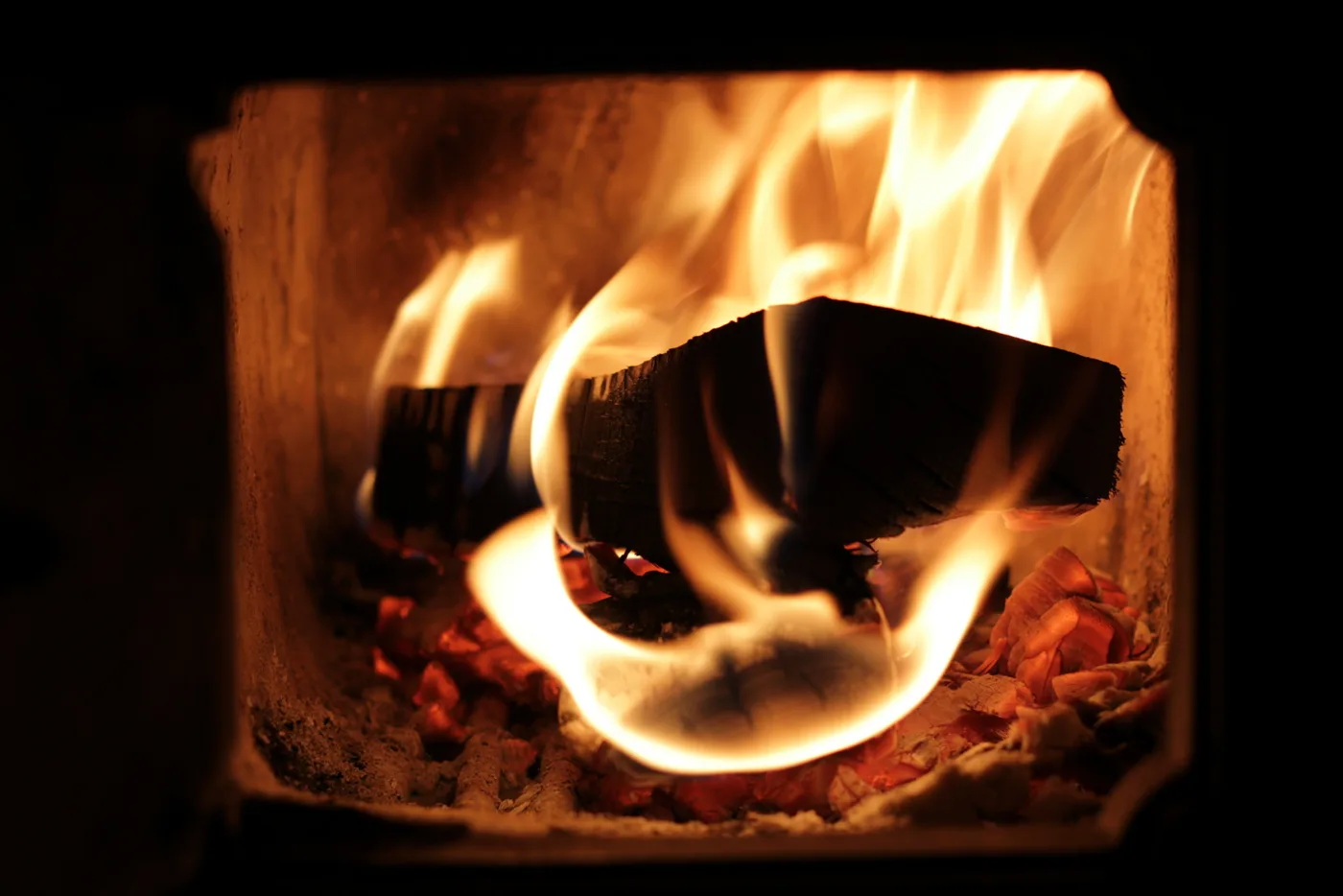
Not flames. A wood burner kept in overnight should be a deep bed of glowing charcoal under a layer of ash, with the stove still warm to the hand in the morning and enough live embers to take kindling without a match. Eight hours of that is realistic with dense hardwood or night briquettes in a stove that was properly hot when you closed it down.
Eight hours of visible flame is not realistic, and chasing it is how flues get lined with tar. If you want the room warm at 6am rather than the fire alive at 6am, the honest answer is that a stove is a poor overnight heater and thermal mass, insulation or a timer on something else will do it better. Our wood burner air vent calculator and stove size calculator are the better tools for that problem.
Frequently asked questions
Can you keep a wood burner in overnight safely? You can bank a wood burner overnight if the stove is designed for reduced burning, the door is closed, the fuel is dry and dense, and you have a working carbon monoxide alarm sited to Approved Document J. What you should not do is choke a cool or newly loaded fire down and leave it, because that is what produces tar in the flue and smoke from the chimney. Stovax does not recommend slumbering at all, so check your own manufacturer’s instructions before you adopt a routine.
How long should you burn logs before closing the air control? Charnwood’s manual says to load large logs and allow them to burn for half an hour before closing the air control, and states that this helps reduce tar deposits in the chimney. The purpose of that half hour is to drive off the moisture and volatile gases while there is still enough heat and air to burn them cleanly, so they do not condense in the flue overnight.
Will a wood burner stay in for eight hours? A well-loaded stove will hold live embers for around eight hours with dense hardwood or purpose-made night briquettes, but it will not hold flame for anything like that long. Judge success by whether the fire takes kindling in the morning without a match, not by whether you can still see flames at 2am.
Is it illegal to leave a wood burner burning overnight? Not in itself. In a smoke control area in England it becomes a problem if smoke is emitted from the chimney, which is now handled through a civil penalty of between £175 and £300 rather than a criminal charge. Charnwood’s own manual limits its reduced burning instructions to areas that are not smoke controlled, which is a fair indication of where the line sits.
Should I empty the ash before banking the stove overnight? No, not if you are burning wood. The manual says to refuel onto a hot bed of ash and to leave the ash on the base when relighting unless it has become too deep. The ash bed insulates the fire and holds heat through the night. Clear the grate and empty the ashpan only if you are burning a high ash content fuel.
How often should the chimney be swept if I bank the fire overnight? At least twice a year. That is what Charnwood’s own stove manual specifies, and it is the figure to follow even though the company’s website elsewhere suggests once a year is enough. Regular banking increases deposits, so twice a year is the minimum rather than the goal, and the sweep’s report on what came down is the most direct feedback you will get on whether your overnight routine is clean.
Want the seasoning calendar and our log-price watch in your inbox?
Join the Kindling List