Buying Firewood in Bulk vs Amazon: Compare kWh, Not Nets
Whether to buy firewood in bulk vs Amazon looks like a price question and is really a units question. Amazon sells boxed logs by weight, or by a number of “nets” whose size nobody defines. Bulk sellers sell by the load, the dumpy bag, the builders bag or the loose cubic metre, none of which is a legally defined quantity either. Two sellers can quote what looks like the same thing and deliver amounts of usable heat that differ by a factor of two.
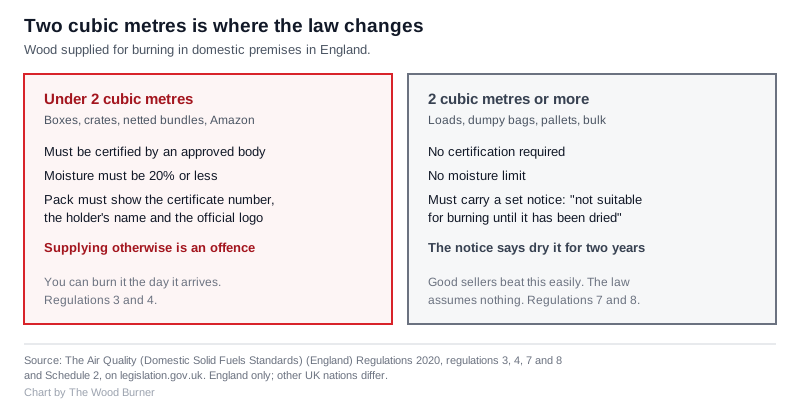
There is one hard line running through the middle of this, and it is written in law rather than in marketing: two cubic metres. Which side of that line your purchase falls on decides whether the wood is legally required to be dry. Everything else follows from that.
The two cubic metre rule, which nobody mentions in a listing
The Air Quality (Domestic Solid Fuels Standards) (England) Regulations 2020 split firewood sales in two by volume.
Under two cubic metres. Regulation 3 defines a “relevant unit of wood” as wood supplied for burning in domestic premises in England in a unit of less than two cubic metres, and sets the “prohibited level” of moisture at more than 20%. Regulation 4 then makes it an offence, punishable by a fine on summary conviction, to supply such a unit unless it has been certified by an approved wood certification body, and unless the packaging carries the certificate holder’s name, the certificate number and the official logo. You can read regulation 4 on legislation.gov.uk.
Every box, crate or netted bundle sold on Amazon for a domestic stove in England is under two cubic metres. So it must be certified Ready to Burn, at 20% moisture or less, and it must show a certificate number. That is not a marketing claim. It is a legal floor, and you can check it: if a listing shows no certificate number and no logo, either the seller is not complying or the product is not intended for domestic burning.
Two cubic metres or more. Regulation 7 defines this as a “relevant amount of wood”, and it needs no certification at all. Instead, regulation 8 requires that it comes with a notice in a form of words set out in Schedule 2 of the regulations, and the wording is blunt:
This wood is not suitable for burning until it has been dried. You should not burn wood until it has a moisture content of 20% or less. … Dry it in a sunny, well-aired space for at least two years, keeping rain off in the winter.
That is the government’s own default assumption about bulk firewood: not ready, needs two years. Plenty of bulk sellers do supply kiln-dried wood well under 20%, and the good ones will tell you the moisture content and let you meter it on delivery. But the legal position is that a bulk load carries no guarantee whatsoever, and the buyer carries the risk.
That is the real difference between the two routes, and it is worth more than any price comparison. Our page on the Ready to Burn rules covers the certification scheme itself.
Why price per net tells you nothing
Three variables sit between the number on a listing and the heat that comes out of your stove.
Moisture. This is the big one. Forest Research’s own guidance on wood as fuel states that a fresh green log of about average moisture content has only around half the energy content of an equivalent, well-seasoned log. Half. Buy a bulk load at 45% moisture and you have bought roughly twice as much wood as the label implies and roughly the same amount of heat, minus everything you lose boiling the water off inside your firebox and the tar it leaves in your flue.
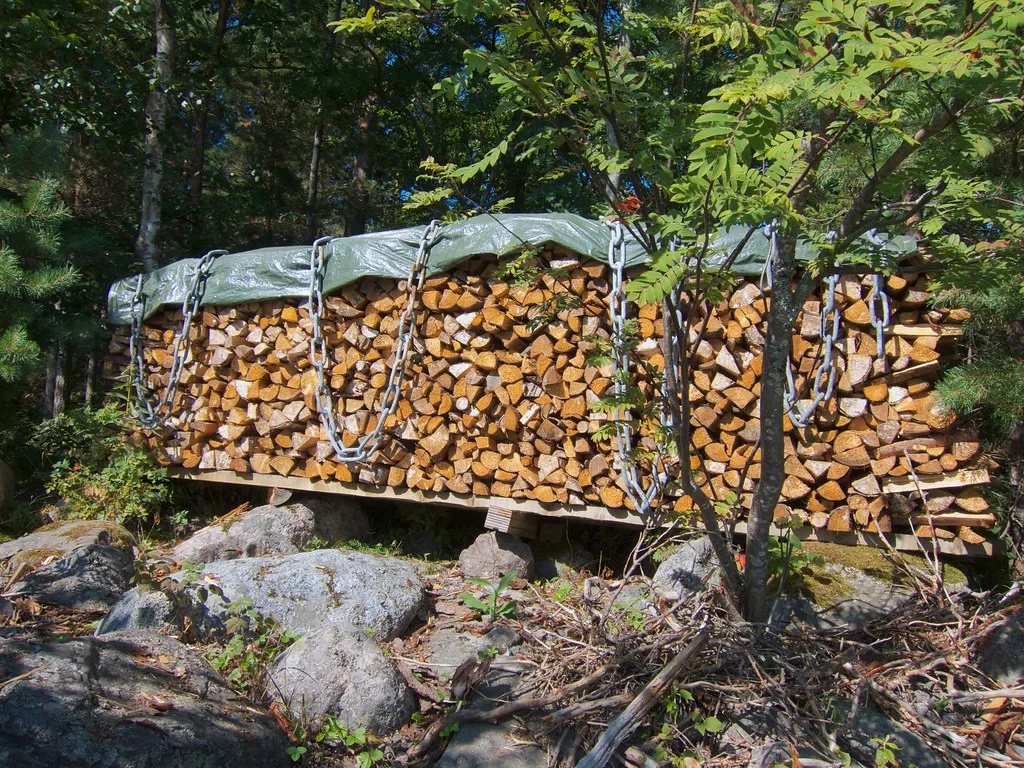
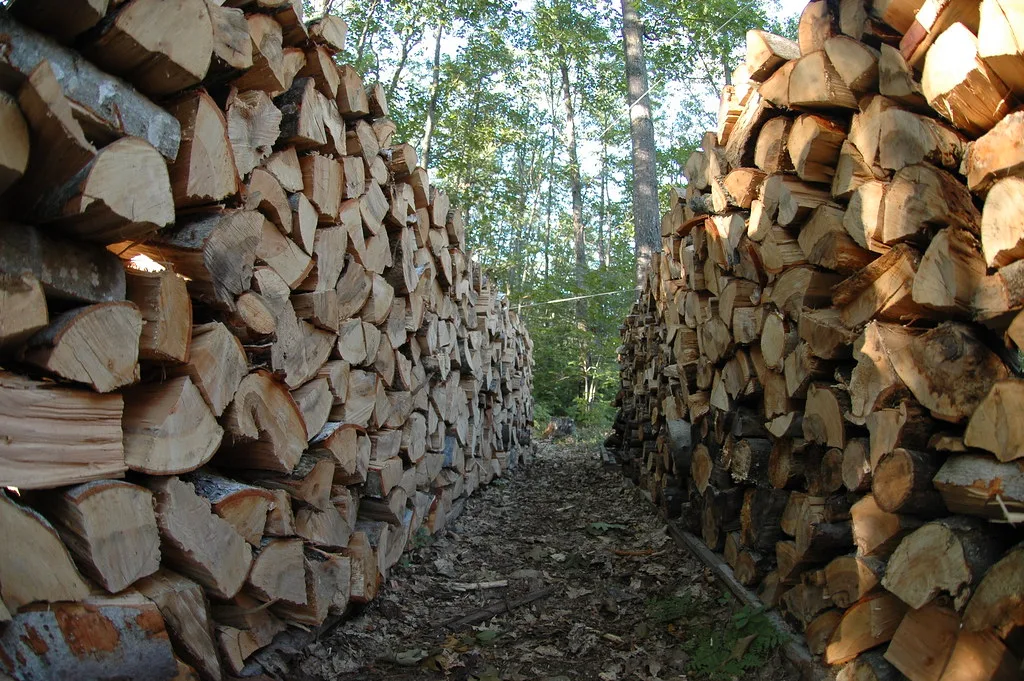
Weight versus volume. Sold by weight, wet wood is heavier, so you pay for water by the kilogram. Sold by volume, wet wood is not much bigger, so the penalty is smaller but the seller’s stacking convention becomes everything. A loose, thrown cubic metre contains substantially less wood than a neatly stacked one, and “builders bag” and “dumpy bag” are not standardised sizes.
Species, but only in one direction. Forest Research is clear that while tree species has some impact on calorific value, per kilogram it is usually extremely small. What varies is density. Because a tonne of hardwood occupies less space than a tonne of softwood, you get more kilowatt hours from a cubic metre of hardwood than from a cubic metre of softwood at the same moisture content. The practical rule: if you are buying by volume, species matters and you want hardwood. If you are buying by weight, it barely matters at all, and softwood at a lower price per kilo can be the better buy.
Put those together and the only unit that compares two offers honestly is cost per kilowatt hour of dry wood delivered. Our firewood price comparison calculator does that conversion, and the volume converter handles loose, stacked and bag quantities.
What Amazon boxed logs are actually good at
- Certainty. Certified under 20%, with a certificate number on the box. You can burn it the day it arrives.
- No storage. This is the one that decides it for most flats and small terraces. Bulk firewood needs somewhere dry, ventilated and off the ground, and if you have no such place the whole cost calculation is irrelevant.
- Delivery to the door, in units a person can carry, rather than tipped on a driveway.
- Small quantities. For a stove lit a dozen times a winter, a bulk load will be half-rotten before you burn it.
What you pay for that is packaging, kiln energy and courier weight, all of which have to be recovered in the price. You are also shipping the wood twice, once to a warehouse and once to you.
What bulk firewood is actually good at
- Cost per kilowatt hour. It is not close. Anyone burning most evenings through a winter will pay far less this way, and the gap widens if you buy seasoned rather than kiln-dried and finish the drying yourself.
- Log size. Bulk sellers cut to a stated length and you can specify one that suits your firebox. Boxed logs come as they come.
- Species control. You can buy a hardwood load, or a mixed load with softwood for kindling and getting going.
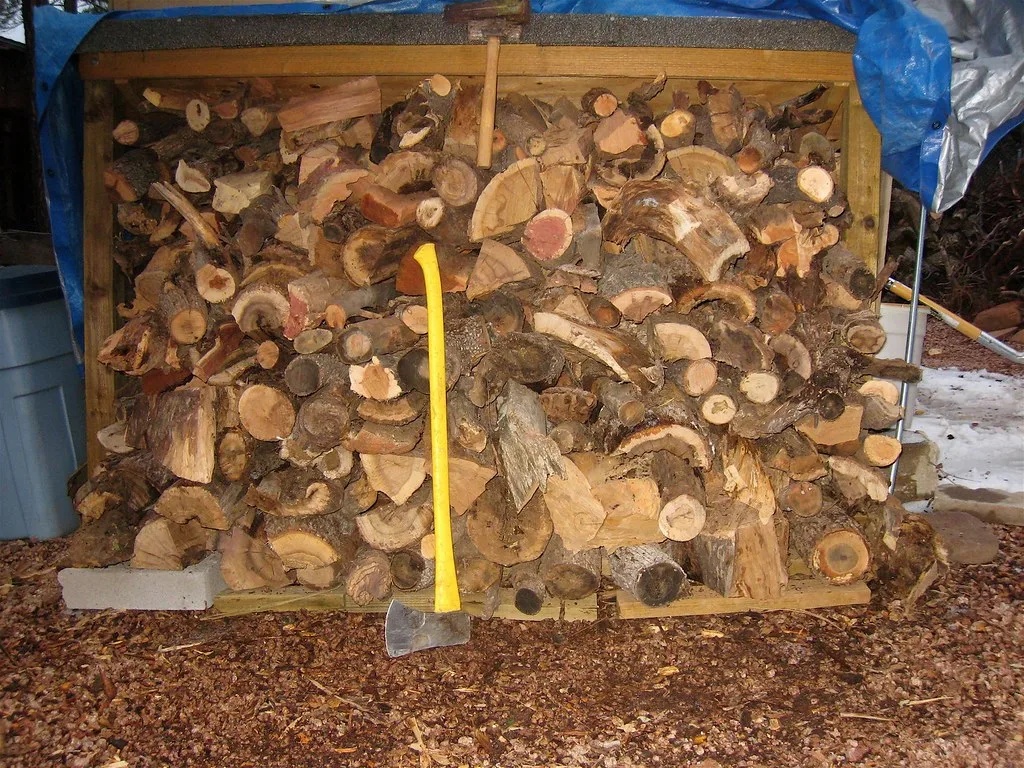
What you take on is the handling and the risk. Forest Research notes that most suppliers will simply tip the logs or leave a dumpy sack on arrival, so you will be stacking it yourself. And unless the seller states and evidences a moisture content, you are buying under a legal regime that assumes the wood needs two more years.
The eight questions that make a bulk quote comparable
- What is the moisture content, and how was it measured?
- Is that a kiln-dried figure or an air-dried estimate?
- Is the quantity loose, stacked or in a bag, and what are the bag’s dimensions?
- What is the delivered weight?
- What species, and what proportion if mixed?
- What log length, and are they split?
- Is delivery included, and will it be tipped or stacked?
- What is the certificate number, if the unit is under two cubic metres?
Questions 1, 3 and 4 are the ones that turn a quote into a number you can compare. A seller who will not answer them is telling you something.
The break-even is space, not money
For almost every household the decision is made before price enters it.
No dry, ventilated storage: buy boxed. There is no version of bulk buying that works when the wood sits in a wet heap, and wet-stored kiln-dried logs reabsorb moisture and stop being Ready to Burn regardless of what the certificate said.
A log store, a shed or a covered side return, and a stove you light most nights: buy bulk, and buy it in spring rather than October. Buying in the off season is when seasoned wood is cheapest and when you have the whole summer to finish drying it.
Somewhere in between, or a first winter with a new stove: buy one bulk load and keep a couple of boxed crates as the reserve for the week the store runs low or the load turns out damper than promised. That is the sensible hedge, and it is what most experienced burners actually do.
Whichever route you take, own a moisture meter and split a log before you test it: a freshly split face reads the inside of the wood, and the outside of a log tells you about last week’s weather rather than about the fuel. Our guides to using a moisture meter and seasoning firewood under 20% cover the method.
Frequently asked questions
Is it cheaper to buy firewood in bulk than on Amazon? Per unit of heat, yes, and usually by a wide margin. Boxed logs carry packaging, kiln drying and courier weight in the price. The saving only materialises if you have somewhere dry and ventilated to store a bulk load, because damp storage undoes it entirely.
Do Amazon logs have to be Ready to Burn certified? In England, yes, if they are sold for domestic burning in a unit of less than two cubic metres. The regulations require certification by an approved body at 20% moisture or less, and the packaging must show the certificate holder’s name, the certificate number and the official logo.
Can a bulk load of firewood legally be wet? Yes. Wood supplied in units of two cubic metres or more is outside the certification requirement. It must instead carry a notice, in wording set by the regulations, telling you the wood is not suitable for burning until dried and to dry it for at least two years.
How much is a net of logs? There is no standard net. Net sizes vary between sellers and are not a legally defined quantity, which is exactly why comparing sellers on a price per net is meaningless. Convert to weight or to stacked cubic metres before comparing anything.
Does hardwood or softwood give more heat? Per kilogram, the difference between species is very small. Per cubic metre, hardwood wins, because it is denser, so a given volume holds more wood. Buy hardwood when you buy by volume, and treat species as close to irrelevant when you buy by weight.
How much heat do you lose burning wet wood? Around half, at typical fresh-cut moisture levels, according to Forest Research’s comparison of green and well-seasoned logs. The energy goes into evaporating water rather than into the room, and the unburnt volatiles deposit in the flue.
When is the best time to buy bulk firewood? Spring or early summer. Prices are lowest outside the burning season, availability is better, and you get a full summer of drying if the load is not already down to 20%. Ordering in October is how people end up burning wood that is not ready.
Want the seasoning calendar and our log-price watch in your inbox?
Join the Kindling List