Heating Oil Up 65% in a Year, Smokeless Fuel Up 2.6%
The government’s latest fuel price tables, out on 29 September, show the gap between heating oil and solid fuel getting wider again going into the burning season. Alongside them, HETAS has added three inspectors to check the work of its registered installers and sweeps, and Defra has announced a £53 million fund to plant up to 500,000 trees. Here is what each one means if you heat with wood.
Heating oil is up 65% on a year ago; smokeless fuel is up 2.6%
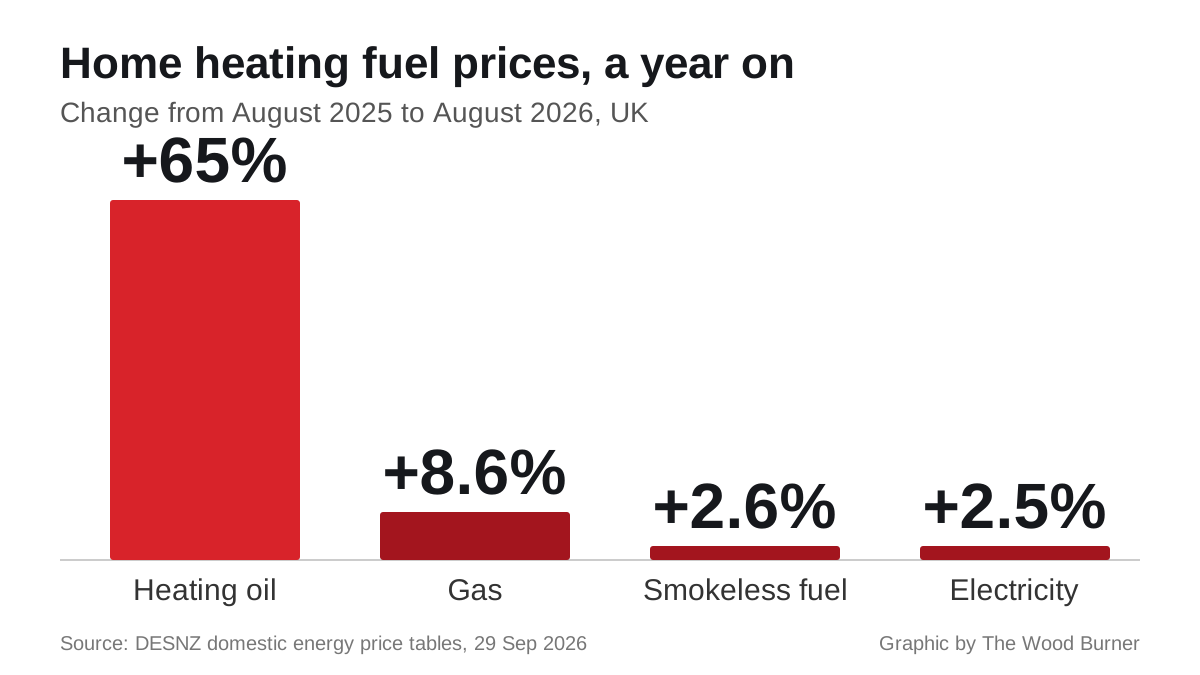
The Department for Energy Security and Net Zero updated its consumer price tables for household fuels on 29 September, with data to August 2026. The average UK price of heating oil (kerosene) was £931.60 per 1,000 litres in August, up from £565.82 in August 2025. That is a rise of about 65% in a year, and 13% up on July’s £824.72. It peaked at £1,281.45 in April, more than double the level a year earlier, and has come down since without getting back anywhere near where it was.
Solid fuel has barely moved. The average price of smokeless fuel was £34.42 per 50kg bag in August, against £33.54 a year earlier, up 2.6%. The solid fuels component of the consumer prices index is up by the same amount. On the same index, gas is up 8.6% year on year and electricity 2.5%.
Why it matters: off-grid homes on oil are the households where a stove does the most work, and the arithmetic has shifted their way. The tables do not price firewood itself, so the number to run is your own: what you pay a cubic metre, how dry it is, and what it replaces. The firewood heat comparison calculator puts logs and other fuels on a cost-per-kWh footing, and the wood burner running cost calculator works out a season. Before you order a load, the firewood buying guide covers what a fair cubic metre looks like. Source: DESNZ, domestic energy price indices (tables 2.1.1 to 2.1.3).
HETAS adds three inspectors to check installers’ and sweeps’ work
HETAS announced on 29 September that it has appointed three new inspectors: Gavin Cater, Graeme Kitchen and Robin Holmes. HETAS inspectors go out to look at work done by its registered installers and chimney sweeps across the UK, and those inspections are part of how the scheme checks that registrants are meeting its standards.
Why it matters: when a HETAS registered installer fits a stove, they can self-certify the work under Building Regulations instead of you paying for a council building control inspection, and you should get a certificate of compliance at the end. Inspection of registrants is what stands behind that certificate. If you are booking a sweep or a fitter this autumn, check they are on the HETAS register and ask for the paperwork. Source: HETAS.
Defra puts £53m into planting up to 500,000 trees
On 30 September the Environment Secretary announced £79 million for nature recovery in England. £53 million of it is a new Community Trees Fund to plant up to 500,000 trees outside woodlands, on streets, in parks and across rural land, between April 2027 and March 2030. The other £26 million is shared among the 48 local authorities that run Local Nature Recovery Strategies.
Why it matters: not much, for this winter’s log pile. These are trees for shade, flood control and wildlife, planted outside woodland, and the money does not start until 2027. The Stove Industry Association used the announcement on 1 October to argue that thinnings and branchwood from well-managed woodland are a legitimate fuel. That case only holds for wood that is dry when you burn it: Ready to Burn sets the line at 20% moisture for wood sold in England in units under two cubic metres. Sources: GOV.UK and Stove Industry Association.
Want the seasoning calendar and our log-price watch in your inbox?
Join the Kindling List