Buying Kiln-Dried Logs: Loose vs Stacked Is the Trap
Buying kiln-dried logs looks like a simple price comparison and almost never is. Two merchants quote a cubic metre, one is noticeably cheaper, and the cheaper one delivers what looks like considerably less wood. Neither has done anything wrong. They have measured the same word in two different ways, and until you know which way each of them means, the prices are not comparable at all. This page explains the units, the moisture question, and the formats firewood arrives in, so you can work out what you are actually being offered.
The units problem, which is the whole game
Firewood is sold by volume, and there are two volumes.
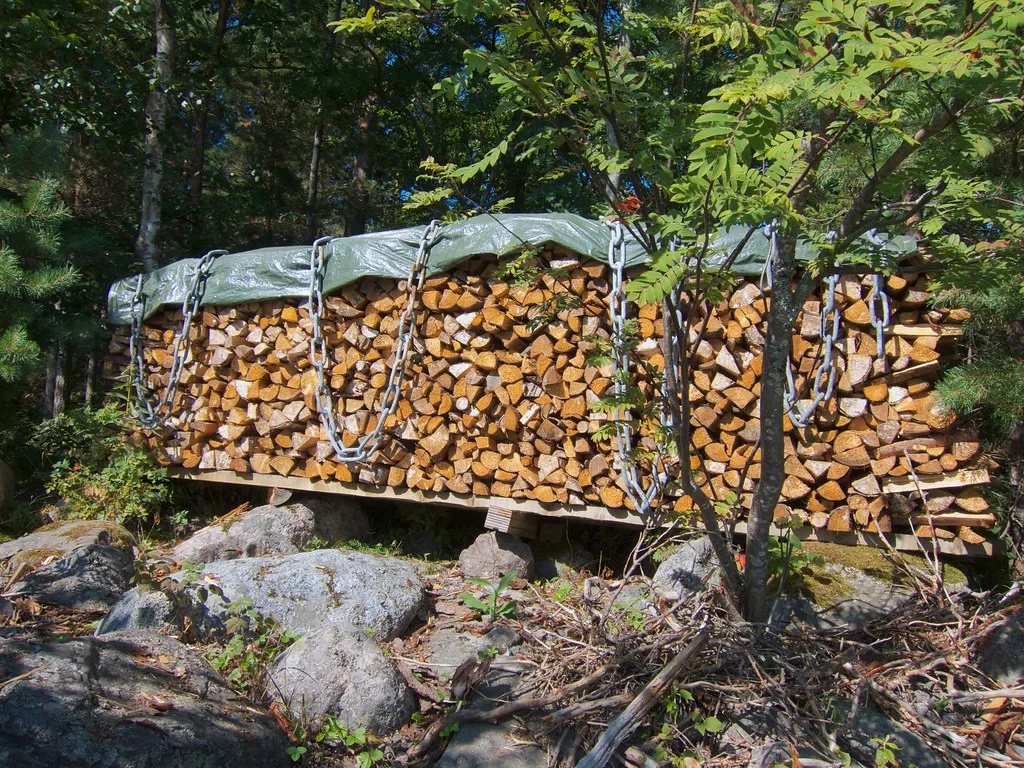
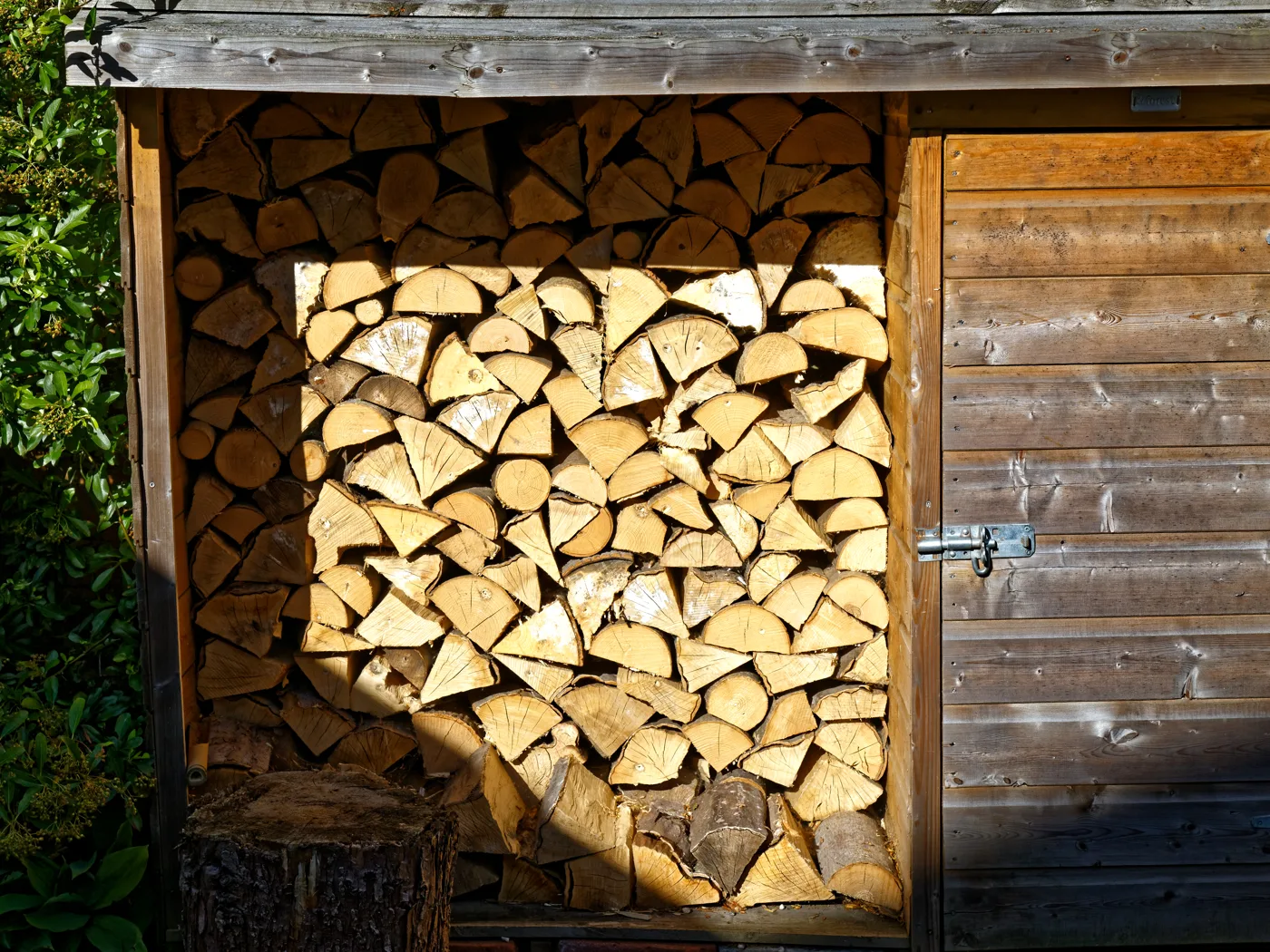
Stacked volume is the space the logs occupy when neatly stacked, with the gaps between logs counted but no more. Loose volume is the space they occupy when tipped in, with air gaps included.
The industry conversion, from the Wood Fuels Handbook and quoted by suppliers including Certainly Wood, is that 1m³ stacked equals about 1.67m³ loose. Turn that round and a 1.2m³ loose-filled bag holds roughly 0.72m³ stacked. So a merchant quoting “1.2 cubic metres” loose is selling you meaningfully less wood than one quoting a stacked cubic metre, despite the larger number.
This is the single question to ask before anything else: is that stacked or loose? A supplier who answers immediately and precisely is a supplier who measures. One who is vague is telling you something.
Our firewood volume converter does the arithmetic, and the price comparison calculator puts competing quotes on the same footing.
What the common formats actually hold
Builder’s bag, bulk bag, dumpy bag. No standard size. A typical bag is around 0.8m by 0.8m by 0.8m, giving roughly 0.5m³ to 0.7m³ loose depending on fill, which is somewhere near a third to four tenths of a cubic metre stacked. The words “bulk bag” tell you nothing about quantity, and bags from different merchants vary enormously. Always convert to a volume before comparing.
Crates. Usually hand-stacked and measured by stacked volume, which is why crate suppliers tend to quote confidently. A standard firewood crate is a bit over a loose cubic metre. Crates are the easiest format to compare between merchants because the measurement is the honest one.
Nets and boxed logs. Small quantities, sold by litres or by count, and the most expensive way to buy wood per unit of heat. Fine for occasional use or for topping up. Our boxed logs versus bulk pallet comparison works through when the convenience is worth it.
Sold by weight. Increasingly common and quietly misleading for dry wood, because water is heavy. A tonne of wood at 30% moisture contains substantially less usable wood, and less heat, than a tonne at 15%. If a merchant sells by weight, ask for the moisture content in the same breath, or you cannot judge the offer.
Moisture: the number that decides everything
Wood at 20% moisture or below burns hot and clean. Wet wood spends its energy boiling off water instead of heating your room, produces far more smoke, and deposits tar in your flue.
In England, wood sold in units of less than 2m³ must meet a moisture standard and carry certification, under the Air Quality (Domestic Solid Fuels Standards) (England) Regulations 2020. Above 2m³ it can be sold wet, provided you are given seasoning advice, which is why bulk loads are cheaper and why they are only a bargain if you have somewhere to store and dry them. We cover the detail in the Ready to Burn rules.
Two practical consequences. If you are buying a small quantity, look for the certification mark and treat its absence as a reason to walk away. If you are buying several cubic metres to season yourself, budget a year or more of covered, ventilated storage and read how to season firewood below 20%.
Either way, check what arrives rather than trusting the label. A meter costs very little against the price of a winter’s wood, and the Valiant FIR421 is the one most UK households end up with because it is simple and the display interprets the reading for you.
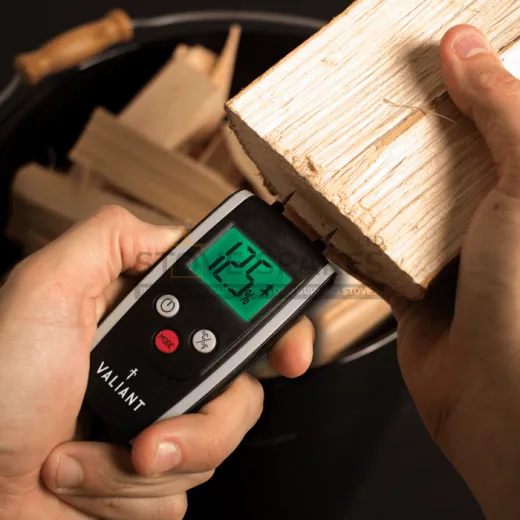
Take the reading on a freshly split face, across the grain, not on the weathered outside of a log. Our guide to what moisture firewood should be explains what the number means, and the moisture meter roundup covers the alternatives.
Species: less important than the sales copy suggests
Dry wood of any species gives roughly similar heat per kilogram. The differences that matter are density and burn behaviour, not some inherent quality of the tree.
Dense hardwoods such as ash, oak, beech and hornbeam give more heat per log and burn longer, which is what you want for an evening fire and for overnight burns. Ash is the traditional favourite because it splits easily and seasons faster than oak.
Softwoods such as spruce and pine light easily and burn fast and hot. They are excellent for getting a fire going and for shoulder-season fires when you want heat quickly and not for long. The old warning about softwood causing chimney tar is really a warning about wet wood: dry softwood in a hot fire is not a problem, and it is cheaper per cubic metre.
The honest answer for most households is a mix: softwood or kindling to establish the fire, hardwood to hold it. Paying a premium for oak over ash is rarely worth it.
Kiln-dried, seasoned, or briquettes
Kiln-dried is dried in a controlled kiln to a reliable moisture content, usually well under 20%, and is ready immediately. You pay for the energy used to dry it.
Seasoned means air-dried, and the word is unregulated in ordinary speech. Some seasoned wood is genuinely dry, some has sat outside for six months and is not. If it is sold in units under 2m³ it must still meet the certification standard, which is the protection here.
Briquettes and heat logs are compressed sawdust or wood residue. They are consistently dry, dense, stack neatly and produce little ash, and they are the strongest option if you are short of storage space because the volume-to-heat ratio is far better than logs. They also cost more per unit of heat than a bulk load of logs you season yourself. Our kiln-dried logs versus briquettes comparison covers the trade properly.
Working out what you need
A rough starting point for a household using a stove as the main heat source on winter evenings is two to four stacked cubic metres a season, and less if the stove is occasional. Our firewood calculator sizes it from your stove output and how much you burn, and the log store size calculator turns that into a store.
Buy for next winter, not this one, if you are seasoning your own. Wood bought in spring and stacked under cover with open sides has all summer to dry, which is the cheapest firewood strategy available.
Checklist before you order
- Stacked or loose? Get the answer in writing.
- If it is a bag, what are the bag dimensions and the volume?
- What is the moisture content, and is there certification if the unit is under 2m³?
- Species mix, and whether it is graded or whatever came off the pile.
- Log length, which must fit your stove with room to spare.
- Delivery: tipped on the drive, or stacked, and is there an access limit?
- Delivery charge, and whether it is included in the quoted figure.
- Minimum order, since the per-unit price usually falls sharply with volume.
Then compare on cost per stacked cubic metre, delivered. That is the only number that means anything. Our best kiln-dried logs roundup covers the national suppliers we rate.
Frequently asked questions
What is the difference between loose and stacked cubic metres of firewood? Stacked measures the logs neatly stacked; loose measures them tipped in with air gaps. One stacked cubic metre equals roughly 1.67 loose cubic metres, so a loose quote for the same number is meaningfully less wood. Always ask which a merchant means before comparing prices.
How much firewood is in a builder’s bag? There is no standard. A typical bag around 0.8m cubed holds roughly 0.5m³ to 0.7m³ loose, which is around a third to four tenths of a cubic metre stacked. Ask for the bag dimensions and the volume, because bags from different merchants differ substantially.
Is kiln-dried wood worth the extra over seasoned? If you need it dry now and have no storage, yes, because it is ready immediately and the moisture content is reliable. If you have a year and a covered, ventilated space, buying a bulk load above 2m³ and seasoning it yourself is considerably cheaper per unit of heat.
Can I still buy wet logs in England? Only in units of 2m³ or more, and the seller must provide advice on seasoning it before burning. Below 2m³ the wood must meet the moisture standard and be certified. That threshold is why bulk loads are cheaper and why they suit only those with drying space.
Does the type of wood really matter? Less than the marketing suggests. Dry wood of any species gives similar heat per kilogram. Dense hardwoods like ash, oak and beech give more heat per log and burn longer; softwoods light fast and burn quickly. Moisture content matters far more than species.
How do I compare two firewood merchants fairly? Convert both to cost per stacked cubic metre, delivered, at a stated moisture content. That single figure strips out bag sizes, loose volumes, delivery charges and species claims. Anything a merchant will not state clearly enough for you to do that calculation is itself the answer.
Sources
Want the seasoning calendar and our log-price watch in your inbox?
Join the Kindling List