Pin vs Pinless Moisture Meter for Firewood: Which Wins?
The pin vs pinless moisture meter for firewood question has a clearer answer than most gear debates: for logs, a pin meter is the right tool, and it is also the cheaper one. Pinless meters are excellent devices, but they are built for a job firewood cannot give them. This guide explains why, how each type actually works, and the measuring habit that matters far more than which meter you buy, because using a good meter wrongly is how people burn wet wood thinking it is dry.
How each type works
A pin meter has two metal probes that you press into the wood. It passes a tiny electrical current between the pins and measures the resistance, then converts that to a moisture percentage. Wet wood conducts more easily than dry wood, so lower resistance means higher moisture. The pins read the moisture at the depth they reach, typically a few millimetres in.
A pinless meter has a flat sensor plate instead of probes. It projects an electromagnetic field a short way into the wood, usually somewhere between a quarter and one inch deep, and measures the dielectric constant of whatever is under the plate. Nothing pierces the wood, which is why joiners and flooring fitters love them for finished timber they do not want to mark.
Why pin wins for firewood
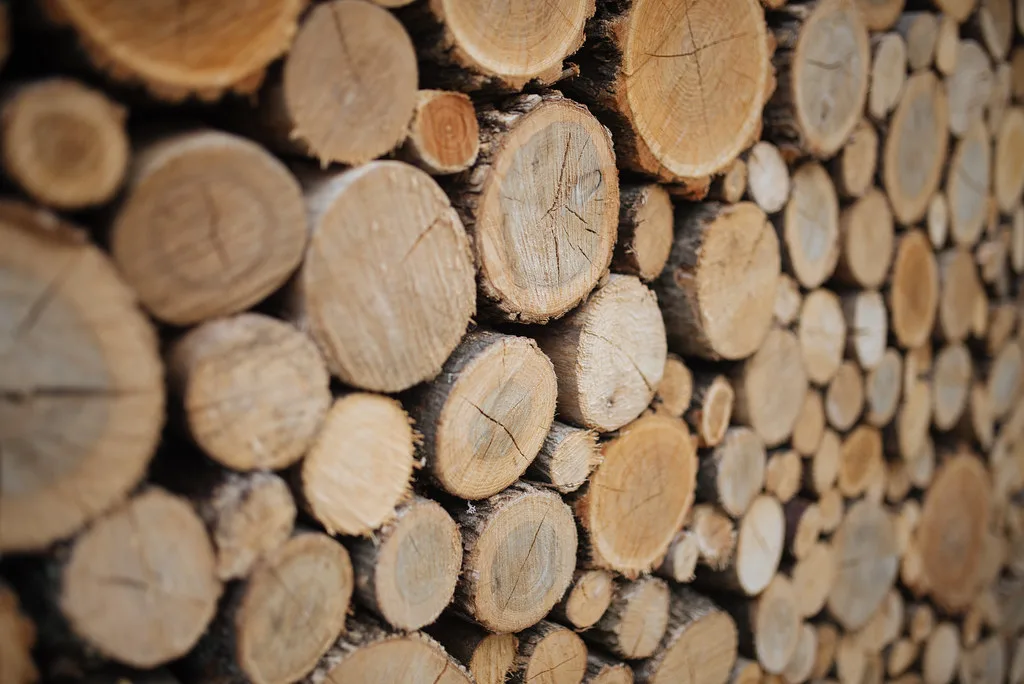
Here is the catch that settles it. A pinless meter only works if its sensor plate can sit perfectly flat against a smooth surface. Firewood is the opposite of smooth: split logs are rough, curved, knotty and uneven, so the plate cannot make proper contact and the reading becomes unreliable. Pinless meters are made for flat, finished surfaces like boards and floors, not gnarly split logs.
A pin meter has no such problem. The two probes press into a rough or curved surface easily, and, crucially, they let you measure inside the log where it counts. That combination of tolerance for rough wood, low cost and the ability to test the inner face is why pin meters are the standard tool for firewood. The tiny pinholes they leave do no harm to wood you are about to burn.
The measuring mistake that gives false readings
This matters more than the pin-versus-pinless choice. The outside of a log dries far faster than the inside, so if you press a pin meter against the outer face of a log, you can get a lovely low number while the core is still soaking wet. That is the single most common reason people burn wood they think is seasoned.
Do it properly instead: take the log, split it fresh, and immediately press the pins into the newly exposed inner face, across the grain. That reading reflects the moisture deep in the wood, which is what actually determines whether it will burn cleanly. If your wood is not there yet, our firewood seasoning time calculator estimates how long it still needs.
You are aiming for 20% moisture content or lower. That is the threshold behind the UK’s Ready to Burn standard, and wood at 20% or under lights easily, burns hot and produces far less smoke and tar. The certification scheme run by Woodsure is the official reference for the 20% figure.
Do you need both?
For firewood alone, no. A decent pin meter does everything you need. Some people who also work with finished timber keep a pinless meter as well, scanning stacks quickly for surface trends and then confirming with pin readings before burning, but that is a nice-to-have, not a requirement. If your only job is checking logs, buy a pin meter and spend the saving on more wood.
Any inexpensive pin meter will do the job; you do not need to spend a fortune, though a better-built unit lasts longer and reads more consistently. See our roundups of the best firewood moisture meters in the UK and the best cheap moisture meters under £20, and if you are weighing a premium model against a budget one, the Stihl vs Valiant comparison shows what the extra money does and does not buy.
Frequently asked questions
Is a pin or pinless moisture meter better for firewood? A pin meter is better for firewood. Pinless meters need a flat, smooth surface for their sensor plate, which rough, curved split logs cannot provide, so their readings on firewood are unreliable. Pin meters cope with rough wood and, more importantly, let you measure the moisture inside a freshly split log, which is what matters for burning.
Are pinless moisture meters accurate on logs? Not reliably. A pinless meter depends on full, flat contact between its sensor and the wood, and firewood’s rough, uneven surface prevents that. Pinless meters are accurate on flat finished timber like boards and flooring, but for split logs a pin meter is the dependable choice.
How deep should a moisture meter read firewood? What matters is measuring the core, not a fixed depth. Because the outside of a log dries faster than the inside, you should split a log and press the pins into the freshly exposed inner face. That gives a reading that reflects the wet core rather than the already-dry surface.
What moisture percentage should firewood be before burning? Firewood should read 20% moisture content or lower before you burn it, which is the level behind the UK Ready to Burn standard. Wood at or below 20% ignites easily, burns hotter and produces much less smoke, tar and chimney deposit than wet wood.
Do pin moisture meters damage firewood? No. The pins leave only tiny holes a few millimetres deep, which is irrelevant on wood you are about to burn. That is another reason pin meters suit firewood, where surface marking is a non-issue, unlike finished timber where a pinless meter is preferred.
Want the seasoning calendar and our log-price watch in your inbox?
Join the Kindling List