Stihl vs Valiant Moisture Meter: Which Should You Buy?
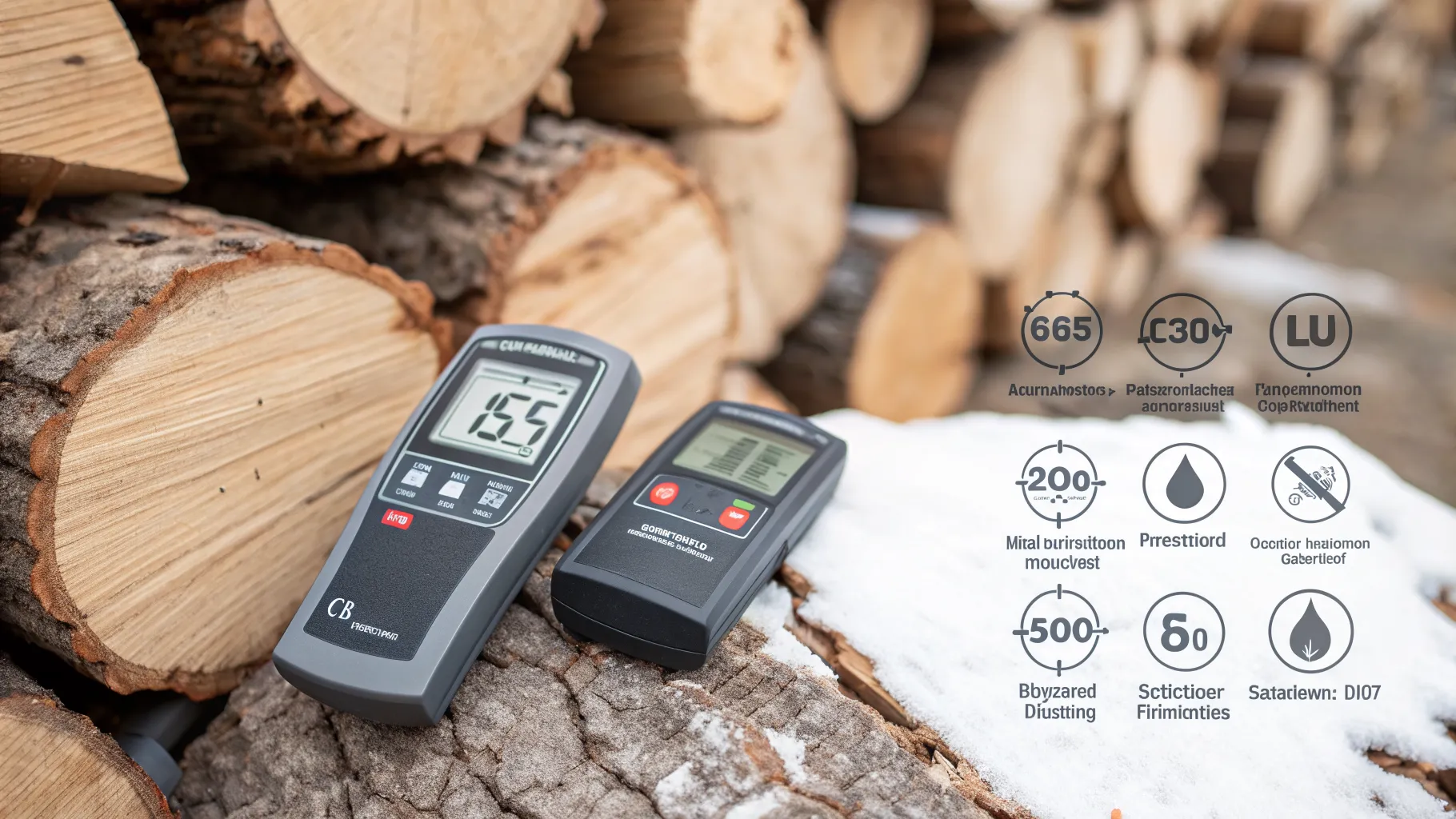
The Stihl vs Valiant moisture meter question comes up because these are the two meters UK wood burner owners actually see: the Stihl on the counter at the dealer where you bought your chainsaw, and the Valiant FIR421 next to the stove accessories in every fireplace shop. They sit at opposite ends of the price range and, awkwardly for the more expensive one, they do the same job to the same standard.
Here is the honest comparison, and the one factor that should actually decide it for you.
The short answer
Buy the Valiant FIR421 if you want the easiest meter to use, a colour display that tells beginners what the number means, and batteries you already own. This is the right choice for most households.
Buy the Stihl if you want something genuinely well built that will survive being dropped on a concrete floor in a cold log store for a decade, and you do not mind ordering unusual batteries.
Neither is more accurate than the other in any way that affects your decision about whether to burn a log.
Why accuracy is not the differentiator
Both are two-pin resistance meters. You push two metal probes into wood, the meter measures the electrical resistance between them, and wet wood conducts better than dry wood. That is the whole technique, it is mature, and the electronics that perform it cost very little.
That means a premium meter and a budget meter are running the same physics with a similar circuit. The Stihl reads 6% to 42% on wood; the Valiant reads roughly 5% to 50%. Both ranges comfortably cover the whole journey of firewood from freshly felled down to seasoned, and both resolve the only question you are actually asking, which is whether a log is above or below 20%.
The genuine accuracy caveat applies equally to both, and to every pin meter at this level: readings drift with wood species and with temperature. A log tested at freezing point reads differently from the same log indoors. Neither meter compensates for this properly, and it does not matter, because you are not chasing a laboratory figure. You are asking a yes or no question with a wide margin either side.
Where they genuinely differ
The display
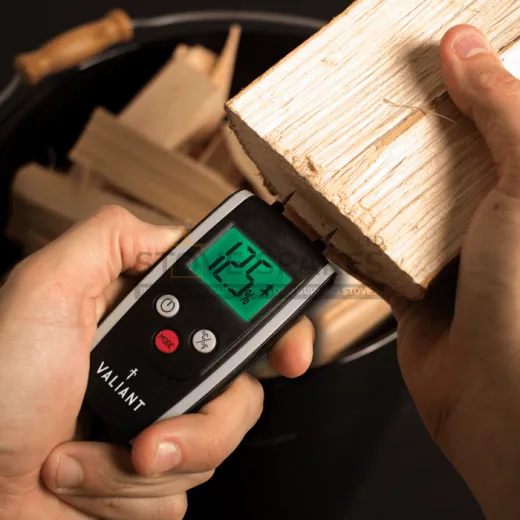
The Valiant’s headline feature is a backlit traffic-light colour system: red for too wet, amber around the 20% borderline, green for ready to burn. It sounds gimmicky and it is not. If you are new to burning and have not yet developed a feel for what the numbers mean, the colour does the interpretation for you.
The Stihl gives you a plain LCD number. Perfectly legible, no interpretation.
Do not let the colour replace the percentage on either meter. The number is what matters, and 20% or below is the threshold that defines wood as ready to burn under the UK Ready to Burn scheme.
The batteries, which matter more than you would think
The Stihl runs on four LR44 button cells. The Valiant runs on two AAA batteries.
This sounds trivial and it is the most practical difference between them. LR44s are watch batteries. They last a long time in a device used for thirty seconds at a time, so this is not a frequent problem, but when the meter finally dies on a cold December evening you will not have any, and neither will anyone you know. AAAs are in the drawer with the TV remote.
A meter that sits dead for a month because you keep forgetting to order batteries is not measuring anything.
Build quality
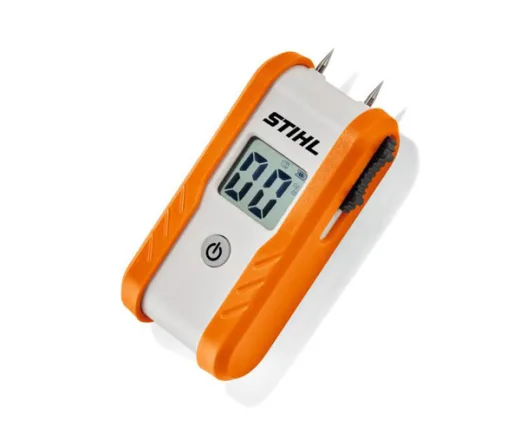
This is where the Stihl earns its price. It is 8cm long, weighs 50g including batteries, and has the overmoulded orange grips Stihl puts on everything. It genuinely feels like it will survive the actual failure mode for these devices, which is being dropped on a hard floor or left out in the rain.
The Valiant is lightweight plastic, clearly built to a budget. It is sturdy enough for domestic use if you do not stand on it, and it is not a professional site tool.
If your meter lives in a coat pocket and gets treated roughly, that difference is real. If it lives on a shelf by the log store and gets picked up twice a week, it is not.
Extras
Both do more than firewood. The Stihl also reads plaster and cement and gives an ambient air temperature. The Valiant reads building materials as well and also has a temperature readout, plus wood type selection settings.
The wood type settings on the Valiant are worth a comment: they adjust the calibration for different species groups, which sounds like a meaningful accuracy advantage. In practice, for the ready-or-not decision, it changes very little. Treat it as a mild refinement rather than a reason to buy.
The thing that matters more than either meter
Technique beats hardware here by a wide margin, and it is where almost everyone goes wrong.
Split the log and test the fresh inner face. The outside of a log dries first, so probing the outer surface of a wet log gives a comfortably dry reading that is completely false. Split it, press the pins into the newly exposed middle, across the grain, and read that.
Take several readings. Two or three logs from a batch, a couple of spots on each. A single reading proves nothing about a stack.
Let cold wood warm up. Very cold logs read low. Test at something like room temperature for a fair result.
Do that with a £15 meter and you will get a better answer than someone testing the outside of a log with the most expensive meter on the market. Our guides on how to use a moisture meter on firewood and what moisture firewood should be go into the detail.
So which one?
For most people reading this, the Valiant FIR421 is the better buy, and not narrowly. It costs a fraction as much, the colour display genuinely helps newcomers, the AAA batteries mean it is always working, and it does the measuring job to exactly the same practical standard. That leaves budget for a decent log store, which will do far more for your firewood than any meter.
The Stihl is the right answer for a narrower group: people who want a small, tough, well-made tool that lives in a pocket and gets knocked about, and who are happy to pay for build quality knowing it buys nothing in accuracy. If you already own Stihl kit and value the way it is made, that is a legitimate reason, and the meter will not let you down.
What neither should be is a substitute for seasoning wood properly in the first place. The meter tells you whether you got it right. It does not make the wood dry.
For the wider field, including cheaper alternatives, see our best firewood moisture meters roundup and our cheap meters under £20 comparison.
Frequently asked questions
Is the Stihl moisture meter more accurate than the Valiant? No, not in any way that matters. Both are two-pin resistance meters using the same measuring principle, and both resolve the only question that counts, which is whether a log is above or below 20% moisture. The Stihl is better built, not better calibrated.
What is the difference between the Stihl and Valiant moisture meters? Three things: the Valiant has a traffic-light colour display and runs on AAA batteries, while the Stihl has a plain LCD and runs on four LR44 button cells but is noticeably better built and more compact. Measuring ranges are similar, at 6% to 42% for the Stihl and roughly 5% to 50% for the Valiant.
Which moisture meter is best for firewood in the UK? For most households the Valiant FIR421, because it is inexpensive, easy to read and takes common batteries. Choose the Stihl if durability matters more to you than cost. Either will tell you reliably whether your wood is under 20%, provided you test a freshly split face.
Do I need to buy an expensive moisture meter? No. Pin meters at every price use the same technique, and technique matters far more than the device. A cheap meter used correctly beats an expensive one used on the outside of a log.
Why does my moisture meter read differently on the same log? Because you are probably testing different surfaces. The outer face of a log dries long before the core, so outside readings run low. Species and temperature also shift readings slightly. Always split the log and test the fresh inner face, and take several readings.
What moisture reading means firewood is ready to burn? 20% or below. That is the threshold behind the UK Ready to Burn standard, and wood above it burns cooler, produces more smoke and deposits more creosote in your flue.
Want the seasoning calendar and our log-price watch in your inbox?
Join the Kindling List