Proster Moisture Meter Review: Multi-Species Log Readings
Proster Wood Moisture Meter Review: Multi-Species Readings for Logs
This Proster wood moisture meter review looks at one of the cheaper pin-type testers on Amazon UK, and specifically at the feature that sets it apart in the budget bracket: switchable wood-group modes. Most sub-£20 meters assume one generic wood type, which is fine if you always burn the same thing, but less useful if your log store is a mix of oak, ash, birch and softwood offcuts. The Proster lets you pick a species group, which in theory tightens the reading. The question this review answers is whether that actually matters in practice, and who should spend the small premium over the simplest meters.
For the wider field, see our roundup of the best firewood moisture meters in the UK and the best cheap moisture meters under £20.
What you get
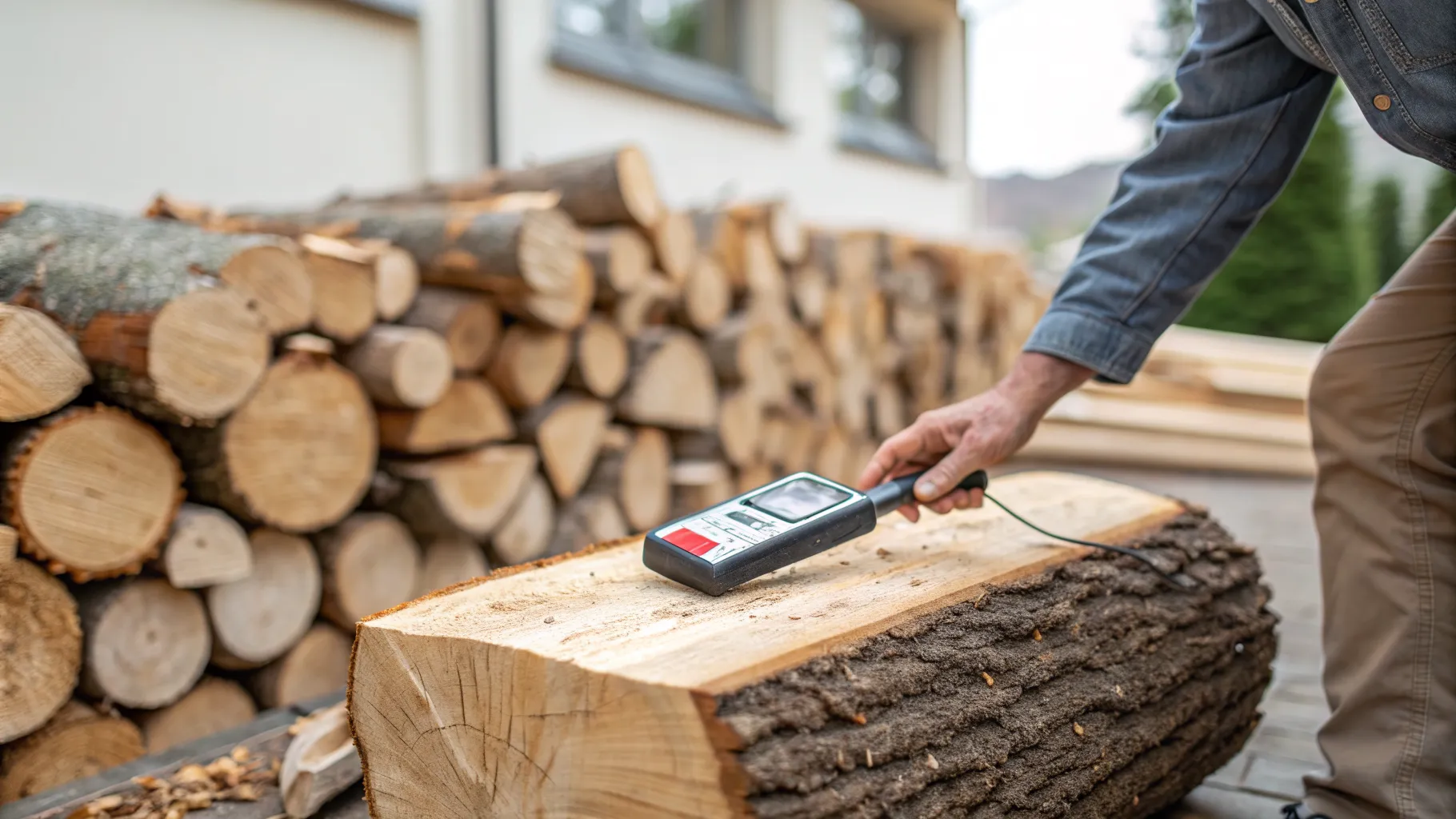
The Proster is a two-pin, pin-type meter. You push the 10mm electrode pins into a freshly split face of the log and it reads the moisture between them. The headline features are:
- Four wood-group modes (labelled A to D) covering around 50 species between them, so you select the group your timber falls into before measuring.
- A wide 0 to 99.9% range for wood, which comfortably covers everything from soaking green logs to properly seasoned firewood.
- A clear LCD with a data-hold function to freeze the reading, plus a battery check and low-battery icon.
- Practical extras: a protective cap over the pins, a carry case, and it runs on a 9V battery. The ABS plastic body is light and hard-wearing.
It is aimed squarely at firewood, paper and cardboard rather than building surveys, so treat it as a log tester, not a damp meter for walls.
Does the multi-species feature actually help?
This is the crux of the review. The wood-group modes are the Proster’s reason to exist over a single-mode budget meter, and they do make a difference, but a modest one. Wood species vary in density and how they hold water, so selecting the right group nudges the reading closer to reality than a one-size setting. If you genuinely burn a broad mix, that is worth having.
Be realistic about the accuracy claims, though. Budget meters like this advertise very tight accuracy figures, and you should not treat any sub-£20 pin meter as laboratory-grade. What these tools are genuinely good at is relative, repeatable readings: telling you whether a log is dry enough to burn, and whether this year’s stack is drier than last month’s. Used that way, and with the correct species group selected, the Proster does the job it is bought for.
Using it well
A moisture meter is only as good as your technique. For a reading that means something:
- Split the log first and test the fresh inside face. The outside of a log dries far faster than the core, so measuring the surface flatters your wood. The cut centre is the honest number.
- Test at room temperature. Cold logs straight from an outdoor store read differently; let them acclimatise.
- Take a few readings across different logs and average them, rather than trusting one push.
- Select the right wood group for what you are testing.
You are aiming for firewood at or below 20% moisture before it goes on the fire. That 20% figure is not arbitrary: it is the standard behind the Ready to Burn certification for firewood sold in the UK, and wetter wood burns poorly, wastes heat and dirties your flue and glass.
How it compares
Within the budget bracket, the Proster is the pick if mixed species is your reality. If you always burn one or two types and want the simplest possible tool, a plainer meter like the ones in our cheap moisture meters roundup is fine and even cheaper. Step up in price and the Valiant FIR421 and Stihl meter feel a touch more solid and consistent, though for pure firewood duty the extra outlay is optional rather than essential. The Proster earns its place by offering the species modes at a price the simplest meters undercut only slightly.
Verdict
The Proster is a capable, low-cost all-rounder that is genuinely more useful than the very cheapest single-mode meters if you burn a mix of timber. Set your expectations at “reliable relative readings” rather than “certified accuracy” and it will happily tell you whether your logs are ready, which is all most people need a firewood meter to do. For anyone with a varied log store on a tight budget, it is an easy recommendation. Check the current price on Amazon UK.
Frequently asked questions
Is the Proster wood moisture meter accurate? It is accurate enough for firewood, which means reliable relative readings that tell you whether a log is dry enough to burn. Do not treat any budget pin meter as laboratory-grade; the advertised accuracy figures are optimistic. Select the correct wood group and test a fresh split face for the most trustworthy result.
What do the wood-group settings on the Proster do? The four modes (A to D) cover around 50 species and adjust the meter for the density of the timber you are testing. Choosing the right group brings the reading closer to reality, which is the Proster’s main advantage over cheaper single-mode meters if you burn mixed wood.
What moisture reading should firewood be before burning? Aim for 20% or below. That is the standard behind the UK’s Ready to Burn certification, and wetter wood wastes heat, burns dirtily and coats your flue and stove glass in tar. Testing a freshly split face gives the honest core reading.
Is the Proster good for checking damp in walls? No. It is designed for wood, firewood, paper and cardboard, not building surveys. For household damp you want a meter built for walls and masonry; the Proster is a log tester.
How do I use the Proster correctly? Split the log and push the pins into the fresh inner face, not the dried outer surface. Let cold logs reach room temperature first, select the right wood group, and take a few readings to average out. That gives a reading that reflects the true moisture in the wood.
Is the Proster worth it over the cheapest meters? If you burn a mix of species, yes, because the wood-group modes improve the reading for a small extra cost. If you only ever burn one or two types, a simpler single-mode meter does the job for slightly less.
Want the seasoning calendar and our log-price watch in your inbox?
Join the Kindling List