Stihl Moisture Meter Review: Premium Pick for Log Burners?
Stihl makes chainsaws people keep for twenty years, so a Stihl moisture meter carries an obvious promise: buy the good one and stop worrying. This Stihl moisture meter review asks whether that promise survives contact with a device that costs several times what a working meter costs, and whether the orange badge buys you anything a £15 meter does not already do.
The short version: it is a decent, well-made, genuinely pocket-sized meter that does exactly what the cheap ones do, with one design decision that will irritate you every couple of years.
What it is
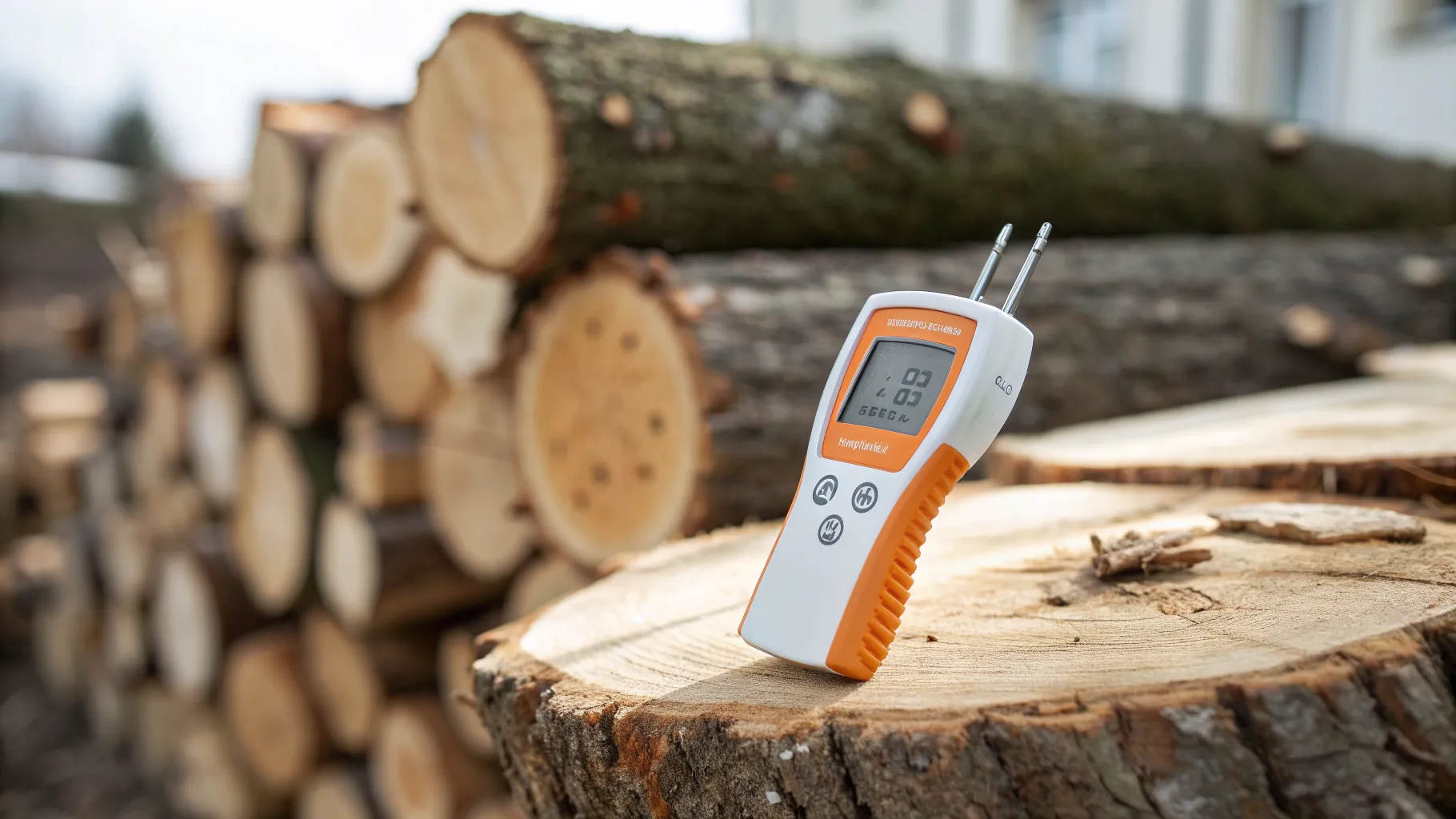
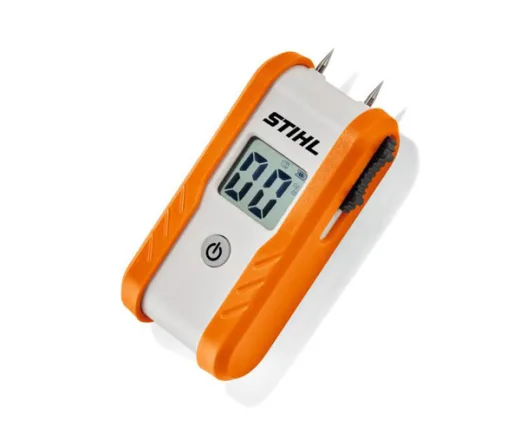
The Stihl wood moisture gauge, part number 04216000080, is a two-pin meter. You press its two metal probes into wood and read a moisture percentage off a small LCD. Despite Stihl’s own product page describing a “high-frequency measuring principle”, this is not a pinless device: there are two visible prongs on the top edge, and it is used exactly like every other firewood meter on the market.
The specifications, from Stihl’s own listing:
- Measuring range: 6% to 42% on wood
- Also reads: plaster and cement, plus ambient air temperature
- Size: 8cm x 4cm x 2cm
- Weight: 50g including batteries
- Batteries: 4 x 1.5V LR44
That size is the standout number. At 8cm long and 50g it is genuinely smaller and lighter than most rivals, and it disappears into a coat pocket or lives in the log store without taking up a shelf. The build is what you expect from Stihl: the orange overmoulded grips are not decoration, and it feels like it will survive being dropped on a concrete floor, which is the actual failure mode for these things.
The battery problem
Here is the design decision worth knowing before you buy: it runs on four LR44 button cells.
LR44s are the little watch batteries. They work fine, they last a long time in a device used for thirty seconds at a time, and they are cheap. But they are not in your kitchen drawer, they are not in the drawer of anyone you know, and when the meter dies on a cold evening you will not be swapping in a spare from the TV remote. Compare that with the Valiant FIR421 and most other meters, which run on AAA cells you already own.
It is a small thing. It is also the kind of small thing that means a meter sits dead in a drawer for a month because you keep forgetting to order batteries, which rather defeats the purpose of owning one.
Does the brand buy you accuracy?
This is the question the price asks, and the honest answer is: not really, and it does not need to.
Pin-type moisture meters all work the same way. They measure electrical resistance between two probes, and wet wood conducts better than dry wood. It is a mature, simple technique, and the electronics involved cost very little. A £15 meter and a Stihl meter are doing identical physics with the same sort of circuit.
What genuinely varies between meters is not the reading, it is:
- Build quality, where Stihl is comfortably ahead of the £15 crowd
- Pin quality, since cheap pins bend and corrode
- Display legibility in a dim log store
- How long it survives being dropped, rained on, and sat on
So the Stihl is not more accurate in any meaningful sense. It is better made. Whether that is worth the difference depends entirely on whether you break things.
There is a real accuracy caveat that applies to every pin meter including this one: readings drift with wood species and with temperature, and a meter used on a freezing log will read differently than the same log indoors at room temperature. Nobody’s meter at this price compensates for that properly, and it does not matter much, because you are looking for “under 20%” rather than a laboratory figure.
How to actually use it (this matters more than the meter)
The most common way people get bad readings has nothing to do with which meter they bought.
Split the log first, and measure the fresh inner face. The outside of a log dries first and can read beautifully at 15% while the middle is still sodden at 30%. A reading taken on the outer surface or on the sawn end of an unsplit round is close to meaningless. Split it, then push the pins into the newly exposed middle.
Push the pins in across the grain, firmly, so both make proper contact. Take two or three readings from different logs in the stack rather than trusting one.
Measure at room temperature if you can. A log straight off a frozen stack will not give you a fair number.
Get that technique right and a cheap meter beats an expensive one used badly, every time. Our guide to best cheap moisture meters under £20 covers the budget end, and the Valiant FIR421 review looks at the most popular UK alternative.
What you are aiming for, and why it is the law
The target is 20% moisture content or less, and that number is not a preference, it is the legal standard for wood sold in England.
Since 1 May 2021, under the Air Quality (Domestic Solid Fuels Standards) (England) Regulations 2020, wood fuel sold in volumes of less than 2 cubic metres must be certified Ready to Burn, confirming moisture of 20% or less. GOV.UK’s guidance sets it out, and local authorities can issue a £300 fixed penalty notice for breaches.
The gap that makes a meter useful: wood sold in volumes of 2 cubic metres or more is exempt from certification. Suppliers only have to give you a notice explaining how to dry, store and check it. So if you buy in bulk, which is the cheap way to buy firewood, nobody has certified anything and checking is your job. That, rather than the sub-2m³ nets from the garage forecourt, is where a moisture meter earns its money. It also pays for itself the first time you catch a “seasoned” delivery reading 28% and get it replaced.
Who should buy it
Buy the Stihl if: you already own Stihl kit and like the ecosystem, you want the smallest meter available, you value build quality over price, or you have broken a cheap meter already.
Do not buy it if: you want the best value, in which case a £15 pin meter measures the same wood to the same useful precision. Or if the LR44 batteries will annoy you, which they might.
The verdict
The Stihl wood moisture meter is a good meter at a price that reflects the badge more than the technology. It is small, tough and does exactly the job. It is not more accurate than a cheap one, because pin meters are a solved problem, and the LR44 cells are a genuine irritation on an otherwise sensible design.
If you want the nice one and you will keep it for a decade, it is a fair buy. If you just want to stop burning wet wood, buy the cheap one and spend the difference on better logs. Check price on Amazon.
Once you know your numbers, the next job is usually splitting the wet stuff down so it dries faster, since split logs season far quicker than rounds. Our log splitter buyer’s guide and best log splitting axes cover getting there.
Frequently asked questions
Is the Stihl moisture meter accurate? Yes, within the normal limits of a pin-type meter. It reads 6% to 42% on wood, which is the whole useful range for firewood. It is not meaningfully more accurate than a cheap pin meter, because all pin meters measure electrical resistance the same way. What Stihl buys you is build quality, not precision.
Is the Stihl moisture meter pinless? No. Despite Stihl describing a high-frequency measuring principle, the device has two visible metal pins on its top edge and is used like any other pin meter, by pressing the probes into the freshly split face of a log.
What batteries does the Stihl moisture meter use? Four 1.5V LR44 button cells. This is the meter’s main annoyance, since most rivals use AAA cells you already have at home, and LR44s usually need ordering specially.
Is the Stihl moisture meter worth the money? Only if you value build quality or already run Stihl kit. It is smaller and tougher than budget meters, but it will not give you better readings. For most wood burner owners a £15 pin meter used correctly does the same job.
What moisture reading should firewood be? 20% or less. That is the legal standard for wood sold in England in volumes under 2 cubic metres, which must be certified Ready to Burn. Above 20% the wood smokes, gives less heat and dirties your flue.
How do I use a moisture meter on firewood correctly? Split the log and push the pins into the freshly exposed inner face, across the grain, at room temperature if possible. Never measure the outside of a log, which dries first and can read 15% while the core is still above 30%. Take readings from several logs rather than one.
Want the seasoning calendar and our log-price watch in your inbox?
Join the Kindling List