Best Heat Resistant Stove Paint UK: 4 Rated 600°C and Up
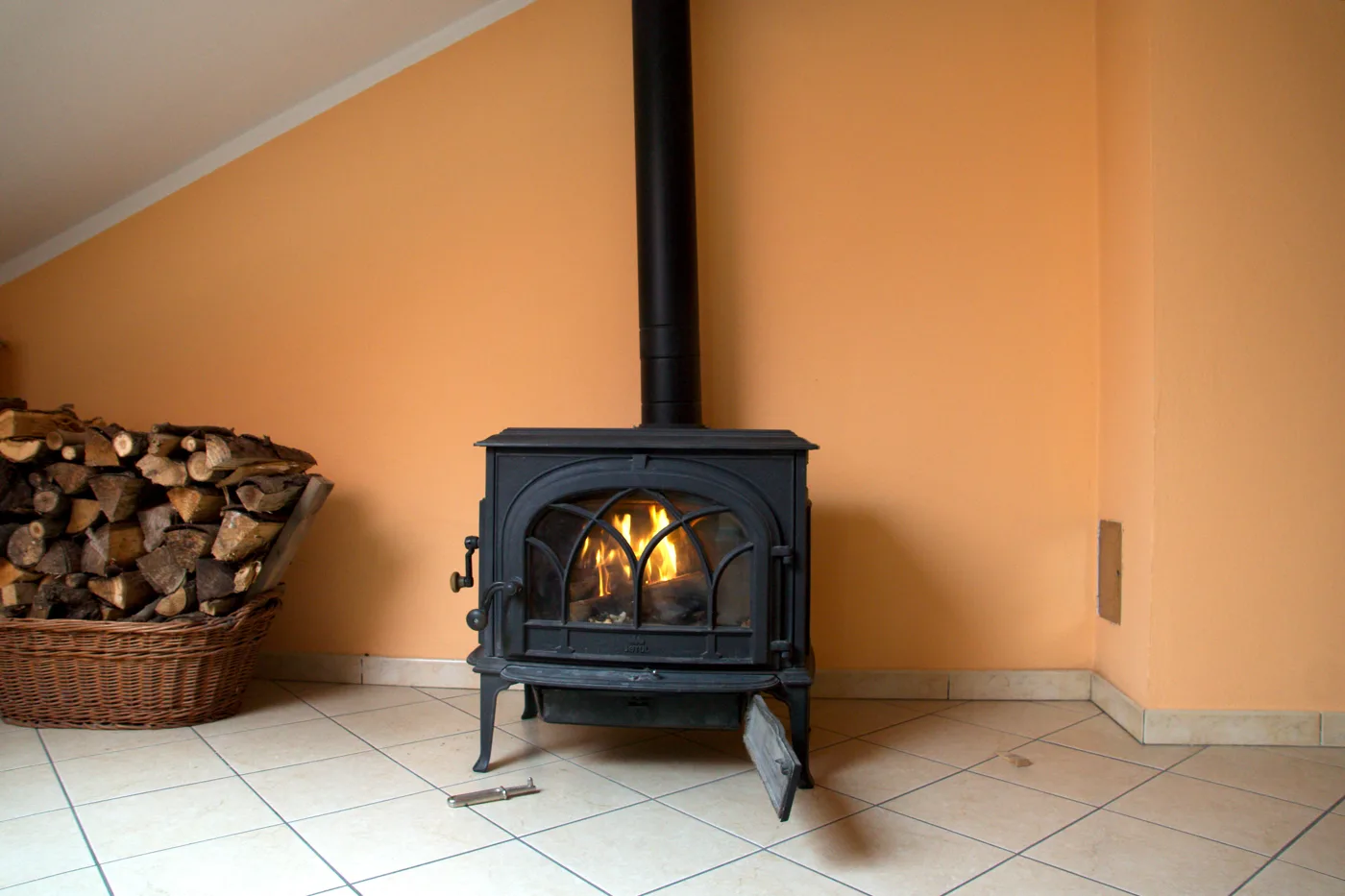
The best heat resistant stove paint in the UK for most wood burners is a matt black aerosol made for stoves, rated to at least 600°C, sprayed in thin coats onto a cold, clean stove and then cured with a few gentle fires. Hotspot’s Stove Paint is the one we would buy first. If you would rather brush than spray, Jenolite’s Heat Resistant Paint in a tin is the pick.
What matters more than the brand is the temperature rating on the can. Plenty of “heat resistant” black paint sold in DIY sheds is made for radiators and pipes, and it will blister and peel on a stove body within a week. Below are four paints sold on Amazon UK that are rated high enough for a stove, checked against manufacturers’ and stockists’ instructions on 24 October 2026, and how to get a finish that lasts.
The four at a glance
| Paint | Type | Rated to | Best for |
|---|---|---|---|
| Hotspot Stove Paint, Matt Black, 250ml | Aerosol | 600 to 650°C (see below) | Most wood burners and multi-fuel stoves |
| Jenolite Heat Resistant Paint, Matt Black, 500ml | Brush-on tin | 650°C | Touching up, or where you cannot spray indoors |
| Rust-Oleum Stove & BBQ Spray Paint, Black Matt, 400ml | Aerosol | 650°C | A bigger can for a full respray |
| Vitcas Heat Resistant Spray Paint, Black, 400ml | Aerosol | 800°C | Flue pipes and the hottest parts of the stove |
All four are matt black, all four are for the outside of the stove only, and none is meant for surfaces in direct contact with flames, such as the firebox lining or the baffle.
Check the rating before anything else
A wood burner’s outer body runs at very different temperatures from one part to another. The sides and door frame run cooler, while the top plate and the first section of flue pipe can run much hotter, especially when the stove is overfired. Our guide on how to read a stove thermometer shows the normal operating bands.
That is why 600°C is the line to look for. Paint rated to 200 or 250°C, sold for radiators, pipes and boilers, is fine on a radiator but not on a stove. Rustins’ own Heat Resistant Black, for example, is listed on Amazon UK as heat resistant to 220°C; it is a good paint, for a different job.
Hotspot Stove Paint: the best for most stoves
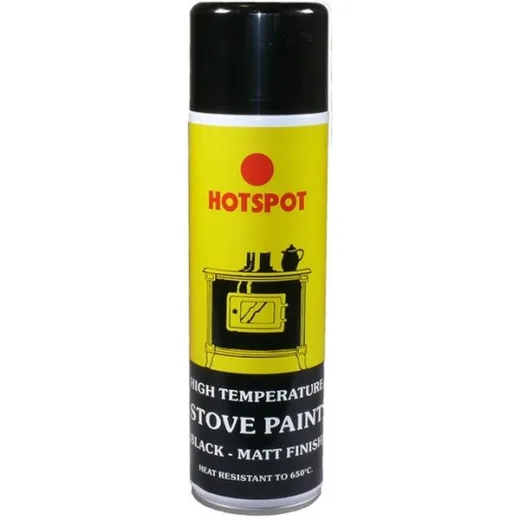
Hotspot is the stove-care range sold by Rustins, the British wood-finish company, and its matt black aerosol is made specifically for stoves, fireplaces and flues rather than barbecues and car parts. It sprays a flat, soot-black finish close to the factory paint on most modern stoves.
The rating needs a note. Hotspot’s Amazon UK listing gives 600°C, while UK stove-supply stockists list the aerosol as heat resistant to 650°C. Either is comfortably above what the outer body of a correctly run wood burner reaches.
Stockists’ instructions are to remove rust and scale with abrasive paper or a wire brush, degrease, shake the can for a minute, and spray thin, even coats with two to three hours between them, then leave it 24 hours before lighting the stove. Paint outdoors or with the room well ventilated, and cover the hearth and anything soft nearby. Check price on Amazon UK.
Jenolite Heat Resistant Paint: the best brush-on
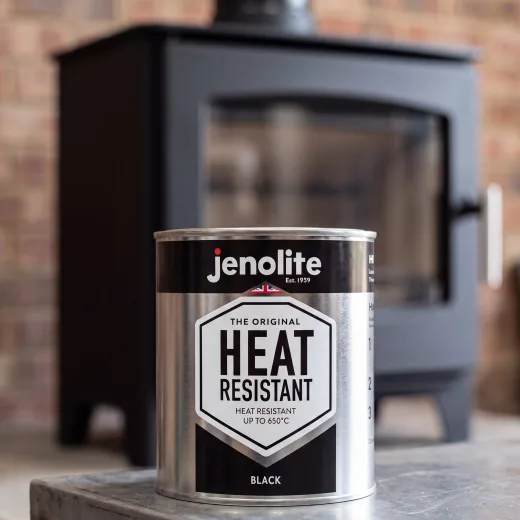
Spraying a stove that is plumbed in and sitting in a fireplace means masking half the room. A brush-on paint avoids that, and Jenolite’s tin is the one to get. It is rated to 650°C, and Jenolite says it does not need a primer for most jobs, though a high-heat primer can help on bare metal.
Jenolite’s product page gives the method: clean, dry surface free of rust, grease and dust, a light sand on rough areas, stir well, and apply thin, even coats 10 to 15 minutes apart. It is touch dry in about 30 minutes and fully cured in about 24 hours, and Jenolite advises heating the painted surface gradually so the coating cures properly. At 500ml it is also plenty for touching up the same stove for years. Check price on Amazon UK.
Rust-Oleum Stove & BBQ Spray Paint: the bigger can
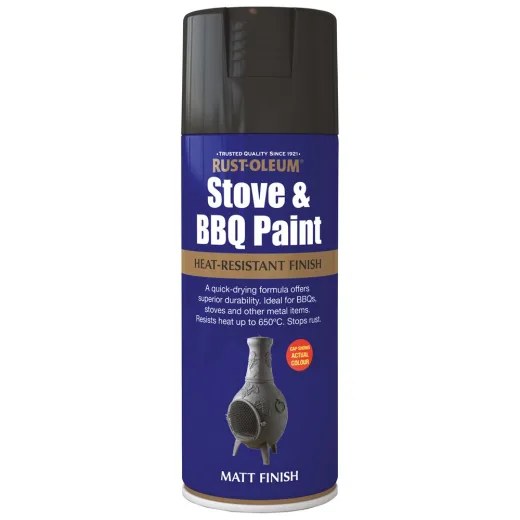
Rust-Oleum’s Stove & BBQ paint is the most widely stocked of the four in British DIY shops, and the 400ml can gives you more paint than Hotspot’s 250ml for a full respray of a medium stove. Its Amazon UK listing says it retains its colour and finish up to 650°C and adds rust protection.
The can carries the usual instructions for an aerosol: shake for a minute after the mixing ball starts to rattle, hold it about 30cm from the surface and build up several light coats a few minutes apart. Rust-Oleum states it is not recommended for areas directly exposed to flames, so keep it to the outside of the stove. Check price on Amazon UK.
Vitcas Heat Resistant Spray Paint: for the hottest surfaces
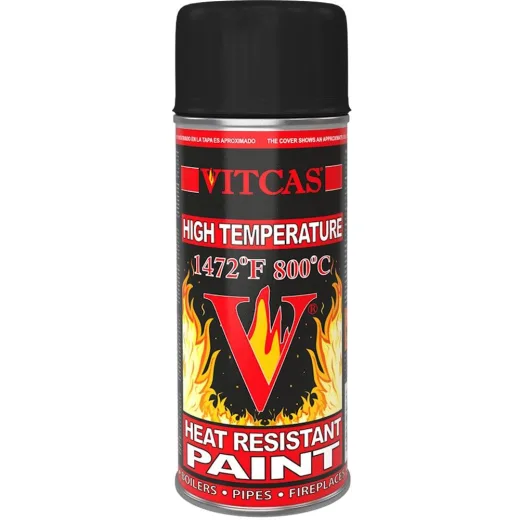
Vitcas makes heat-resistant materials for stoves, ovens and fireplaces, and its black spray has the highest rating here at 800°C. That headroom is useful on the first metre of flue pipe and on stove tops that run hot.
It is also the fussiest to apply. Vitcas’s technical data says to use it on a clean, grease-free surface without primer, ideally at room temperatures of 15 to 25°C, and that the coating fully cures at 160°C for an hour, so the cure happens on the stove’s first proper fires. It smokes while it cures, so open the windows. Some stove retailers sell it as a touch-up paint for their own stoves. Check price on Amazon UK.
How to paint a wood burner
- Let the stove go completely cold. Never paint a warm stove; the solvent can flash off and the paint will not bond.
- Take off what you can. Remove the ash pan, grate and any handles that come off. Cover the glass, the rope seal and the hearth with masking tape and paper.
- Clean back to sound metal. Wire brush any rust and loose paint, sand the edges smooth, then wipe the whole stove with a degreaser and let it dry.
- Ventilate. Open windows, or if you can, paint flue sections outside. Wear a mask with a spray can.
- Thin coats. Two light coats beat one heavy one. Heavy coats run, and runs bubble when they cure.
- Wait before lighting. Leave it at least as long as the maker says, usually 24 hours.
Curing: the smoke on the first fires is normal
Stove paint does not finish curing until it gets hot. The first two or three fires will give off smoke and a strong paint smell as the solvents and resins burn off. Keep those first fires small, open the windows, keep pets and children out of the room, and build the heat up gradually over a few burns rather than going straight to a roaring fire. A smoke alarm going off during the first cure is common, so warn the household.
If the smoke and smell are still there after several fires, the coats were probably too thick.
Do not paint the glass or the seal
Paint on stove glass will not come off cleanly and blocks the view of the fire. Paint on the rope seal stiffens it and can stop the door sealing, which makes the stove harder to control. Mask both. If the glass is grubby after painting, our best stove glass cleaner UK guide covers what to use on cold glass.
Frequently asked questions
What is the best heat resistant paint for a wood burner? A matt black stove paint rated to at least 600°C. Hotspot Stove Paint is the best aerosol for most stoves, Jenolite Heat Resistant Paint is the best brush-on option, and Vitcas’s 800°C spray suits flue pipes and very hot stove tops.
What temperature should stove paint be rated to? At least 600°C for the stove body and flue. Paint rated to 200 or 250°C, sold for radiators and pipes, is not suitable for a wood burner and will blister and peel.
How long after painting can I light my stove? Usually 24 hours, but follow the instructions on your paint. Then keep the first few fires small and build the heat gradually so the paint cures fully.
Why is my newly painted stove smoking? Stove paint finishes curing with heat, and the solvents and resins burn off on the first fires, which gives off smoke and a paint smell. Open the windows and keep the fires small. It should clear within two or three burns.
Can I brush stove paint on instead of spraying? Yes. Jenolite’s Heat Resistant Paint is made to be brushed on and is rated to 650°C. Brushing avoids overspray when the stove is fixed in a fireplace, but apply thin coats so the finish stays even.
Can I paint the inside of my stove? No. These paints are for the outside of the stove and flue only. Rust-Oleum and Jenolite both state their paints are not recommended for areas directly exposed to flames.
Want the seasoning calendar and our log-price watch in your inbox?
Join the Kindling List