Best Stove Glass Cleaner UK: 3 Picks and the Free Ash Trick
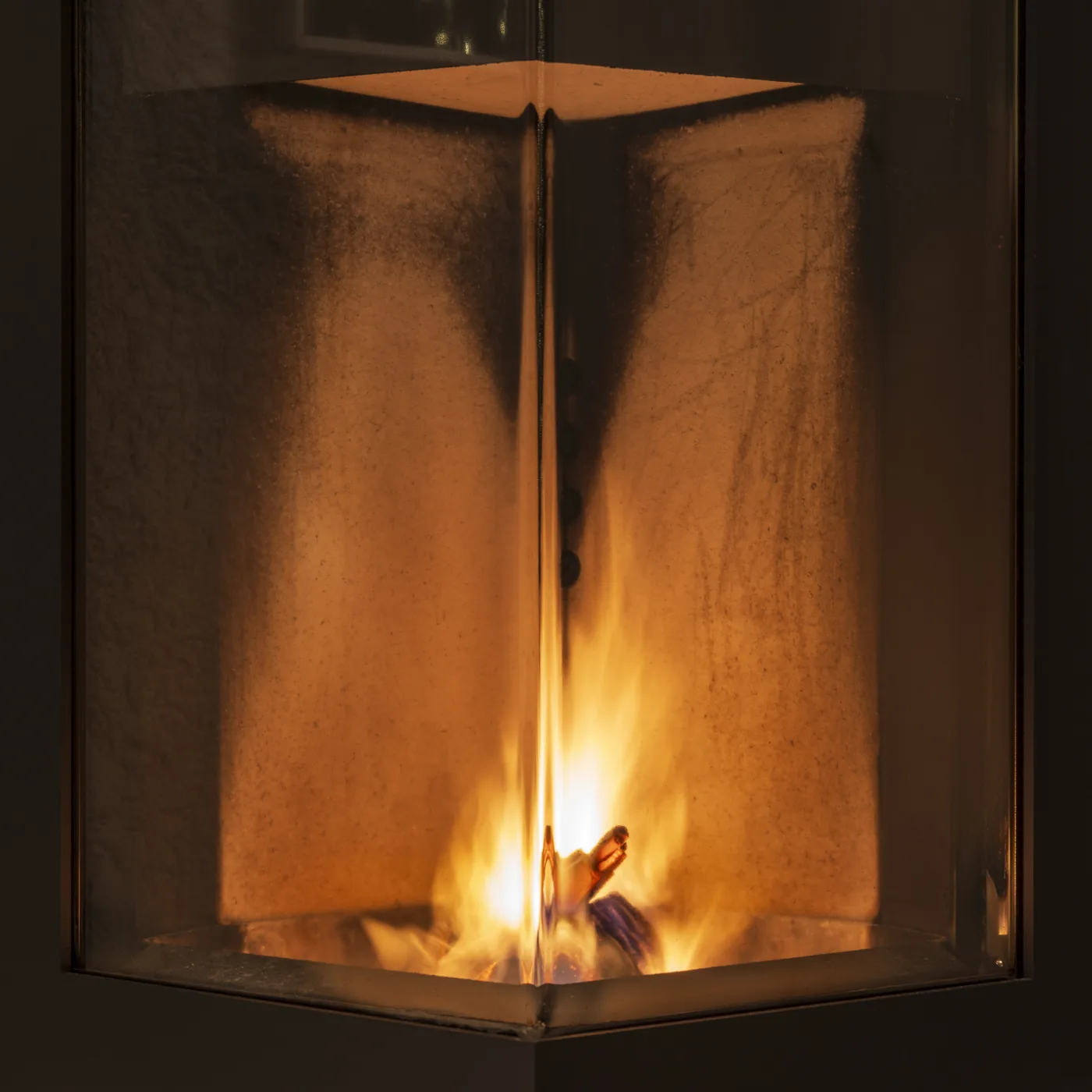
The best stove glass cleaner in the UK for most wood burners is a simple spray you put on cold glass, leave for a few minutes and wipe off. HG’s Stove Glass Cleaner is the one we would buy first. For thick, burnt-on brown tar, a paste does better because it clings and stays put. And for light grey haze you may not need a product at all: a damp sheet of newspaper dipped in the stove’s own fine ash does the job for nothing.
Below are three cleaners on Amazon UK, checked against the manufacturers’ and sellers’ instructions on 21 October 2026, how to use them without damaging the door seal or the paint, and why the glass keeps blackening in the first place. That last part matters more than the cleaner: glass that blackens every night is telling you something about your wood or your air control.
The three at a glance
| Cleaner | Type | Leave on for | Best for |
|---|---|---|---|
| HG Stove Glass Cleaner, 500ml | Trigger spray | 3 to 5 minutes | Regular cleaning, most stoves |
| Hotspot Stove Glass Cleaner, 750ml | Trigger spray | Up to 2 minutes | A big bottle for heavy use |
| Dirtbusters Stove Glass Cleaner paste, 250g | Paste | 5 to 10 minutes | Thick, burnt-on tar |
All three are for cold or barely warm glass. None should go on a hot stove.
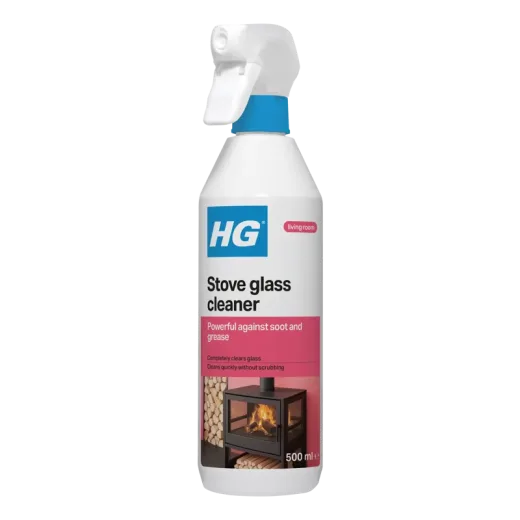
HG Stove Glass Cleaner: the best all-rounder
HG is a Dutch cleaning brand that has been sold in the UK for decades, and its stove glass cleaner is one of the most widely stocked in British hardware shops. You spray it on cold or lukewarm glass, leave it for three to five minutes, and wipe it off with a damp sponge; on heavy soot, you repeat. It is also sold for lifting light soot from the brickwork round a stove.
The instructions on HG’s product page include two warnings worth reading before you start: do not let the liquid run, and do not use it on marble or other chalky natural stone, untreated aluminium or plastic. If your stove sits on a limestone or marble hearth, put an old towel down first. Check price on Amazon UK.
Hotspot Stove Glass Cleaner: the big bottle
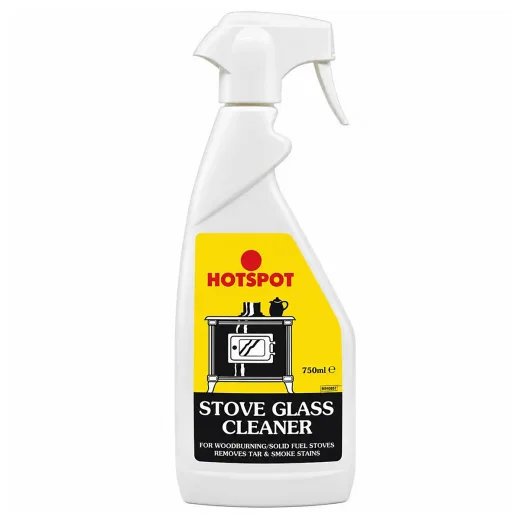
Hotspot is sold in the UK by Rustins, the British wood-finish company, and its 750ml spray is the largest of the three here, which suits anyone burning every night through the winter. The instructions are to make sure the glass is cool, shake the bottle, spray lightly over the stain and leave it for up to two minutes before wiping and polishing. For stubborn marks the label suggests a nylon scouring pad, which is fine on stove glass but not on the painted door frame.
Retailer listings carry a “causes serious eye irritation” warning, so wear glasses or keep your face back when spraying a door at eye level, and protect the carpet from run-off. Check price on Amazon UK.
Dirtbusters Stove Glass Cleaner paste: for burnt-on tar
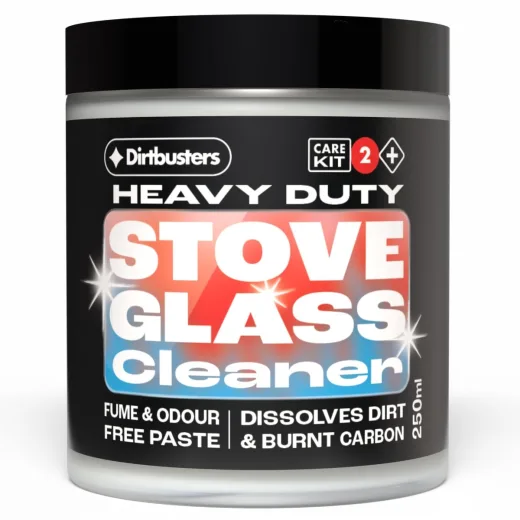
A paste is the answer when the glass has a thick brown or black crust that sprays run straight off. Dirtbusters’ cream clings to the glass rather than running down onto the rope seal or the hearth, which is its main advantage. You apply a thin layer, leave it for five to ten minutes, wipe it off with a damp cloth and buff dry with kitchen roll.
It has a fine polishing action, so use it with a soft cloth or non-scratch pad, not a scourer. Dirtbusters says the formula is fume free, so the stove can be lit straight after. Check price on Amazon UK.
The free method: newspaper and ash
For the light grey or brown haze most stoves build up over a few evenings, the cheapest cleaner is already in your ash pan:
- Wait until the stove is completely cold.
- Scrunch up a sheet of newspaper and dampen it, not soaking.
- Dab it in the fine, pale wood ash (not lumps of charcoal).
- Rub the glass in small circles. The ash works as a very mild abrasive.
- Wipe off with a clean damp sheet, then buff dry with a dry one.
It works best on wood ash; avoid ash from coal or smokeless fuel, which can contain harder grit. It will not shift a thick tar crust, which is where the paste earns its place.
How to clean stove glass without damaging the stove
- Always on cold glass. Cleaner on hot glass bakes on, and cold liquid on hot ceramic glass is asking for trouble. Clean in the morning, before you light it.
- Keep it off the rope seal. The fibreglass rope round the door is what keeps the stove airtight. Spray onto the cloth rather than the glass near the edges, and do not soak the rope.
- Keep it off the paint. Stove paint is heat-resistant, not chemical-resistant. Wipe off any cleaner that runs onto the frame straight away.
- No metal scourers or razor blades unless your stove maker says they are safe for your glass. Most stove glass is ceramic, which is tough against heat but scratches like any glass. Scratches catch soot, so they make the problem worse.
- Check the manual. A few stoves have coated glass with their own cleaning instructions.
Why the glass keeps going black
A clean-burning stove with a working airwash should only need its glass cleaning every few days. If it blackens in a single evening, one of four things is usually to blame:
- Wet wood. This is the cause most of the time. Logs above 20% moisture spend the fire boiling off water, burn cool and smoky, and coat the glass in tar. Check with a moisture meter (our moisture meter comparison explains which to buy) or switch to kiln-dried logs.
- Air turned down too far. The airwash is a curtain of air that sweeps down the inside of the glass. Shut the air control right down to keep the fire in overnight and the curtain stops, so the glass soots up. See our guide to keeping a wood burner in overnight for a better way.
- Running too cool. A stove that never gets up to its working temperature burns dirty. A stove thermometer tells you if you are in the burn zone.
- Logs against the glass. Wood stacked hard up against the door blocks the airwash and chars the glass directly. Load from the back.
Fix those and you will be buying stove glass cleaner a lot less often.
Frequently asked questions
What is the best stove glass cleaner in the UK? For regular cleaning, a spray designed for stove glass such as HG Stove Glass Cleaner, used on cold glass and left for a few minutes. For thick, burnt-on tar, a paste like Dirtbusters’ clings better and does more.
Does the newspaper and ash method really work? Yes, on light grey or brown haze. Damp newspaper dipped in fine wood ash acts as a gentle abrasive. Use it on cold glass only and skip it for heavy tar, which needs a dedicated cleaner.
Can I use oven cleaner on stove glass? It is best avoided. Oven cleaners can be harsh on the paint and the rope seal round the glass. A stove glass cleaner is designed for the job.
Why does my stove glass go black so quickly? Usually wet wood, or the air control turned down too far so the airwash stops working. Logs over 20% moisture and slumbering overnight are the two biggest causes.
Can I clean stove glass while it is warm? Only lukewarm at most, and cold is better. HG says its cleaner should only go on cold or lukewarm glass, and the Hotspot label says to make sure the glass is cool.
Will a stove glass cleaner damage the rope seal? It can if the seal gets soaked. Spray onto a cloth near the edges, wipe excess off straight away, and keep the rope as dry as you can.
Want the seasoning calendar and our log-price watch in your inbox?
Join the Kindling List