Best Kindling Splitters UK: Safe Cast-Iron Tools for Easy Kindling
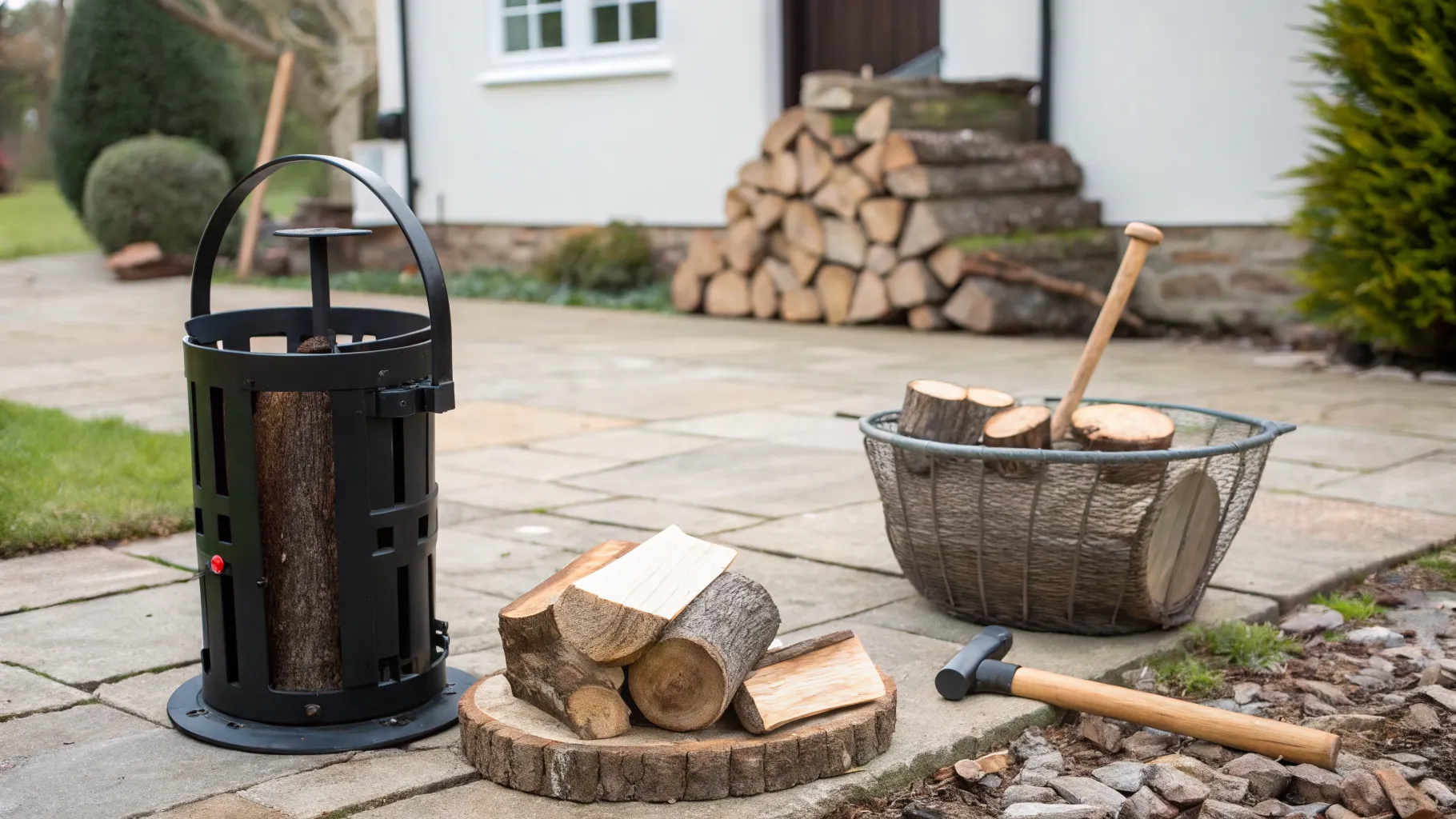
Making kindling with a hatchet means swinging a sharp edge at a thin stick held near your fingers, usually in the dark, usually in a hurry. A kindling splitter removes the sharp swing entirely: the blade is fixed, your hands stay clear, and the moving part is a blunt hammer or a sliding weight. The catch is that most of the advice online is American, quoting dollar listings that do not exist here. When we checked every kindling splitter we could find on Amazon UK, several listings turned out to be dead or unavailable, including more than one Kindling Cracker bundle. The six tools below are the ones we verified in stock, compared in centimetres, kilograms, and honest trade-offs.
The three designs, and why they feel completely different to use
Every kindling splitter on sale is one of three designs, and the design matters more than the brand.
Ring-and-wedge (Kindling Cracker): a cast-iron ring with an upturned blade inside it. You stand a log in the ring and tap it down onto the blade with a blunt hammer. Your hands never go near the edge and the ring stops the log toppling. The trade-offs: you work low, so it wants mounting on a log round or bench, and you need a separate hammer, which no bare Kindling Cracker includes. Ring designs also cap your log size at the ring’s inside diameter.
Drop-weight (Forest Master FMSS Smart Splitter): a weight slides on a vertical shaft and you drop or pump it onto the log. There is no hammer swing at all, which makes it the gentlest option for anyone with shoulder or wrist trouble.
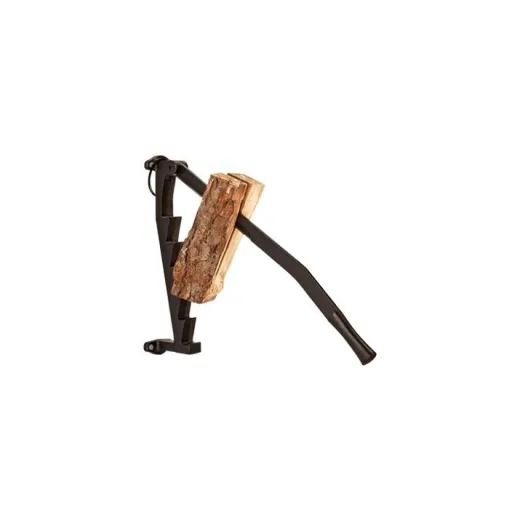
Wall-mounted lever (Stikkan, Skadi): a wedge on a lever, fixed to the wall at standing height. No bending, no hammer. The Stikkan is designed for softwood only, so it is a kindling maker rather than a general splitter.
If you are splitting full logs rather than kindling, this is the wrong page: see our log splitter guides and the best log splitting axes for the UK.
Best overall: Kindling Cracker Original
The Kindling Cracker is the tool that defined the category, and it has a better origin story than most: it was invented in New Zealand by Ayla Hutchinson, aged 13, as a school science fair project after watching her mother nick a finger making kindling. It is cast from recycled cast iron in an Australian foundry, and the UK version comes through Fandango Fire Tools, the official European distributor, with a 5-year warranty.
The Original measures 22 x 22 x 31cm, weighs 4.8kg, and has a 16.5cm safety ring, so it takes logs up to about 16cm across. In use it is exactly as simple as it looks: stand the log in the ring, tap it onto the blade with a club hammer, and the split halves fall away. DIY Garden’s hands-on test found it needed the least effort of the manual splitters it tried, Family Handyman’s review reached the same approving verdict, and it works on wet wood as well as dry. It is also one of the most reviewed tools in the category, with thousands of owner ratings across Amazon’s markets. The honest limits: knotty or irregular-grained logs need extra strikes, and the 16.5cm ring rules out fat rounds. Specs and stock are on the Fandango Fire Tools product page; the Amazon listing is the same tool from the same distributor.
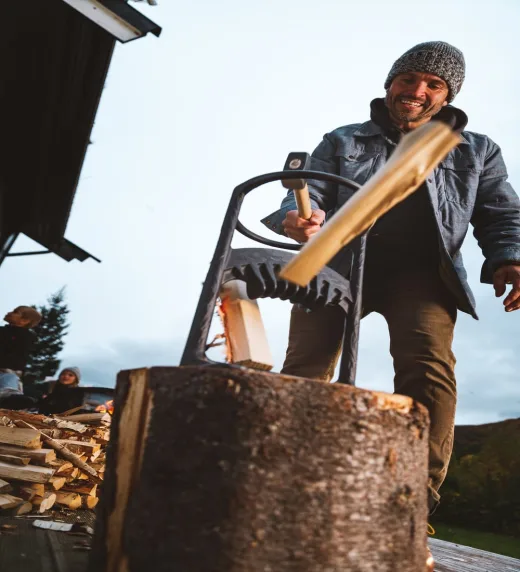
Best for bigger logs: Kindling Cracker King
The King is the XL version: 27.5 x 27.5 x 43cm, 9.5kg, with a 22cm safety ring that takes logs up to 22cm across. It is nearly twice the size of the Original and carries the same 5-year warranty. Buy it if your logs routinely come in fat, or if you want one tool to take a log from full round to kindling-thin in one place: split big pieces into quarters, then keep tapping the quarters down into kindling. At 9.5kg it also sits more firmly under heavy strikes before you bolt it down. If your firewood is standard 25cm stove logs, the Original is enough; if you buy unsorted loads, get the King.

Best complete kit: Kindling Cracker King Bundle
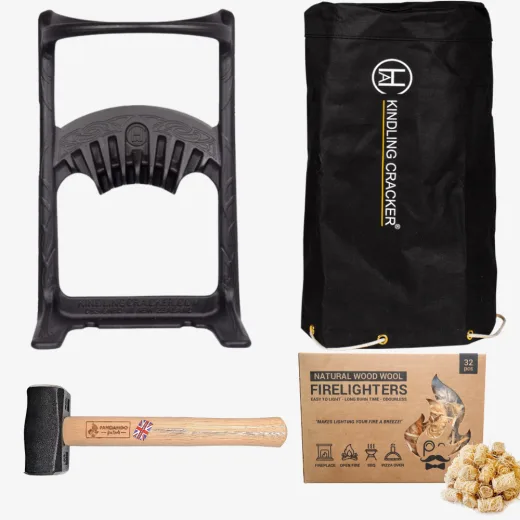
Neither bare Kindling Cracker includes a hammer, which catches almost everyone out at the checkout. Fandango’s King bundle fixes that: the King plus a hickory-handled lump hammer, a protective cover so it can live outside, and a set of natural firelighters. If you were going to buy a hammer and cover anyway, the bundle saves you assembling the parts. One warning: bundle listings come and go on Amazon UK, so make sure you are on a live listing before you order.
Best budget pick: Forest Master USAB 7in Splitting Axe Base
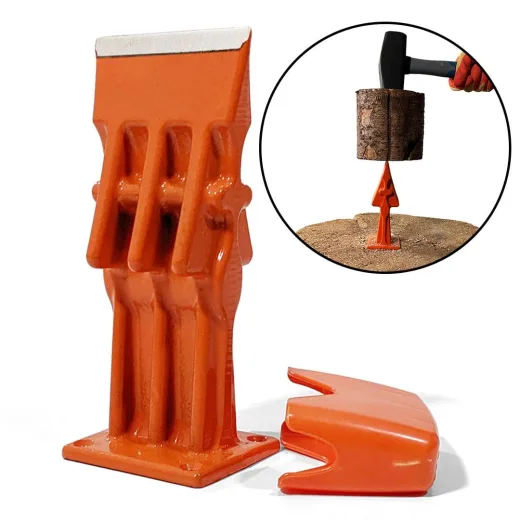
Forest Master is a UK firewood-equipment brand with more than 30 years in the trade, and its USAB base is the value answer to the ring designs. It is ductile cast iron with alternating fins that split the log at an angle, which stops the blade jamming in stringy wood, and it has bolt holes for stump mounting. It is rated for logs up to about 25cm across and 30cm long, so it actually takes bigger wood than either Kindling Cracker. What you give up is the safety ring: there is nothing holding the log upright, so you steady it by hand and need a touch more care and accuracy. Details are on the Forest Master product page.
Best no-hammer option: Forest Master FMSS Smart Splitter
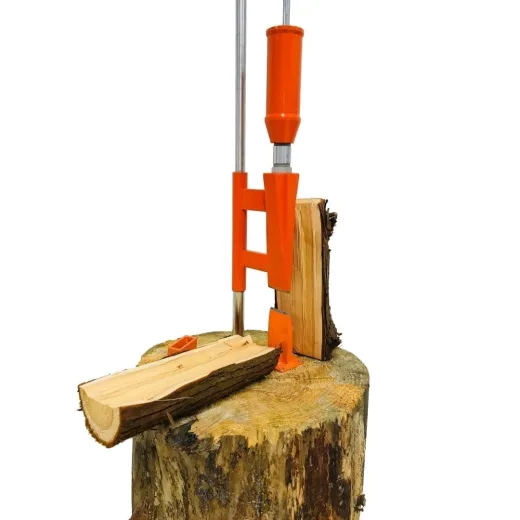
The FMSS is the drop-weight design: a sliding weight on a vertical shaft that you lift and drop onto the log, with no hammer swing at any point. It ships with Forest Master’s universal DuoCut splitting base blade, so you get a strike-on base in the box as well. This is the pick for anyone who cannot or should not swing a hammer, including older users and anyone with wrist, elbow or shoulder problems: the effort is a controlled lift, not an impact you have to aim. It is slower per split than tapping logs through a Kindling Cracker, but the motion is almost impossible to get wrong.
The standing-height option: Stikkan
The Stikkan is a Norwegian design from 1982, made by hand in Foshaga, Sweden: a 4.7kg cast-iron lever-and-wedge unit about 59cm long that mounts to a wall, locks shut between uses, and carries a 10-year warranty. You make kindling standing up, no bending, no hammer, which is genuinely pleasant if your wood store has a solid wall. Two big caveats. First, it is designed for softwood only, pine and spruce; it is not the tool for oak offcuts. Second, the Amazon UK listing has at times been priced well above specialist UK retailers such as Chris Forestry, so compare prices before you click anything.
Comparison table
| Tool | Design | Max log | Weight | Hammer needed? | Warranty |
|---|---|---|---|---|---|
| Kindling Cracker Original | Ring and wedge | 16cm dia | 4.8kg | Yes, not included | 5 years |
| Kindling Cracker King | Ring and wedge | 22cm dia | 9.5kg | Yes, not included | 5 years |
| King Bundle | Ring and wedge | 22cm dia | 9.5kg | Lump hammer included | 5 years |
| Forest Master USAB | Open fin base | ~25cm dia, 30cm long | not stated | Yes, not included | UK brand support |
| Forest Master FMSS | Drop weight | not stated | not stated | No swing at all | UK brand support |
| Stikkan | Wall lever | softwood sticks only | 4.7kg | No | 10 years |
What hammer do you need?
A blunt club (lump) hammer, not an axe and not a claw hammer. The consensus from testers and firewood forums is a 3lb to 4lb head: DIY Garden’s reviewer used a Faithfull 4lb club hammer and called it “the perfect weight and size”, and Family Handyman’s test also picked a 4lb club hammer as the clear winner. A 3lb head suits occasional kindling; step up to 4lb if you make kindling in volume, because the extra mass does the work and you swing less hard. A rubber mallet is too light for anything but the thinnest softwood.
Bolt it down, and what to bolt it to
Both Kindling Crackers and the Forest Master USAB have bolt holes in the base, and you should use them. The standard fix, a common recommendation on the Arbtalk firewood forums, is large screws or coach bolts through the eyes into a heavy log round about knee height, which puts the ring at a comfortable striking height and stops the splitter walking under repeated blows. A solid bench works too if you do not mind the noise travelling through it. Unbolted, the heavier King mostly stays put; the 4.8kg Original will skip around on hard strikes.
Will it split hardwood, knotty logs and wet wood?
Straight-grained wood, hardwood or softwood, splits easily; that is what the testing reviews found needed so little effort. Wet and unseasoned wood splits fine too, which makes these tools useful for processing fresh logs down to drying size. Knotty and irregular-grained logs are the weak spot: they need extra strikes and occasionally a better angle, and a truly gnarled round is still a job for a splitting maul. The Stikkan is the exception in the table: softwood only, by design.
Kindling that actually lights: the 20% rule
A splitter solves the geometry; moisture decides whether the fire lights. Wood sold in volumes under two cubic metres in England must be certified Ready to Burn, which means a moisture content of 20% or below, and that figure is exactly right for kindling too: thin, dry softwood catches fast and gets a top-down fire going cleanly. The rules are set out in the government’s guidance on selling wood for domestic use in England. If you are splitting your own fresh wood for next year, our firewood seasoning time calculator will tell you how long it needs to get there.
Is the tool worth it against bags of bought kindling? If you light three or more fires a week through a heating season, the maths favours the splitter quickly: nets of kindling are one of the most expensive ways to buy wood by weight, and a splitter turns the offcuts and odd logs you already own into a winter’s supply. Light a fire once a fortnight and a couple of bought bags will see you through; the tool earns its keep on frequency.
Frequently asked questions
Is a kindling splitter worth it over a hatchet? For safety, yes: the blade is fixed and your fingers never hold wood near a swinging edge, which is why these tools are the standard recommendation for older users and for teaching teenagers to make kindling. On cost, it pays for itself within a season or two if you light fires several times a week instead of buying nets of kindling.
What size hammer do I need for a Kindling Cracker? A 3lb to 4lb club (lump) hammer. Testers rate a 4lb head as ideal for volume work; 3lb is enough for occasional use. No hammer is included with either bare Kindling Cracker, only with the bundle.
Original or King: which size for a UK log burner? The Original’s 16.5cm ring handles typical pre-split stove logs. The King’s 22cm ring takes fat or unsorted logs and lets you quarter big rounds and re-split the quarters in the same tool. If your logs arrive as mixed loads, buy the King.
Do I need to bolt it down? Yes, once you use it regularly. Both Kindling Crackers and the Forest Master USAB have bolt holes; forum users fix them to a heavy log round at knee height with large screws or coach bolts, which steadies the tool and puts it at a comfortable working height.
Can it split wet or knotty wood? Wet and unseasoned wood splits fine, and testers found the design works on both. Knotty, twisted-grain logs need extra strikes and are the one wood type where these tools struggle; truly gnarled rounds still want a maul.
Why is the Stikkan softwood only? Its lever-and-wedge action is sized for cleaving straight-grained pine and spruce into kindling sticks, not forcing apart dense hardwood. Used as intended it carries a 10-year warranty; just compare specialist UK retailers’ prices before paying the Amazon price.
Want the seasoning calendar and our log-price watch in your inbox?
Join the Kindling List