Best Splitting Mauls UK: Budget to Premium for Stubborn Logs
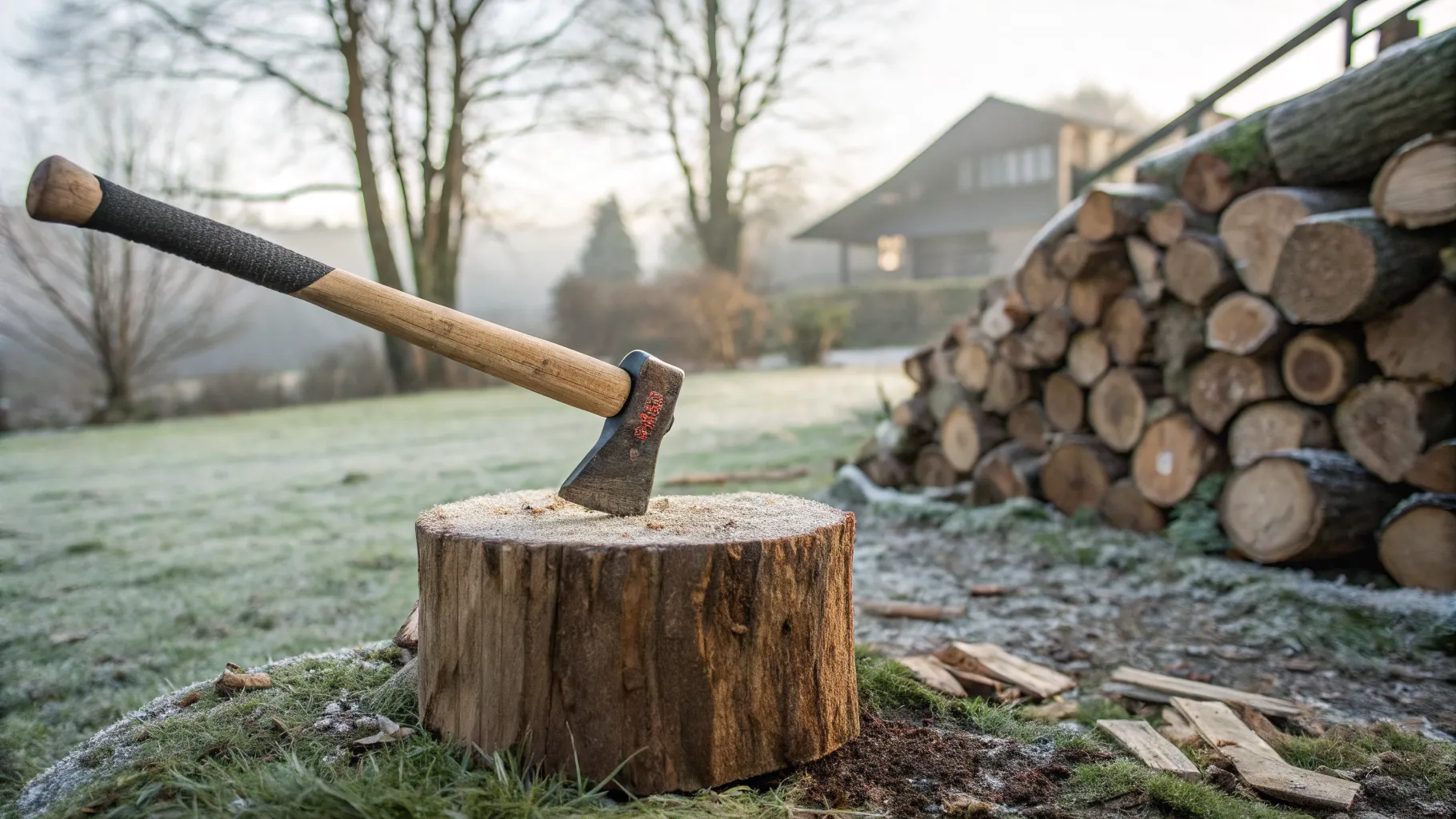
Search for the “best splitting maul” and you will mostly be sold a Fiskars X27. That is fine, except the X27 is not a maul. It is a splitting axe, and the difference decides whether you sail through a winter’s worth of seasoned ash or bounce off a single green oak round until your shoulders give up. This guide names the picks worth buying on Amazon UK right now, but it tells you honestly which are axes and which are true mauls, and when a heavy maul actually earns its keep over a faster, lighter axe.
If you split mostly seasoned logs up to about 30cm across, you almost certainly want a splitting axe and you can skip to the best log splitting axes for the UK. If you are facing big, knotty, stringy rounds, green oak, or interlocked elm, read on: that is maul territory.
Maul or splitting axe: which do you actually need?
These are different tools with different jobs, and most listicles blur them.
A splitting maul has a heavy head, roughly 2.7kg to 3.6kg (6lb to 8lb), with a blunt, broad, wedge-shaped face. It splits by sheer mass and wedge angle rather than a keen edge, so it powers through tough, knotty, oversized rounds and shrugs off the odd nail or grit. The flat poll (the back of the head) is hardened on a proper maul so you can use it to drive a steel splitting wedge into something that will not yield. It is heavy, slower to swing, and tiring over a long session.
A splitting axe is lighter, with a head around 1.8kg to 2kg (4lb) and a sharper, convex-tapered wedge that flares behind the edge to lever the grain apart. It is faster, more accurate, and far less fatiguing, which makes it the right tool for everyday seasoned or kiln-dried firewood. It is not built to be hammered on, and it can bind in stringy green wood.
The practical rule:
- Everyday seasoned or kiln-dried logs, up to ~30cm: splitting axe.
- Big rounds, knotty hardwood, green oak, stringy elm, or driving wedges: true maul.
- Both kinds of wood regularly: own one good axe and keep a maul (or a steel wedge plus a maul) in reserve.
If you want the textbook definition and history, the Wikipedia entry on the splitting maul is accurate and concise.
The picks at a glance
| Job | Tool | Type | Head / total weight | Handle |
|---|---|---|---|---|
| Best overall, everyday wood | Fiskars X27 | Splitting axe | ~1.8kg head / ~2.9kg | FiberComp composite |
| Best lightweight / control | Fiskars X25 | Splitting axe | ~1.8kg head / ~2.5kg | FiberComp composite |
| Best for big stubborn rounds | Roughneck Gorilla 8lb | True maul (anti-jam) | 3.6kg total | Compression-fitted fibreglass |
| Best budget heavy maul | Roughneck 8lb classic | True maul (anti-jam) | 3.6kg total | Epoxy-bonded fibreglass |
| Best premium / traditional | Spear & Jackson Razorsharp 6.5lb | True maul | 2.95kg head / 3.75kg | Hickory |
Best overall for everyday firewood: Fiskars X27
For most UK wood-burner owners, the honest “best splitting maul” answer is a splitting axe, and the Fiskars X27 is it. At 91.5cm (36 inches) and around 2.9kg total, the long handle and forward-balanced head generate real tip speed, and the convex wedge pops seasoned rounds apart in one strike far more often than a blunt maul will. The FiberComp handle is effectively unbreakable and shock-absorbing, the low-friction blade coating helps it pull free instead of binding, and Fiskars backs it with a lifetime warranty. It suits taller users and anyone splitting medium to large seasoned logs day in, day out. Be clear-eyed about it: this is an axe, not a true maul, so it is not the tool for hammering a wedge into a green oak monster. For everything else, it is the one to beat.
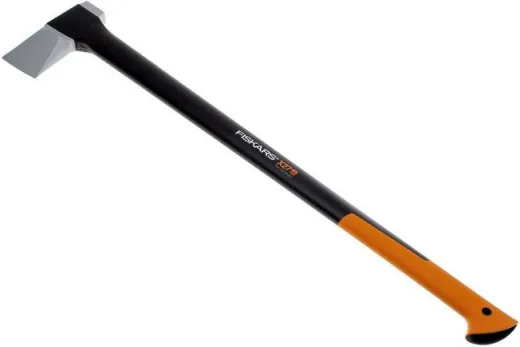
Best lightweight and best for control: Fiskars X25
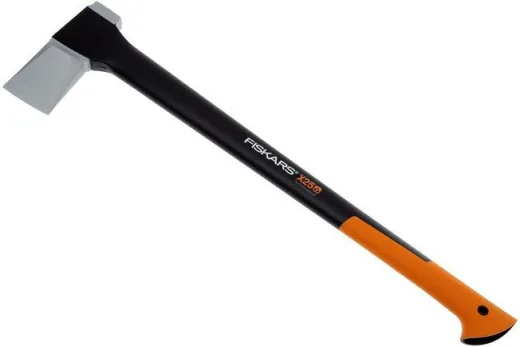
The X25 is the X27’s shorter sibling at about 71cm to 77cm and roughly 2.5kg total, supplied with a storage and carrying sheath. The shorter handle trades a little raw power for a lot of control: it is more accurate, easier to swing in a confined woodshed or close to a chopping block, and noticeably less tiring across a long session. It is the better pick for average-height and shorter users, for anyone whose accuracy falls apart with a 91cm handle, and for splitting smaller rounds where placement matters more than brute mass. Same FiberComp handle, same hardened forged-steel blade, same logic: a fast, sharp splitting axe rather than a maul, and all the better for it on normal seasoned wood.
Best for big stubborn hardwood rounds: Roughneck Gorilla 8lb anti-jam maul
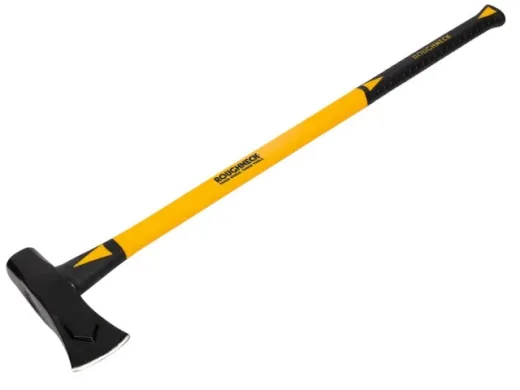
When the round is too big or too knotty for an axe, you want a genuine maul, and the Roughneck Gorilla is the smart one. It is a full 3.6kg (8lb) on a 875mm handle, with a drop-forged, heat-treated head and a dual-wedge anti-jamming head geometry: instead of one wide face that buries and sticks in stringy or interlocked grain, the stepped wedge keeps forcing the split open so the head is far less likely to jam. The Gorilla is the upgraded build in Roughneck’s 8lb maul range, with a compression-fitted solid fibreglass core handle, a shock-absorbing grip, and an overstrike guard, so a missed swing that clips the handle on the log does not destroy it. This is the tool for green oak, beech, and elm rounds that laugh at an axe. Roughneck is a familiar UK trade brand, which is part of why it is an easy one to trust.
Best budget heavy maul: Roughneck 8lb classic
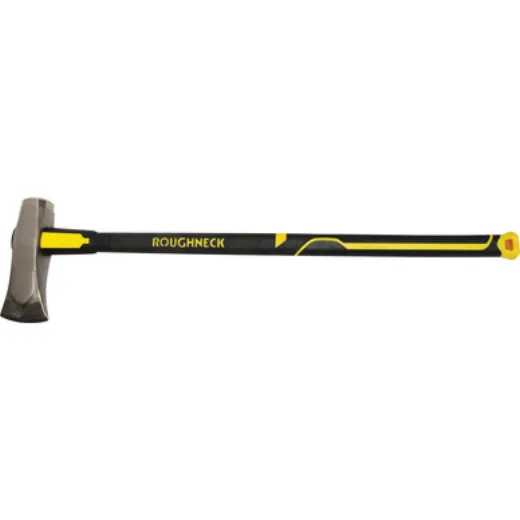
If you want the same 8lb dual-wedge maul for less, the standard Roughneck ROU65662 is the value pick. It shares the anti-jamming dual-wedge head and overstrike protection, drop-forged and heat-treated, with a painted head and polished, lacquered cutting edge for corrosion resistance, but it is built on an epoxy-bonded solid fibreglass core handle with a soft grip rather than the Gorilla’s compression-fitted shaft and shock grip. In practice you give up a little handle refinement and pay less for it; the splitting head is the same idea. For big rounds and for driving steel wedges it is a lot of reliable maul for the money. If 8lb feels like too much, Roughneck also sell a 6lb fibreglass version and a hickory-handled 4.25lb maul, which brings us neatly to the weight question.
Best premium and traditional: Spear & Jackson Razorsharp 6.5lb
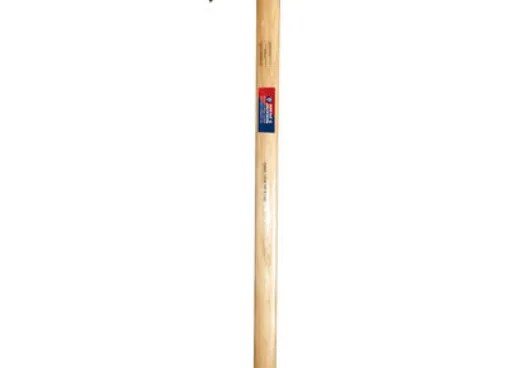
The Spear & Jackson 3765LM is the pick if you want a maul that feels like a maul should: an 885mm hickory shaft, a 2.95kg drop-forged carbon steel head hardened and tempered to a DIN standard, and 3.75kg total. Hickory soaks up shock differently from fibreglass and many people simply prefer the feel and the look of it, and the shaft is replaceable if you ever split it. There is a hooked end to lever and roll heavy logs around, a blade guard in the box, and a 10-year warranty from a British heritage brand. At 6.5lb it is meaningfully lighter than the 8lb Roughnecks, so it tires you less while still being firmly maul-class, which for a lot of people is the sweet spot. Spear & Jackson publish the full specification on the Razorsharp 6.5lb log splitting maul page.
6lb or 8lb: heavier is not automatically better
This is the question buyers agonise over, and the physics has a clear answer. A swinging head’s splitting energy depends on its mass and the square of its speed. Mass only counts once; speed counts twice. So a 6lb maul you can swing fast and accurately delivers more useful energy at the wood than an 8lb maul you can only heave slowly and place badly. The 8lb head also fatigues you far faster, and a tired splitter swings slower and misses more, which makes the gap worse as the session goes on.
The honest guidance:
- Strong, experienced, splitting genuine monster rounds: an 8lb maul is justified, especially for driving wedges.
- Average build, mixed wood, a couple of hours at a time: a 6lb maul or even a sharp 4lb splitting axe will out-perform an 8lb tank.
- Smaller or younger users, or anyone new to it: go lighter. Control and follow-through split more wood than raw mass.
If in doubt, lighter. You can always swing harder; you cannot un-tire your shoulders.
Fibreglass or hickory handle?
Both are good, and the choice is about priorities, not quality.
- Fibreglass (composite): weatherproof, will not rot if left in a damp shed, and survives overstrikes and missed swings far better. Look for an overstrike guard or collar below the head, which is the single most useful feature on a budget maul because most broken handles die from a clipped overstrike, not from splitting.
- Hickory: traditional feel, absorbs shock pleasantly, and is replaceable when it eventually splits. The downside is that a hard overstrike can crack it, and it does not love being left out in the wet.
How to split safely and not get the maul stuck
Technique matters more than tool. A few things that make the biggest difference:
- Set the round on a low, solid chopping block, not on soft ground that swallows the energy. Block height around knee level keeps the swing controlled.
- The old tyre trick: stand the round inside a car tyre laid on the block. It holds the round upright and stops split pieces flying, so you can keep working without resetting.
- Aim for an existing crack or the edge of the round, not dead centre, on big or knotty pieces. Work in from the outside.
- Let the weight do the work. Stand with feet apart, slide your top hand down the handle as you swing, and follow through. Muscling it tires you and ruins accuracy.
- Wear PPE: safety glasses for flying chips, gloves, and steel-toe boots. This is not optional with a 3.6kg head moving at speed. The Art of Manliness guide to splitting firewood walks the technique through clearly.
If the head jams, do not yank it straight up. Rock it side to side to widen the split, or lift the whole round (with the maul stuck in it) and bring it down poll-first on the block to drive it through. An anti-jam head like the Gorilla’s sticks far less in the first place, and for the worst stringy elm a couple of steel splitting wedges driven with the maul’s poll will beat any single swing.
Season your wood first
Most “this log is impossible” problems are really moisture problems. Seasoned firewood, dried six to twelve months under cover to around 20% moisture or below, splits dramatically more easily than green wood. Green oak genuinely splits like concrete, and stringy elm is brutal at any moisture, but most species are far kinder once dry. If you are splitting green to speed up seasoning, expect to work harder and lean on a true maul rather than an axe. To work out how much split wood you actually need stored, our log store size calculator does the maths.
When to skip the maul entirely
A maul is the wrong tool for two jobs. For small kindling, a dedicated kindling splitter such as a Kindling Cracker is far safer and faster than swinging a maul at a thin baton. And if you are processing serious volume, or your back has had enough, a hydraulic machine will out-split any hand tool without the fatigue: see our best log splitter guide and what tonnage log splitter you need to size one.
Frequently asked questions
Is a splitting maul better than a splitting axe? Neither is “better”; they are for different wood. A maul (6lb to 8lb, blunt heavy head) wins on big, knotty, stringy or green hardwood rounds and for driving steel wedges. A splitting axe (around 4lb, sharper) wins on everyday seasoned logs because it is faster, more accurate and far less tiring. Most UK wood-burner owners split mostly seasoned wood, so an axe like the Fiskars X27 handles 90% of the work; keep a maul in reserve for the brutes.
Should I get a 6lb or an 8lb splitting maul? For most people, 6lb. Splitting energy depends on the square of head speed but only linearly on mass, so a 6lb maul you swing fast and place accurately often out-splits an 8lb one you can barely control, and it tires you far less over a session. Reserve 8lb for strong, experienced users tackling genuine monster rounds or driving wedges all day.
What weight maul should a beginner buy? Go lighter than you think. A 6lb maul, or even a sharp 4lb splitting axe such as the Fiskars X25, builds good technique, stays accurate, and does not wreck your shoulders while you learn. You can always upgrade to an 8lb head later if you genuinely need it; most people never do.
Why does my splitting maul keep getting stuck? Usually you are hitting stringy or interlocked grain (elm and green oak are the worst), or burying a flat-faced head dead centre. Aim for the edge of the round and any existing cracks, give the maul a slight twist on impact, and consider a dual-wedge anti-jamming head like the Roughneck Gorilla or ROU65662, whose stepped wedge keeps the split opening instead of binding. For the worst rounds, use steel splitting wedges driven with the maul’s poll.
Fibreglass or hickory handle, which lasts longer? Fibreglass survives missed swings and damp sheds better and will not rot, which makes it the safer choice for most buyers, especially with an overstrike guard below the head. Hickory feels traditional, absorbs shock nicely and is replaceable when it splits, but a hard overstrike can crack it and it dislikes being left out in the wet. Both are good; pick on whether you value durability or feel.
Can I split green or wet wood with a maul? Yes, but it is much harder. Seasoned wood dried to around 20% moisture splits far more easily; green oak is notoriously stubborn and elm is stringy whatever its moisture. If you must split green, use a true maul rather than an axe, work the edges, and keep steel wedges handy. Many people split green and then stack to season, which is fine, just expect to work for it.
Want the seasoning calendar and our log-price watch in your inbox?
Join the Kindling List