How to Split Logs by Hand Safely (Without Wrecking Your Back)
Knowing how to split logs by hand is one of those skills that looks like brute force but is actually mostly technique. Get the tool, the block and the body mechanics right and a round of seasoned hardwood falls apart with a single controlled swing. Get them wrong and you will exhaust yourself, blunt your edge, and wake up with a sore back. This guide covers the safe, efficient way to split firewood by hand, including the simple tricks that stop you bending over between every swing.
Pick the right tool
For splitting (not chopping across the grain), you want a splitting maul or a dedicated splitting axe, not a felling axe.
- A splitting maul has a heavy, blunt, wedge-shaped head. The weight and shape drive the wood apart and resist getting stuck, which makes it the better choice for large, knotty or stubborn rounds.
- A splitting axe (such as a modern lightweight design) is lighter and faster, ideal for straight-grained, smaller rounds where speed and repetition matter more than raw force.
If you are choosing between them, our guide to splitting axe vs maul goes deeper, and the best splitting maul and best splitting axe roundups cover specific tools. Whatever you use, keep the edge sharp and the handle sound.
Set up a proper chopping block
Never split on the ground. Soft ground absorbs the blow, wet ground rots your logs, and a low target forces you to stoop, which is where the back trouble starts. Instead, stand your log on a stable chopping block: a flush-cut section of hardwood, roughly 30cm (about a foot) tall, sitting on firm level ground.
The right block height means you swing down into the wood with a straight back and bent knees, not folded over at the waist. This single change does more to protect your back than anything else.
Use the tyre trick
Here is the tip that transforms the job. Place an old car tyre on top of your chopping block and stand the logs to be split inside it. When you split a round, the pieces stay upright and held together by the tyre instead of flying off across the garden. You just swing again and again without stopping to bend down and reset the wood.
It saves your back, saves time, and keeps split pieces from ricocheting. A bungee cord wrapped around the base of a round does a similar job if you do not have a tyre.
The technique
Good splitting is accurate, not violent:
- Stand square to the block, feet about shoulder-width apart, hips and knees facing forward. Forget the over-the-shoulder, twisting Hollywood swing. It is less accurate and harder on your body.
- Position the log at the far edge of the block, not the centre. If you overshoot, the head buries in the block or the ground beyond, not into your shins.
- Aim at existing cracks. Seasoned wood almost always shows cracks radiating from the centre. Strike into one of those weak points and the wood wants to come apart. Read the grain before you swing.
- Let the tool do the work. Raise it overhead, and as it comes down let the head’s weight accelerate. Slide your top hand down to meet the bottom hand at the moment of impact for both power and control. You are guiding a heavy head, not muscling it.
- Follow through so the edge drives right through the round rather than stopping at the surface.
For big rounds, split off the outer edges first and work inwards, rather than trying to halve a huge log in one go.
Dealing with knots and stubborn logs
Knotty, twisted or elm-type wood can defeat even a good maul. For these, use a steel splitting wedge: set it in a crack, then drive it with the poll of a maul or a sledgehammer. Never hit a wedge with the sharp edge of an axe. Two wedges leapfrogged down a long split will open up the most awkward log. Aiming just to the side of a knot, rather than straight through it, is often the path of least resistance.
Timing helps too: many species split more easily when the wood is still slightly green, or when it is cold and even frozen, than when it is bone dry.
Safety kit and sense
Splitting is safe when you respect it:
- Eye protection against flying chips, and sturdy boots (steel toe caps are ideal) in case of ricochet.
- Gloves for grip and blisters, and long, heavy trousers to shield your legs from debris.
- Clear the area. No children, pets or onlookers within range. A split piece or a glancing head can travel.
- Check your footing is stable and level before every session, and stop when you are tired. Most accidents happen on a fatigued, sloppy swing.
If splitting by hand is becoming a chore because of volume or wrist strain, a powered tool may make sense: see our log splitter buying guide and what ton log splitter you need. Tool makers such as Fiskars publish useful guidance on their splitting tools too.
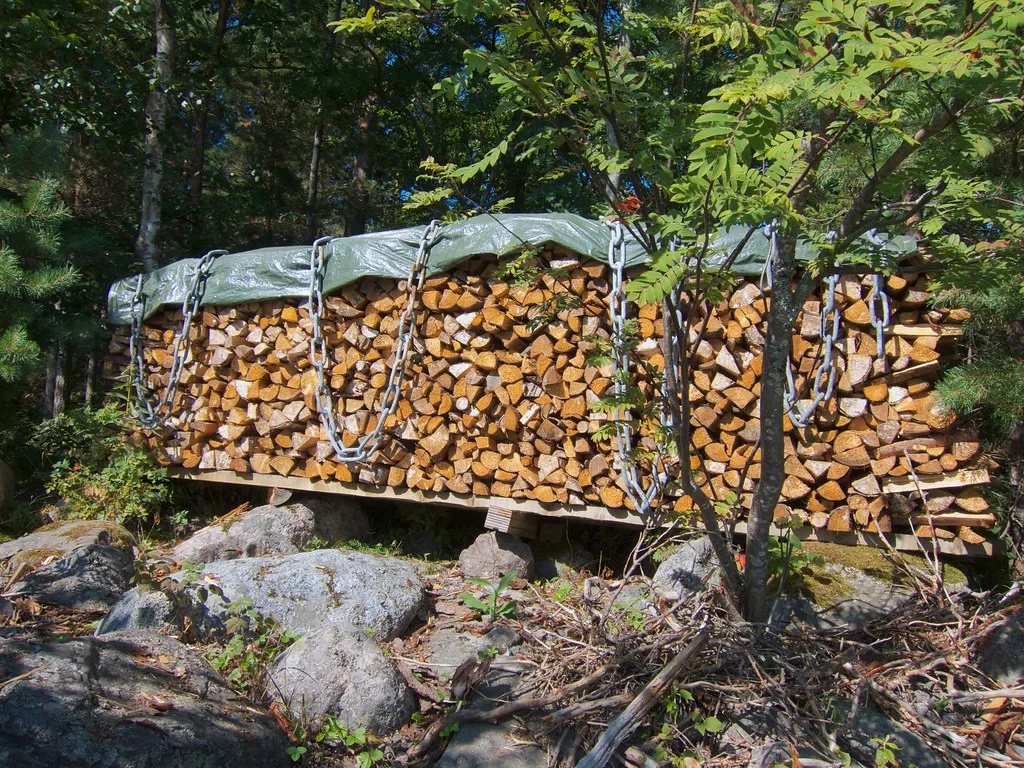
Once your logs are split, the real work is drying them properly, because only well-seasoned wood burns cleanly. Split, stack and season it before it goes near your stove.
Frequently asked questions
What is the best tool to split logs by hand? A splitting maul for large, knotty or stubborn rounds, thanks to its heavy wedge-shaped head, or a lighter splitting axe for smaller, straight-grained wood where speed matters. Avoid a felling axe, which is designed to cut across the grain rather than split along it. Keep whichever you choose sharp and the handle sound.
How do I split logs without hurting my back? Use a chopping block about 30cm tall so you swing with a straight back and bent knees instead of stooping. Add the tyre trick so you are not constantly bending to reset split pieces. Let the tool’s weight do the work rather than heaving with your back, and stop when you get tired.
Where should I aim when splitting a log? Aim at the natural cracks that radiate from the centre of a seasoned round, as the wood wants to split along these. Place the log at the far edge of the block so an overshoot misses your legs, and for knotty wood aim just to the side of the knot rather than straight through it.
Is it easier to split green or seasoned wood? Many species actually split more easily when slightly green or when cold and frozen than when fully dry. That is convenient, because firewood is normally split first and then seasoned. Splitting also speeds up drying by exposing more surface area, so it is worth doing before you stack the wood to season.
Do I need a splitting wedge? Not for straightforward rounds, but a steel wedge is invaluable for knotty, twisted or stubborn logs that a maul cannot part. Set the wedge in a crack and drive it with the poll of a maul or a sledgehammer, never with the sharp edge of an axe. Two wedges worked down a long split will open the toughest wood.
Want the seasoning calendar and our log-price watch in your inbox?
Join the Kindling List