Kindling Cracker Review: Tested on Wet and Dry Wood
Kindling Cracker Review: Tested on Wet and Dry Wood
If you burn wood, you make kindling, and making kindling with a hatchet is how a lot of people end up with a plaster on their thumb. The Kindling Cracker is the cast iron gadget that promises to take the danger out of it. In this Kindling Cracker review we cover exactly how it works, how it copes with both wet and dry wood, the difference between the Original and the King XL, and whether it earns its place by the log store. For where it sits against the alternatives, see our best kindling splitter guide.
What the Kindling Cracker is
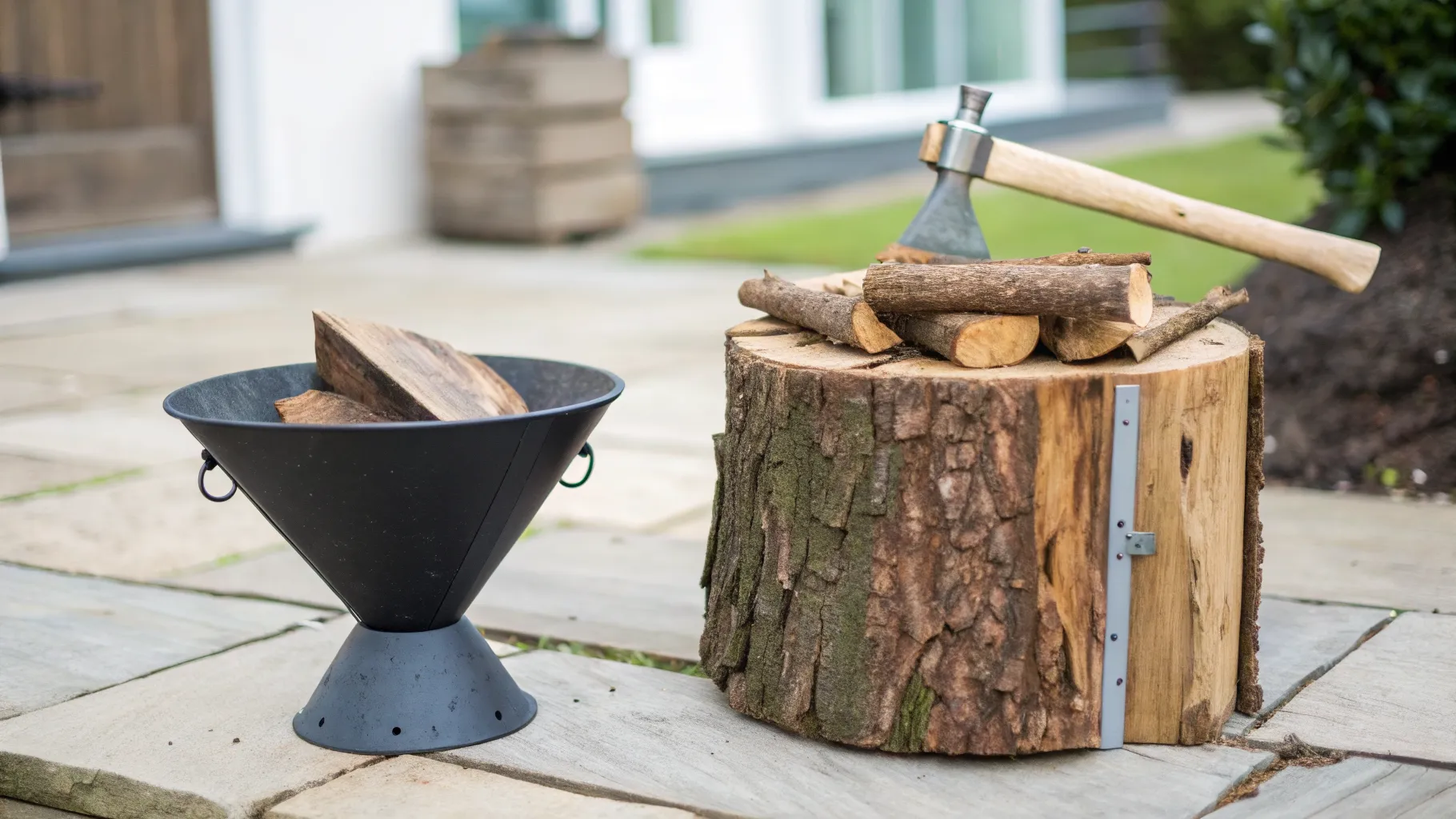
The Kindling Cracker is a heavy cast iron cone with a splitting blade fixed inside a circular safety ring. It was designed by a 13-year-old, Ayla Hutchinson from New Zealand, after her mother hurt her hand with a splitting axe, and it has since become the standard against which every clone is judged. The whole idea is simple and clever: instead of swinging a sharp blade towards your hand, you drive the wood onto a stationary blade, with your fingers kept well clear by the ring.
It is made of solid cast iron and it is heavy, comfortably over 9kg, which is exactly what you want from something you hit repeatedly with a hammer. The Original has an inner safety ring of roughly 16 to 17cm, big enough for the logs most people split into kindling.
How it works
Using it is almost suspiciously easy:
- Bolt or sit the Cracker on a solid base, a log stump, a paving slab or a sturdy bench. It performs best fixed down so it cannot shift.
- Stand a piece of firewood upright inside the ring, resting on the blade.
- Strike the top of the wood with a lump hammer or a heavy mallet (around 1.5 to 2kg). The blow drives the log down onto the blade and it splits.
- Repeat, halving and quartering pieces down to kindling size.
Your hands never go near the blade, and there is no swinging, which is the entire point. Children old enough to swing a hammer can make kindling under supervision without the risks of an axe, though it is still a tool and common sense applies. The official Kindling Cracker site shows the technique.
Performance: wet wood vs dry wood
This is where a lot of buyers worry, so it is worth being clear. On dry, seasoned wood the Cracker is excellent: straight-grained pieces pop apart with one or two taps, and you can produce a basket of kindling far faster and more safely than with a hatchet.
On wet or unseasoned wood it still works, but it asks more of you. Damp timber is fibrous and clings together, so you may need firmer, repeated blows and the split can be stringier rather than clean. The tool copes, it does not jam or fail, but no splitter makes wet wood behave like dry. The honest takeaway: the Kindling Cracker handles both, but like everything, it is happiest with properly seasoned wood. If your wood is wet, that is a seasoning problem to fix at the wood pile, not a fault of the splitter.
Knotty, twisted or very thick rounds are the other limit. The Original’s ring suits typical firewood-sized pieces; oversized or gnarly lumps are better reduced first with an axe or maul, or handled by the larger model.
Original vs King XL
There are two main versions, and choosing is mostly about the size of wood you feed it.
The Kindling Cracker Original is the one most home burners want. Its ring fits standard firewood pieces, it is easier to store, and it is the better value of the two for everyday kindling.
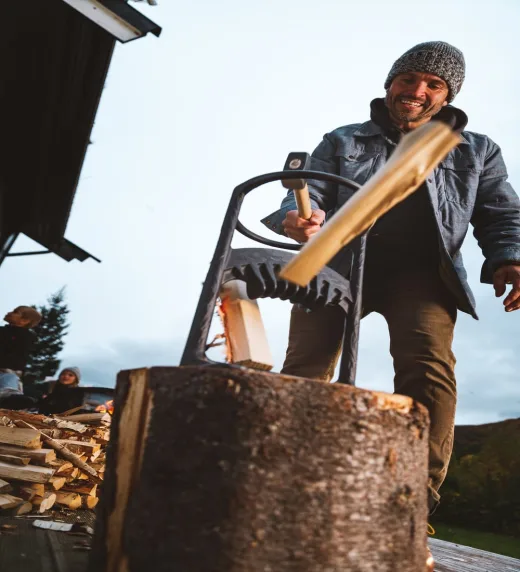
The Kindling Cracker King XL has a larger ring, around 22cm, taking logs roughly 40 per cent bigger. If you split chunkier wood, or you want to take whole small logs down rather than pre-splitting them, the King is worth the extra outlay. It is bigger and heavier to match.

For most people the Original is the right call. Go King XL only if you genuinely handle larger wood.
What we liked, and what to know
The good: - Genuinely safe, hands stay away from the blade, no swinging. - Fast once you have the rhythm: a full basket of kindling in minutes. - Effectively indestructible cast iron with nothing to wear out or maintain. - Easy enough that supervised older children can help.
Worth knowing before you buy: - It is heavy and best bolted down, so it is not a grab-and-go tool. - You need a hammer or mallet, which is not always included. - It is a premium product, and there are cheaper clones (we compare them in our best kindling splitter guide). - Wet and oversized wood need more effort, as with any splitter.
The verdict
The Kindling Cracker does exactly what it claims: it makes splitting kindling fast and, above all, safe. It is not magic on wet wood and it is not cheap, but it is a buy-once tool that removes the single most common way people hurt themselves preparing firewood. For any household that burns regularly, it is an easy recommendation, with the Original being the right pick for most and the King XL reserved for those splitting larger logs. Check the current price on Amazon before you buy, and pair it with a decent lump hammer if you do not already own one. If you prefer a traditional approach, our best splitting axe guide covers the alternative.
Frequently asked questions
How does the Kindling Cracker work? You stand a piece of wood upright inside its cast iron safety ring and strike the top with a hammer or mallet. The blow drives the wood down onto a fixed blade, splitting it, while the ring keeps your hands away from the blade. There is no swinging an axe.
Does the Kindling Cracker work on wet wood? Yes, but with more effort. Dry, seasoned wood splits cleanly with a tap or two, while wet or unseasoned wood is stringier and needs firmer, repeated blows. It copes with both, but seasoned wood is far easier, so damp results point to a seasoning issue rather than a tool fault.
Do you need a hammer with the Kindling Cracker? Yes. You strike the wood with a lump hammer or heavy mallet, ideally around 1.5 to 2kg. One is not always included, so factor in buying a suitable hammer if you do not own one.
What is the difference between the Kindling Cracker Original and King XL? The Original has a roughly 16 to 17cm ring suited to standard firewood pieces, while the King XL has a larger ring (around 22cm) for logs about 40 per cent bigger. Most home burners are well served by the Original; the King suits chunkier wood.
Is the Kindling Cracker safe for children to use? It is far safer than an axe because there is no swinging and the hands stay clear of the blade. Older children who can handle a hammer can make kindling under adult supervision, but it is still a tool with a blade and should be treated with care.
Is the Kindling Cracker worth the money? For regular wood burners, yes. It is a premium price for a cast iron tool that lasts indefinitely and dramatically reduces the risk of injury making kindling. If you only light the odd fire, a cheaper option may suffice, but for frequent use it is a strong buy-once choice.
Want the seasoning calendar and our log-price watch in your inbox?
Join the Kindling List