Best Long Matches for Wood Burners: 94mm vs 280mm
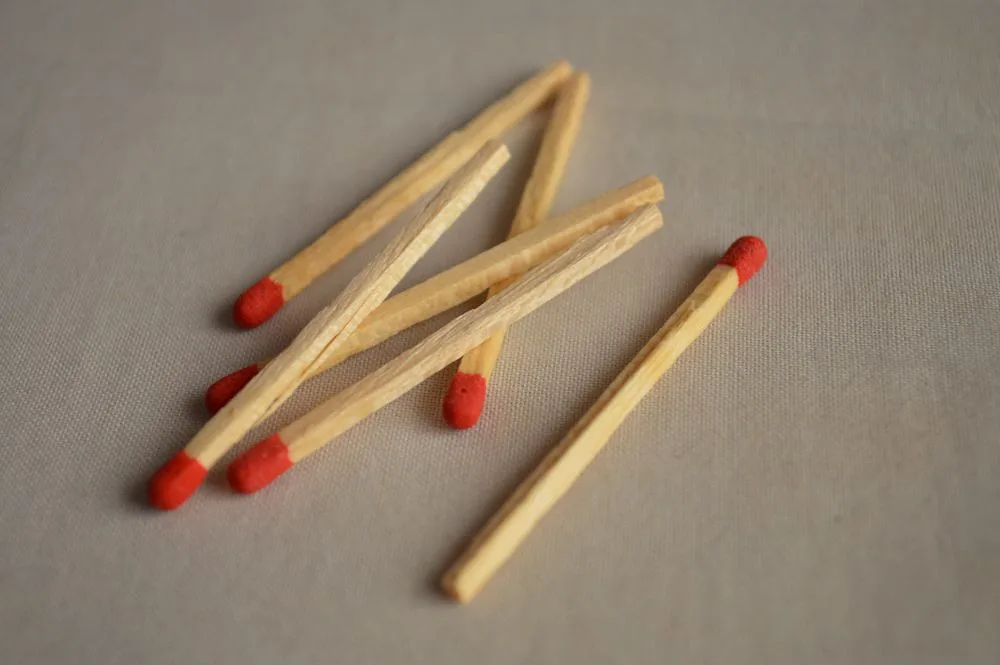
Search for the best long matches for a wood burner and you get two completely different products under the same words. One is 94mm. The other is 280mm. Both are advertised as “extra long”, both turn up in the same results, and only one of them lets you reach a firelighter at the back of a firebox without putting your knuckles inside the stove.
That single fact decides most of the disappointment in this category. Get it right and a box of matches lasts a season and costs less than a fortnight of firelighters. Get it wrong and you have twelve boxes of something barely longer than a kitchen match.
The two lengths, and why the labelling is useless
Around 94mm is what the supermarket brands mean by extra long. Bryant & May’s Extra Long Safety Matches, made in Sweden from aspen and sold through House of Swan, are 94mm with roughly 45 per box. That is a candle and birthday-cake match. It is a genuine step up from the 45mm to 50mm of a standard household match, and it is fine for lighting a hob, a candle or a gas fire from a comfortable angle.
Around 280mm, or 11 inches, is what the fireside trade means. Manor’s 1961 matches, the Galleon Fires boxes and Calfire’s Ultra Large all sit at 280mm with roughly 90 sticks per box. These are the ones designed for reaching into a firebox.
The gap between them is not a nicety. On a 5kW stove, the firelighter sits at the back of a box maybe 300mm deep, and you are reaching in through a door opening ringed by glass and steel that may still be warm from the last burn. With a 94mm match your fingertips end up level with the door frame. With a 280mm match your hand stays outside the stove entirely.
There is a middle option at around 230mm (9 inches), usually 90 to a box, sold by stove spares retailers. It is a reasonable compromise if the 280mm boxes will not fit in your log basket.
Which ones to buy
Manor 1961, the default fireside match
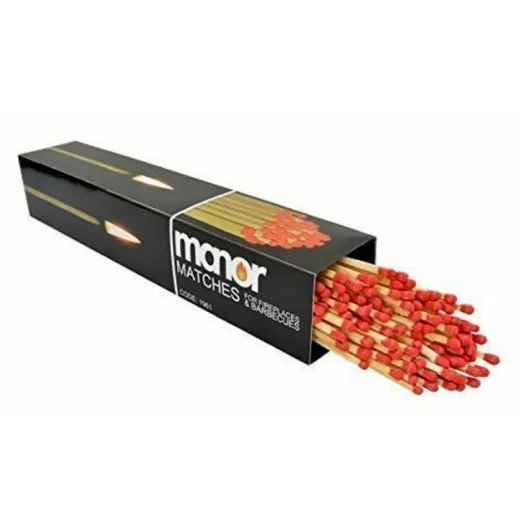
Manor’s fireside matches are the ones that turn up in almost every UK stove shop and hardware store, and they are the sensible starting point. They are 280mm long with approximately 90 matches per box, sold in a slim black carton that slides open so you can pull one from the end without tipping the lot on the hearth.
The important detail is the head. These are thick, well-loaded matches rather than long thin splints, so they carry a decent flame for long enough to get a firelighter properly alight rather than blowing out halfway through the reach. Buying them three boxes at a time works out better, and 270 matches is genuinely a season or two of lighting for most households.
Check price on Amazon.
Bryant & May Extra Long, for everything that is not a stove
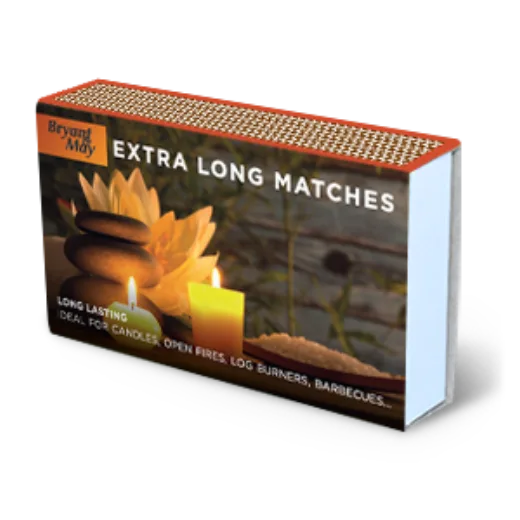
Worth being clear about what this is, because it is the box most people end up with by accident. At 94mm these are not stove matches. They are excellent candle and hob matches: consistent strike, clean burn, made from Swedish aspen, and a wipe-clean box that survives a kitchen drawer.
Buy them if you want a reliable everyday match and you already have a long-reach lighter or proper fireside matches for the stove itself. Do not buy them expecting to light a wood burner with the door open and your hand out of harm’s way, because 94mm will not do that.
Check price on Amazon.
The other 280mm boxes
Galleon Fires and Ecolighters both sell 11-inch boxes of around 90 matches through the same channels, and Calfire’s Ultra Large Safety Matches run to 280mm as well and turn up in fireplace accessory shops rather than supermarkets. Functionally there is very little between any of them at this length. If one is in stock and the others are not, take the one in stock.
Safety matches, not strike-anywhere
Every long match sold in the UK for this job is a safety match. The oxidiser lives in the striker strip on the box, not in the head, so a long match will not light off a stone hearth, a brick or the sole of a boot. Two practical consequences:
- Keep the box. Decanting long matches into a jar or a match holder without the striker leaves you with 90 useless sticks. If you use a hearthside match holder, either buy one sold with a striker panel or cut the striker off the original carton and keep it with them.
- The striker wears out before the matches do on a 90-match box, particularly if it gets damp. Storing the box away from the hearth, where it will not sit in steam from drying logs, makes a real difference.
Getting the technique right
A long match solves reach, not lighting. The rest is method, and it is the same method whichever match you use:
- Light the match away from the stove, let the head burn past the initial flare, then take it in. A freshly struck match carries a spitting head that can drop, and the flame is unstable for the first second.
- Go in low and to the back. Heat rises, so a flame held under the firelighter climbs into the kindling. A flame held above it does nothing.
- Do not light through the air wash. If the door is open and the air control is fully open, the draught pulling across the glass will blow the match out. Crack the door rather than swinging it wide.
- Light two points if you are using a top-down build, one at each end of the top layer, rather than trying to make one firelighter do the whole job.
For the build itself, our guides to kindling for wood burners and firelighters cover what you are actually trying to set alight, and how to light a wood burner with briquettes covers the awkward case.
Matches or a long-reach lighter?
Both work, and the honest answer is that they suit different people.
Matches are cheaper per light, need no fuel, no battery and no maintenance, work when it is cold, and produce no failure mode more complex than a damp striker. They also give you a flame you can see and place precisely, which matters when you are trying to light one specific corner of a firelighter.
A refillable long-reach gas lighter is better if you light a fire every day through the winter, if you have arthritis or limited grip, or if you light from an awkward angle where holding a burning stick steady is uncomfortable. The trade-off is a piezo igniter that eventually fails, gas that runs out at the worst moment, and a flame that gets pushed sideways by draught more easily than people expect. Our roundup of long-reach lighters for wood burners covers the models worth having.
Plenty of people keep both: a lighter for the daily fire and a box of 280mm matches in the log basket for when it is empty.
Frequently asked questions
How long should matches for a wood burner be? Around 280mm, or 11 inches. That is long enough to place a flame at the back of a typical firebox with your hand outside the stove. The 94mm boxes sold as “extra long” in supermarkets are candle matches and leave your fingers at the door opening.
Are extra long matches and fireside matches the same thing? No, and this is the main trap. “Extra long” on a supermarket box usually means about 94mm. “Fireside”, “long fireside” or “ultra large” from a stove or fireplace brand usually means 280mm. Always check the stated length in millimetres rather than trusting the words.
Can I use long matches for a pizza oven or fire pit? Yes, and they are better suited to it than to a stove in one respect: there is no glass to lean past, so the extra reach is pure benefit. Outdoors the limitation is wind, since a safety match blows out easily, so light with your back to the breeze and shield the flame with your free hand.
Why will my long matches not strike on anything but the box? They are safety matches. The chemical that makes a match ignite by friction is in the red striker strip on the box rather than in the head, which is why strike-anywhere matches feel different. Keep the box, or keep the striker panel, or the matches are useless.
How many long matches do I need for a season? A box of about 90 covers a season for most households lighting a few fires a week, allowing for the occasional relight. Buying two or three boxes at once is usually better value and means you are not caught out in January.
Do long matches go off? They do not have a shelf life in any meaningful sense, but damp is their enemy. Matches stored in an unheated porch or next to a log store absorb moisture, and the first sign is a striker strip that smears rather than ignites. Keep them indoors and dry and a box will still work years later.
Want the seasoning calendar and our log-price watch in your inbox?
Join the Kindling List