Best Stove Polish UK: Graphite Shine or Matt Black Restorer
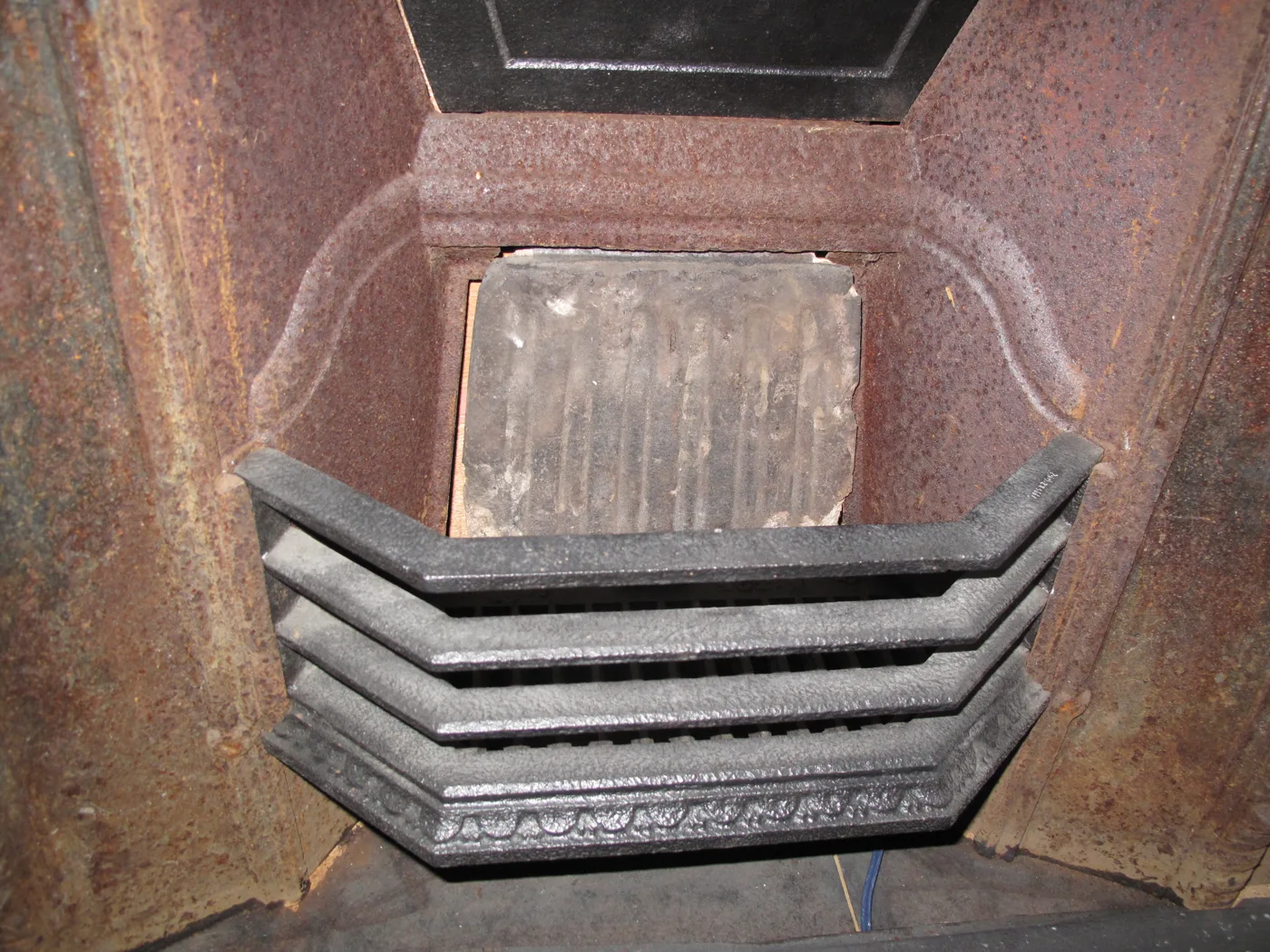
The best stove polish in the UK depends on which black you want. Traditional graphite polish, the modern descendant of black lead, buffs up to a dark metallic sheen that suits old cast iron grates, range cookers and Victorian fireplaces. A wipe-on stove restorer gives the soft matt black that most modern wood burners leave the factory with. Use the wrong one and a matt stove ends up looking shiny and patchy, or an antique grate looks flat.
For a quick refresh of a modern matt stove, Furniture Clinic’s Stove Restorer is the pick. For cast iron that you want to gleam, Hotspot Stove and Grate Polish is the classic. Below are four polishes sold on Amazon UK, checked against the makers’ and UK stockists’ instructions on 25 October 2026, and when you should reach for heat resistant stove paint instead.
The four at a glance
| Polish | Finish | Applied | Light the stove |
|---|---|---|---|
| Furniture Clinic Stove Restorer, 250ml | Matt black | Sponge, buff after 10 minutes | Straight after, to cure |
| Dirtbusters Black Stove Polish & Restorer, 250ml | Soft sheen matt black | Microfibre cloth, thin layers | Straight after |
| Hotspot Stove and Grate Polish, Black, 170ml | Lustrous black | Damp cloth, buff off | Expect some fumes first time |
| Libéron Iron Paste, 250ml | Graphite metallic | Cloth or brush, dry 2 hours, buff | Brief fumes on first firing |
All four go on a cold stove and all four are for the outside only. None of them will fix flaking paint or bare, pitted rust; that is a job for paint.
Polish, restorer or paint?
Graphite polish (blacking) is a paste of graphite and wax or binder that you rub in and buff. It does not form a layer that peels; it sits in the surface of the iron. It suits cast iron that was blacked originally: grates, fireplace inserts, old ranges, companion sets. It gives a sheen, and it can mark soft furnishings if a cushion brushes the stove.
Stove restorer is the newer, water-based alternative. You wipe it on, it darkens faded and grey patches, and the heat of the fire cures it into a matt coat. It is the closest match to the factory finish on most modern stoves, and nothing needs masking.
Stove paint is for when the finish has gone: rust that has eaten in, flaking old paint, or a colour change. A polish will not cover those. Our guide to the best heat resistant stove paint covers the 600°C-plus sprays and tins.
Furniture Clinic Stove Restorer: the best for modern matt stoves
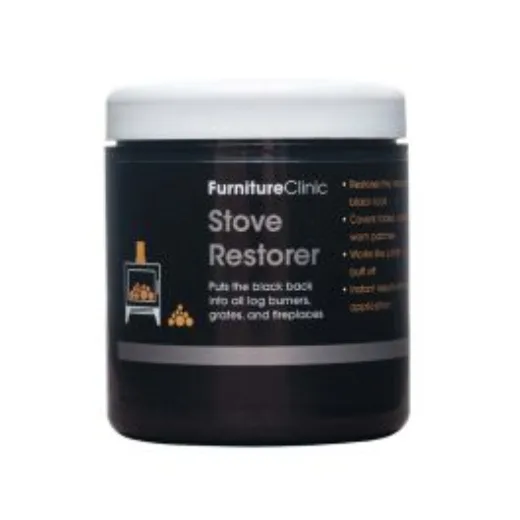
Furniture Clinic, the British leather and furniture care company, makes this as a polish that behaves like paint without the painting. It is water based, which Furniture Clinic says makes it easier and safer to use than traditional polishes, and its listing describes it as non-flammable, fume free and odour free.
Furniture Clinic’s method is simple: clean off soot, ash and dirt first, dip a sponge in the restorer and rub it into the metal, leave it 10 minutes to dry, polish with a clean cloth, then light the stove to cure it. Heavily faded patches may need a second coat. Because it is not a painted layer, the maker says it will not peel, flake or burn off. Clean the glass at the same time; our best stove glass cleaner roundup covers what shifts tar fastest. Check price on Amazon UK.
Dirtbusters Black Stove Polish & Restorer: light it straight away
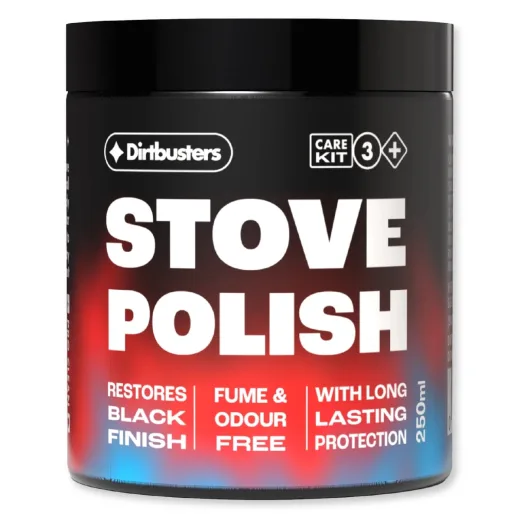
Dirtbusters’ polish does the same job as Furniture Clinic’s with a slightly different finish: Dirtbusters describes it as a soft sheen matt black rather than a dead flat one. It is liquid, it covers rust spots, marks and faded patches, and the maker says the fire can be lit straight after applying it, with no fumes or odour.
Dirtbusters’ own instructions are to clean the stove first, wear gloves (it stains hands), put a little on a microfibre cloth, and work it over the surface in thin layers with circular motions. Then either light the fire to form the protective coating, or let it air dry and add more layers over stubborn rust and discolouration. It also works on fire surrounds and grates that are not in use, and on cast iron pan supports. Check price on Amazon UK.
Hotspot Stove and Grate Polish: the classic black shine
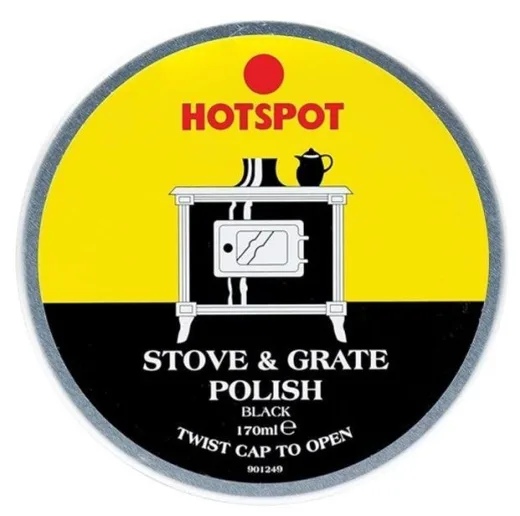
Hotspot is the stove-care range behind the stove paint we recommend, and its grate polish is the traditional choice for blacking cast iron. It is a black polish whose fine pigments sit in the surface of the iron to hide small scratches and light rust, leaving a lustrous black finish that does not rub off once dry. Hotspot’s Amazon listing notes it is not for barbecues or food-contact surfaces.
Stockists’ instructions: make sure the stove or grate is cold or only just warm, apply a thin, even coat sparingly with a damp cloth, let it dry for a few seconds, then polish off with a soft cloth or brush until no residue shows. Excess left on the surface can give off fumes when the stove is next lit, so buff thoroughly and ventilate the room on the first fire. Add a few drops of water to the tin after use to stop it drying out. Check price on Amazon UK.
Libéron Iron Paste: for cast iron fireplaces and grates
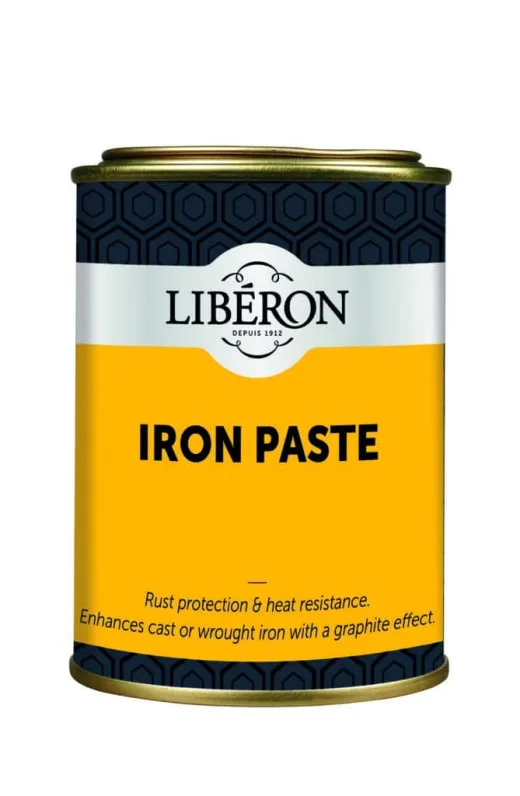
Libéron’s Iron Paste is the one furniture restorers reach for on period fireplaces. It gives a graphite effect on cast or wrought iron, reduces the chance of rust, and Libéron rates it heat resistant to 700°C, so it can go on a grate or insert that is used.
The method takes more time than the others. Libéron says to clean off dirt and grease first (it suggests its Wax and Polish Remover with fine steel wool), take off loose rust with a brass brush, apply a thin coat with a cloth, leave it two hours, then polish with a soft cloth or brush. When the fireplace goes back into use, the fumes released are temporary and, Libéron says, not toxic. It cleans up with white spirit, and the 250ml tube goes a long way. Check price on Amazon UK.
Also worth knowing about
Stovax Black Grate Polish is the stove maker’s own graphite polish in a 75ml tube, sold on Amazon UK. Stovax describes the finish as silver-black, and buyers report a graphite sheen rather than a deep black, which suits old cast iron better than a modern matt stove.
Hotspot Stove Restorer is a newer 250ml matt restorer from Hotspot, sold on Amazon UK as a paste that restores the black on stoves, ranges and grates. We have not found detailed maker instructions for it yet, so it is not one of our four.
How to polish a wood burner properly
- Wait until it is completely cold. Polish on a warm stove smears and can smoke. Hotspot allows “only just warm”; the others say cold.
- Clean first. Brush off ash, wipe away soot, and remove loose rust with a wire or brass brush. Polish over dirt looks grey within a week.
- Protect the room. Lay old sheets over the hearth and nearby carpet; graphite and restorers both stain. Wear gloves.
- Less is more. Thin coats, worked in. Thick polish either never dries properly or burns off as smoke.
- Keep it off the glass and seals. If polish gets on the door rope or the glass, wipe it off before lighting.
- Cure with a small fire. Light a modest fire first and open a window. A sudden roaring fire on fresh polish gives the most smoke and smell. Our guide on how to read a stove thermometer shows the gentle heat band to aim for.
Most stoves need polishing once or twice a season. If you find yourself polishing every few weeks, or the stove keeps going grey in the same spot, that patch is running very hot, and it is worth checking the fire is not being overfired.
Frequently asked questions
What is the best stove polish for a log burner? For a modern matt black log burner, a wipe-on restorer such as Furniture Clinic Stove Restorer or Dirtbusters Black Stove Polish gives the most factory-like finish. For a cast iron stove or grate you want to shine, Hotspot Stove and Grate Polish or Libéron Iron Paste give a black or graphite sheen.
Is stove polish better than stove paint? They do different jobs. Polish refreshes a finish that is faded or patchy but intact, and needs no masking. Paint is for bare metal, deep rust or flaking old paint, and lasts longer once cured. If the stove is just grey and tired, try polish first.
Is black lead still sold? True black lead, a graphite paste, is still the basis of grate polishes such as Stovax Black Grate Polish and Libéron Iron Paste, though old brands such as Zebo are hard to find. Modern versions are sold as grate polish or iron paste.
Can you light a wood burner straight after polishing? With Dirtbusters’ polish, yes, and Furniture Clinic’s restorer is cured by lighting the stove. With graphite polishes, buff off every trace of excess first, because leftover polish smokes on the first fire. Libéron advises letting its paste dry for two hours before polishing.
Why does my stove smoke after polishing? Usually too much polish was left on the surface. The excess burns off on the first hot fire. Open the windows, keep the first fire small, and buff more thoroughly next time.
How often should you polish a wood burner? Once or twice a heating season is typical. Polish when the stove looks grey or patchy, always when it is cold, and clean off soot first.
Want the seasoning calendar and our log-price watch in your inbox?
Join the Kindling List