Forest Master FM10D 7 Ton Log Splitter Review (DuoCut Blade)
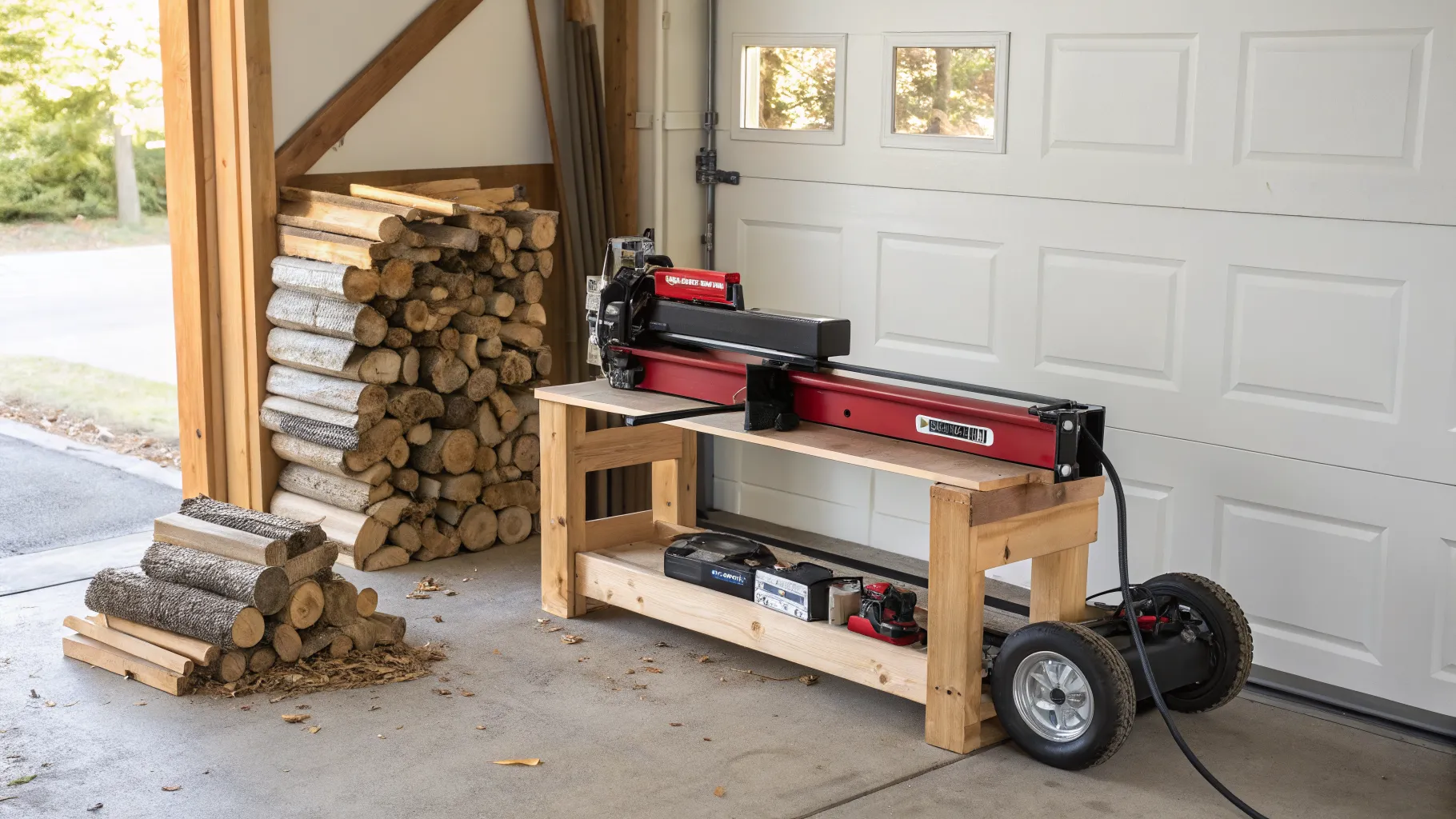
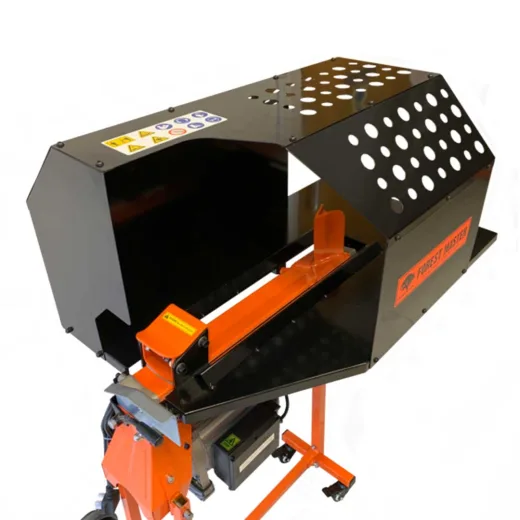
Decoding the Forest Master model maze is the single most useful thing to get right before you spend a penny, because the name “FM10D” alone covers two different machines and several physical configurations. The model this review covers is the FM10D-7-TC: the 7 ton, DuoCut, bench/ground version with the workbench and guard, no stand.
If you buy the wrong suffix, you either get a weaker 5 ton ram or a unit without legs that you assumed had them. Here is the family laid out plainly.
Which Forest Master is this, exactly
| Model | Force | Max log length | Stand | Notes |
|---|---|---|---|---|
| FM10D-TC | 5 ton | 450mm | None (bench/ground) | Cheaper entry point |
| FM10D-7-TC | 7 ton | 450mm | None (bench/ground) | This review |
| FM10T-7-TC | 7 ton | 450mm | T-stand (legs) | Adds working height |
| FM10TW-7 | 7 ton | 450mm | Trolley/wheeled stand | Easier to move |
| FM10-AT | 7 ton | 450mm | Four PU all-terrain wheels | Most portable |
The suffix logic, once you know it, is consistent: D = bench or ground, T = T-stand legs, TW = trolley wheels, -7 = the 7 ton ram, -TC = supplied with the workbench and guard. So FM10D-7-TC reads as “DuoCut, bench, 7 ton, with bench and guard.”
The practical upshot: the D model sits on a workbench or on the ground. It has no legs and no wheels. At 62kg it is a two-person lift. If you want to wheel it across a yard, you want the TW or AT variant instead, and you should not assume this one moves easily once it is set down.
For the smaller 5 ton machine in this family, see our Forest Master FM5 review.
Confirmed specifications
These figures come from the official Forest Master product page for the FM10D-7-TC.
- Splitting force: 7 tons
- Motor: 2200W
- Power supply: 220 to 240V, 50Hz, runs off a standard UK 13A domestic socket
- Hydraulic pressure: 500 bar (7250 psi / 50 MPa)
- Maximum log length: 450mm (about 17.7 inches)
- Maximum log diameter: up to 400mm, which is what the workbench and guard accommodate
- Throughput: around 100 logs per hour (manufacturer claim)
- Net weight: 62kg including the workbench and guard
- Oil: pre-filled with hydraulic oil, ready to run out of the box
- Operation: two-hand operation (a button and a lever pressed together) for safety
- Compliance: CE and UKCA marked; supplied workbench and guard are CE/UKCA compliant
A 13A plug is the headline for a lot of buyers. You do not need a 16A blue commando socket or three-phase power. Plug it into a normal garage or outhouse socket and it runs.
The DuoCut blade: what it actually does
The DuoCut is the reason to look at this model over a plain single-wedge 7 ton splitter. It is a twin-blade design that drives into the log from both ends at once.
The mechanical argument is sound. A single wedge has to find one route through the grain, and if the leading edge meets a knot it stalls or jams. With two blades working from opposite ends, the split tends to find the path of least resistance from either direction; if one blade hits a knot, the other often completes the split. In day-to-day use that means fewer logs hung up half-split on the ram.
Forest Master markets this as letting a 7 ton machine “split like a 10-ton.” Treat that as a performance claim, not a force rating. The hydraulic ram still produces 7 tons of force, and on a very large, bone-dry, dense hardwood round the laws of physics do not change. What the DuoCut genuinely buys you is better behaviour on awkward and knotty logs, and less time spent clearing jams, rather than literally the crushing force of a 10 ton ram. That is a real benefit, just a different one from the one the slogan implies.
Is 7 tons enough for hardwood?
This is the question that decides whether you are happy with this machine or frustrated by it.
For the firewood most UK households actually burn, 7 tons is enough. Seasoned ash, birch, sycamore and medium rounds of oak and beech split readily. The thing many first-time buyers get backwards: green or part-seasoned wood often splits more easily on a machine in this class than bone-dry wood, because dry fibres lock together harder. If you are processing your own logs from felling through to the stack, the freshly cut and partly seasoned stuff is rarely the problem.
Where 7 tons reaches its ceiling is large-diameter, fully dry, dense hardwood and gnarly knotted rounds, the kind with twisting grain or where a branch joined the trunk. The DuoCut helps here more than a single wedge would, but it is not magic. If a big share of your wood is huge dry oak or beech butts and elm, you want to size up to a 10 to 16 ton machine and accept the extra cost and bulk.
A blunt summary:
- Good fit: domestic firewood, seasoned softwood and medium hardwood, occasional to regular weekend processing
- Marginal: large dry hardwood rounds, frequent knotty timber
- Wrong tool: high-volume or commercial splitting, consistently huge dense butts
If you are still weighing machines against each other, our best log splitter UK guide compares this class against higher-tonnage options.
The Ram Stop, and why it matters for short logs
The Ram Stop is an adjustable stop that shortens the ram’s return travel. On a full cycle the ram pushes the log through the blade, then retracts all the way back. If you are splitting a stack of short logs, all of that return travel is wasted motion that adds up over a hundred cycles.
Set the Ram Stop so the ram only returns far enough to clear your log length, and every cycle gets shorter. Across an afternoon of kindling-length and short stove logs, that is a meaningful saving. It is a small feature that earns its keep if you cut to a consistent short length. If most of your kindling is split by hand or with a dedicated tool, see our best kindling splitter UK roundup.
Living with it: the honest friction
A few things the spec sheet will not tell you straight.
The weight. 62kg with the bench and guard. This is not a machine you casually shift. Decide where it lives before it arrives, and plan a two-person lift to get it there. The D model has no wheels, so once it is on a bench it stays put.
No stand. The TC supplies the workbench and guard, but the D suffix means there are no legs. You either work on it at the height of whatever bench you stand it on, or you operate it lower down, which is harder on your back over a long session. If working height matters to you, the FM10T-7-TC (legs) or FM10TW-7 (trolley) is the better buy, and that decision should be made now, not regretted later.
Corded reach. It is electric, so it is quieter than petrol, produces no fumes and is fine to run in a garage or outhouse. The trade-off is the cord: you are tethered to a socket and an extension lead, so you bring the logs to the machine rather than the machine to the woodpile. For most domestic users that is the right trade, but it is a trade.
The dense-knot ceiling. Covered above, but worth repeating as ownership reality rather than a spec: you will occasionally meet a log this machine will not finish, and that is normal for the 7 ton class.
Troubleshooting
A few faults come up often enough to plan for.
- A log jams against the guides: place previously-split logs on the bench split-face up. Loading them split-face down lets the flat face catch against the log guides and jam.
- The ram will not return: a rare ram-return fault traces to a faulty hand-wheel pin. The fix is a replacement pin from the dealer, not a workaround. Forest Master’s UK technical support handles this directly.
- Pump bolts: do not over-tighten them. Over-tightening the pump bolts can cause problems rather than prevent them.
- Oil: you do not add any. The machine ships pre-filled and ready to run.
Why the brand matters here
Forest Master Ltd is a family-run forestry-equipment firm in Tyne and Wear, near Newcastle, incorporated in 2010 and registered at Companies House under number 07402638 (you can check the Companies House record yourself). It positions itself as a UK forestry-equipment specialist with in-house technical support.
For a machine where the most common real-world fault is a small part like a hand-wheel pin, UK-based support and parts is not a marketing line, it is the difference between a quick replacement and an import you cannot get spares for. Bought direct, the FM10D-7-TC comes with a 2-year warranty and UK technical support. The same machine is sold on Amazon.co.uk under the listing for the FM10D-7-TC; just confirm the exact model and seller on the live page before you order, because Forest Master’s listings are spread across several similar SKUs. Check price on Amazon, and cross-check it against buying direct from Forest Master.
Who should buy it
Buy the FM10D-7-TC if you are a domestic or regular firewood user processing mostly seasoned softwood and medium hardwood, you have a bench or fixed spot for it, and you want the DuoCut’s resistance to jamming. The 7 ton ram and the twin blade are a genuinely good pairing for this kind of work, and the UK support behind it is worth real money.
Look elsewhere if you need to move the machine around (choose the TW or AT variant), if you want a comfortable working height out of the box (choose the T-stand model), or if your wood is consistently large, dry and dense (size up to 10 tons or more).
If you process firewood mostly by hand, a good splitting tool may serve you better than any electric machine; see our best log splitting axe UK guide.
Frequently asked questions
Is the FM10D-7-TC enough for hardwood like oak, ash and beech? For most UK firewood, yes. Seasoned ash and medium rounds of oak and beech split well, and green or part-seasoned wood usually splits more easily than bone-dry timber on this class of machine. Its limit is very large, dry, dense hardwood and gnarly knotted rounds, where you would want a 10 to 16 ton splitter instead.
What is the difference between the FM10D, FM10T and FM10TW, and the 5-ton versus 7-ton? The number after the letters is the force: -7 means the 7 ton ram, while a plain FM10D-TC is the 5 ton machine. The letters describe the stand: D is bench or ground with no legs, T adds a T-stand for working height, and TW adds a wheeled trolley. So FM10D-7-TC is the 7 ton bench model with bench and guard and no legs.
Does the DuoCut blade actually stop the machine jamming? It reduces jamming rather than eliminating it. Cutting from both ends of the log at once means a split can find the path of least resistance, and if one blade meets a knot the other often finishes the cut. The “splits like a 10-ton” line is a manufacturer claim about behaviour on awkward logs, not a literal force rating; the ram still produces 7 tons.
Can it run off a normal household socket? Yes. It runs on 220 to 240V at 50Hz and plugs into a standard UK 13A domestic socket. You do not need a commando socket or three-phase supply.
What is the largest log it will take? Up to 450mm long and up to 400mm in diameter, which is what the supplied workbench and guard accommodate.
What do I do if the ram will not return? A rare ram-return fault traces to a faulty hand-wheel pin, with the fix being a replacement pin from the dealer. Also check that you have not over-tightened the pump bolts. Forest Master’s UK technical support deals with this directly.
How many logs per hour can it do? Forest Master claims around 100 logs per hour. The Ram Stop, which shortens the ram’s return travel, speeds this up noticeably when you are splitting short logs.
Do I need to add hydraulic oil? No. The machine ships pre-filled with hydraulic oil and is ready to use out of the box.
Is the 7-ton worth it over the 5-ton FM10D-TC? For any hardwood, yes. The price gap between them is small relative to how much more comfortably the 7 ton handles denser and knottier wood.
Is an electric splitter better than petrol for home use? For garage or outhouse use, electric suits most people: it is quieter, produces no fumes and needs no fuel. The trade-off is the cord, which tethers you to a socket and means you bring the logs to the machine rather than the machine to the woodpile.
Does it come with a stand? No. The D in FM10D means it is the bench or ground model with no legs. The -TC supplies a workbench and guard, but if you want legs or wheels you need the FM10T-7-TC or FM10TW-7 instead.
Want the seasoning calendar and our log-price watch in your inbox?
Join the Kindling List