How Many Firelighters for a Wood Burner?
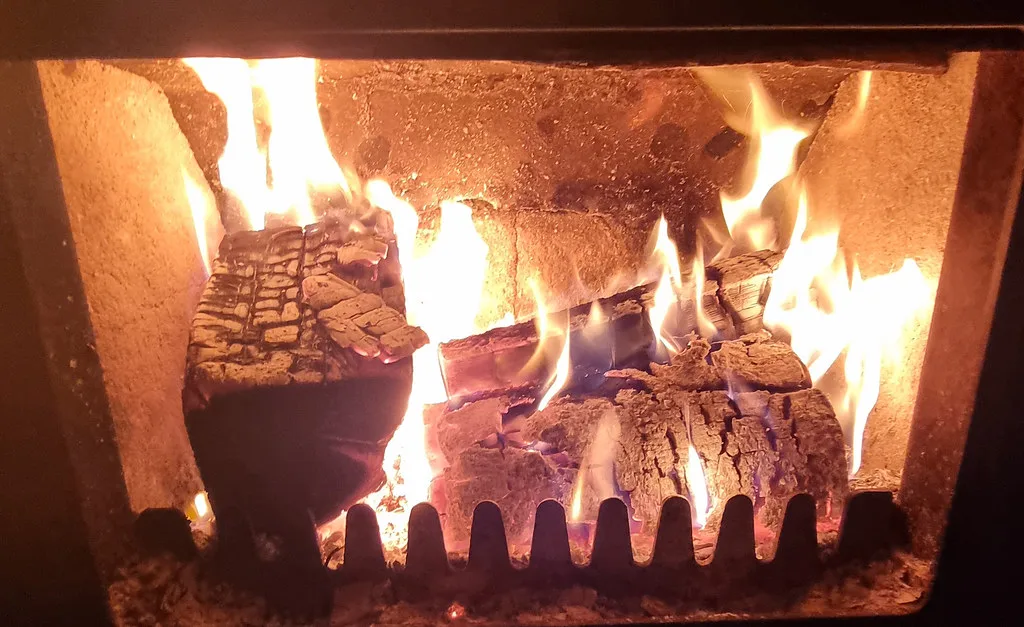
How many firelighters to use in a wood burner comes down to one number: one for a normal light, two if you are lighting top down or the stove is stone cold. That is what the firelighter makers say and it is what HETAS says. If you routinely need three or four, the firelighter is not your problem, and this page is mostly about finding out what is.
What the people who make them actually say
It is worth putting the published guidance side by side, because it is more consistent than the arguments in stove forums suggest.
Certainly Wood, who make Flamers, are the bluntest. Asked how many you need, their answer is “just the one, along with 6 to 8 sticks of kindling and a couple of logs.” One firelighter, and they are clear that the kindling count matters as much as the firelighter.
Lekto say much the same about their natural firelighters: “one or two firelighters should be enough for most use cases.”
HETAS, the body that certifies solid fuel installers, specifies two in its top-down method, and is precise about where they go. Two small logs on the fire bed, five pieces of kindling, four more laid at 90 degrees with two firelighters in the gaps between them, then another five pieces of kindling on top. Fourteen pieces of kindling, two firelighters.
So: one is the default, two is right for top-down, and the makers of the things have no commercial reason to talk you down from three.
A firelighter is a timer, not a fuel
This is the bit that makes the number make sense, and almost nothing written about firelighters says it.
A wood wool firelighter burns for 8 to 10 minutes. That is the figure Flamers publish and Lekto publish the same. Those eight to ten minutes are not there to heat your room. They are there to hold a steady flame underneath your kindling for long enough that the kindling catches properly on its own.
Eight minutes is a generous window. Thumb-thick kindling in good condition catches in two or three. If your kindling has not taken hold after eight minutes of direct flame, a second eight minutes will not change the outcome, because the thing stopping it is not a shortage of flame. Adding a third firelighter buys you another ten minutes of the same failure and a sootier window.
Think of it as a stopwatch. One firelighter is ten minutes to get the kindling going. If you are losing that race, fix the runner, not the clock.
How many, by type
| Firelighter | Typical burn | How many for a stove |
|---|---|---|
| Wood wool cylinder (Flamers, Lekto and similar) | 8 to 10 minutes | One. Two for a top-down build or a cold stove |
| Wrapped kerosene firestarter (Zip wrapped and similar) | Up to 18 minutes, per the maker | One. They burn longer, so two is usually waste |
| Traditional white block | Sold scored into segments | One segment, not the whole block |
Two notes on that table.
Wrapped kerosene starters burn roughly twice as long as wood wool, which is why one of them does the job of two Flamers. If you are switching between types, the number changes with the type, and that catches people out when they move to natural firelighters and quietly start under-lighting.
The white blocks are designed to be broken. People forget, put a whole one in, and get a paraffin smell through the room and a film on the glass. Snap it. Our comparison of wood wool against cube firelighters goes through the trade-offs, and the firelighters and kindling buying guide covers the rest of the field.
If you need three, something else is wrong
Five causes, roughly in order of how often they turn out to be the answer.
Your wood is wet. By some distance the most common. Firewood sold in volumes up to 2m³ has to carry Ready to Burn certification, which means 20 per cent moisture or below, but that guarantee ends the day it leaves the yard, and it never covered anything you seasoned yourself. Wet kindling will absorb a firelighter’s entire output evaporating water and still not catch. Check it properly with a moisture meter rather than by feel.
Your kindling is too thick, or all one size. Fourteen pieces of uniform, chunky kindling is a much harder light than a graded mix of pencil-thick and thumb-thick. The thin stuff catches from the firelighter, the thick stuff catches from the thin stuff. Skip the first rung and the ladder does not work. Making your own kindling is the cheap fix here.
The stack is too tight. Firelighters need air as much as the wood does. Kindling packed flat with no gaps smothers the flame. Lay it in crossed layers so there is a visible gap between every piece.
The air controls are shut. Every stove should be lit with the primary air fully open, and on most Ecodesign stoves the lighting position is marked. Closing down too early is the single most common operating mistake, and it looks exactly like a firelighter problem.
The flue is cold. Covered below, because this is the one case where the answer genuinely is different.
None of those five is solved by more firelighters. Four of them are made slightly worse by it, because a bigger, dirtier initial flame in a stove that is not drawing properly puts more unburnt residue on the glass and in the flue.
The cold flue exception
There is one situation where an extra firelighter is the right call, and it is the first fire of the season.
A flue that has stood unused through the summer fills with cold, dense air. That plug of air sits there and resists everything you do, which is why an October relight can fill the room with smoke while the same stove lit happily all through March. The fix is not more fuel in the firebox. It is getting heat up the flue to reverse the flow before you commit to a full load.
The practical version: light a single firelighter on its own, up high, near the flue outlet, and let it run for a minute or two before you light the main build. You are priming the chimney, not starting the fire. Once you feel the draught pull, light the proper fire underneath. A top-down build helps here for the same reason, because it keeps the first flames high in the firebox where they warm the flue fastest, which is covered in how to light a wood burner top down.
Two firelighters on the first light of the season is sensible. Two firelighters every night in February is telling you something.
The case for one
Beyond the fire itself, the count adds up. At one firelighter a fire, a box of 200 covers roughly 200 fires, most of a burning season for a stove lit four or five nights a week. At three a fire the same box is gone in 66. That is the difference between buying firelighters once a year and buying them three times.
There is a cleanliness argument too. Every firelighter you burn deposits a little residue, and paraffin-based ones deposit more. Two of them in a stove that is drawing badly is how you get the greasy film on the inside of the glass that no amount of air wash clears.
And there is a diagnostic argument, which matters most. A household that lights on one firelighter every night knows immediately when something has changed. A household that throws in three has no signal at all, and will go a whole winter burning damp wood without noticing.
The short version
Use one. Use two for a top-down build or the first fire of the season. Pair it with 6 to 14 pieces of graded kindling depending on the method, open the air fully, and give it eight minutes before you conclude anything. If it fails on one firelighter, check the wood before you reach for a second.
Frequently asked questions
How many firelighters should I use in a log burner? One for a standard light. Two if you are building the fire top down, where HETAS specifies two placed in the gaps between crossed layers of kindling, or if the stove and flue are completely cold after a long break.
Can you use too many firelighters? Yes, though not dangerously in a correctly installed stove. The practical penalties are a sooty window, a paraffin smell in the room, faster consumption of the box, and losing your ability to tell when the wood or kindling has gone off. More than two is a symptom rather than a technique.
How long does a firelighter burn for? Wood wool firelighters burn for 8 to 10 minutes, which is what both Flamers and Lekto publish. Wrapped kerosene firestarters claim up to 18 minutes. That window is meant to be long enough for kindling to catch on its own, not to heat the stove.
Why won’t my fire light with one firelighter? Almost always wet wood or kindling that is too thick. Check moisture with a meter, grade the kindling into pencil-thick and thumb-thick, leave visible air gaps in the stack, and make sure the primary air control is fully open. See seasoning firewood below 20 per cent if the moisture reading is high.
Do I need firelighters at all, or will newspaper do? Firelighters are better. Modern newsprint burns fast and cool, throws ash flakes up the flue, and is usually spent before the kindling has taken. One wood wool firelighter does the job of a whole sheaf of paper and does it cleaner.
How many firelighters for briquettes or heat logs? Usually two, and more kindling than you would use for split logs. Compressed briquettes are dense and have very little surface area to catch, so they need a longer and better established kindling fire underneath them. Our guide to lighting a wood burner with briquettes covers the build.
Sources
Want the seasoning calendar and our log-price watch in your inbox?
Join the Kindling List