How to Light a Wood Burner: Top Down Beats Bottom Up
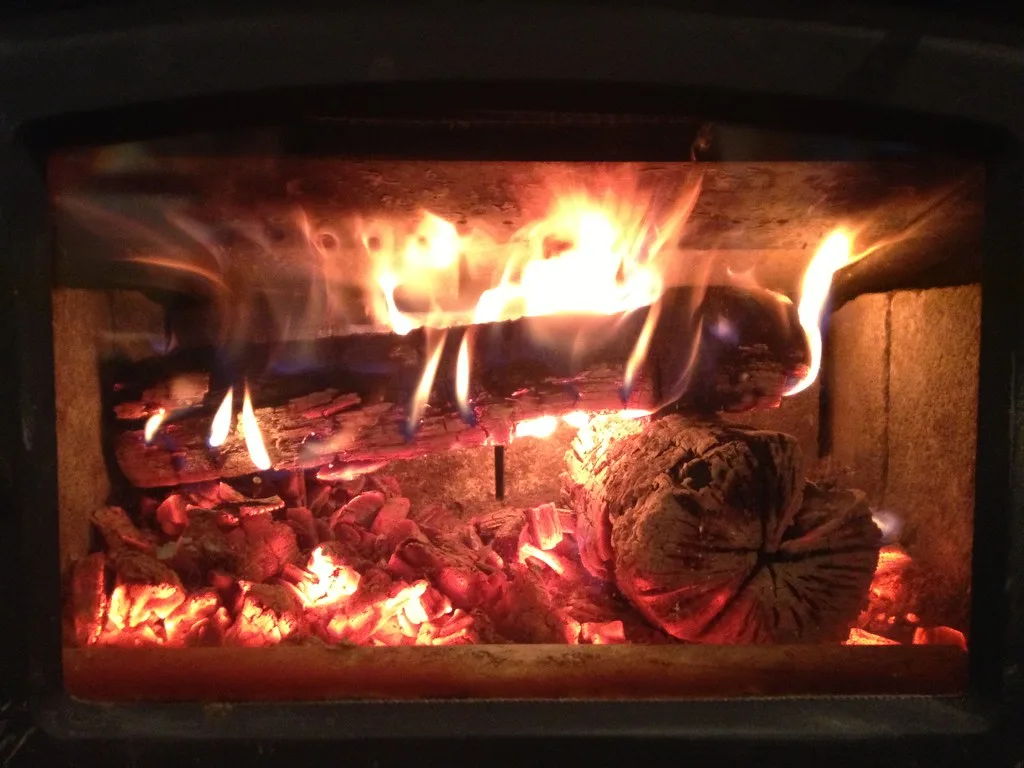
Learning how to light a wood burner top down takes about one evening and it is the single biggest improvement most people can make to how their stove runs. You build the fire upside down: logs at the bottom, kindling above them, firelighter on top, and the flame burns downwards into the fuel instead of upwards out of it. It is slower to believe than to do, and it produces noticeably less smoke on lighting.
The method is recommended by the Stove Industry Association and by most modern stove manufacturers, and Norwegian research institute SINTEF is blunt about why. In its guidance on reducing a stove’s environmental footprint, SINTEF’s researchers list lighting from the top as a headline measure because it cuts particle emissions considerably, and put the total achievable reduction from burning properly at 50 to 80 per cent.
Why upside down works
A conventional fire, firelighter at the bottom, is a smoke machine for its first fifteen minutes, and the reason is physics rather than technique.
When you light from the bottom, the flame immediately heats the whole stack above it. All that wood starts releasing volatile gases at once, far more gas than the small flame can burn, and the surplus goes straight up the flue unburned. That surplus is the smoke. It is also most of the energy in the log, which is why a smoky fire is a cold fire.
Light from the top and the fire works down through the stack a layer at a time. Only the fuel immediately below the flame front is being heated hard enough to release gas, and the gas that is released has to travel up through the flame to escape. It gets burned on the way. The flue warms up quickly, the draught establishes, and the stove reaches working temperature faster.
There is a secondary benefit on a modern Ecodesign stove. Those stoves depend on secondary and tertiary air being hot enough to ignite the gases above the fire, and the air wash that keeps the glass clear only works once things are up to temperature. A top-down light gets there sooner, which is why a top-down fire tends to leave clean glass and a bottom-up one sooties it in the first ten minutes.
What you need before you start
Dry wood, and that means measured. Under the Air Quality (Domestic Solid Fuels Standards) (England) Regulations 2020, firewood sold in volumes up to 2m³ must carry Ready to Burn certification, which means 20 per cent moisture content or below. That covers what you buy. It does not cover what happens to it in your woodshed, and it does not cover anything you seasoned yourself. If you have not checked, check: our guides to using a moisture meter and what moisture content firewood should be cover the method, and seasoning firewood under 20 per cent covers getting there.
Top-down lighting will not rescue wet wood. Nothing will.
Kindling in two sizes. You want a handful of pieces around thumb thickness and a handful nearer pencil thickness. Uniform kindling is a slower, less reliable light than graded kindling, which is the argument for making your own or buying decent stuff rather than the cheapest net on the forecourt.
A firelighter, not newspaper. This is the recommendation people push back on hardest. SINTEF’s advice is explicit: use dry wood and avoid newspapers for lighting, using bark, wood chips or firelighters instead. Modern newsprint burns fast, cool and dirty, throws ash flakes up the flue and is gone before the kindling has caught. A single wood wool firelighter does the job better. Our firelighters, kindling and ignition aids guide covers the types, and eco and natural firelighters covers what the labels actually mean.
A clear grate. Not a bare one. A thin bed of ash, a centimetre or so, insulates the base and helps. What you do not want is a deep pile blocking the primary air.
The method, step by step
1. Open everything. Primary air, secondary air, any air wash control, all the way open. On most stoves this is a lever or two on the front. The fire needs far more air to establish than it needs to run, and choking it at this stage is the commonest mistake.
2. Two or three logs at the bottom, laid front to back. Choose split logs rather than rounds, because split faces catch and rounds do not. Lay them parallel with finger-width gaps between them, running towards the back of the stove rather than side to side, so air can move along them.
3. A layer of thumb-thick kindling across them, at right angles. Six or eight pieces, spaced not packed. Crossing the direction at each layer is what keeps the gaps open all the way through.
4. A layer of pencil-thick kindling on top of that, at right angles again. Another six or eight pieces. You should now have a stack you can see daylight through.
5. One firelighter on the very top, in the middle. Two if the stove is large or the flue is cold. Not buried in the stack. On top, where you can see it.
6. Light it and leave the door slightly ajar. Every stove manufacturer’s lighting instruction says the same thing, and it is the step people skip. A stove door sealed shut on a cold flue starves the new fire of the air it needs. A centimetre of gap for the first few minutes is enough. Do not walk away from an open door.
7. Wait, and do not poke it. For the first five minutes it will look like a failure. The firelighter burns, the top kindling catches, and very little appears to be happening below. That is the method working. The flame front needs to establish before it can travel down.
8. Close the door once the top kindling is properly alight. Leave the air controls fully open.
9. Bring the primary air down once the logs below have caught and the stove is up to temperature. Typically fifteen to twenty-five minutes in, depending on the stove and the flue. Go by the fire, not the clock: you want lively flames with blue tones near the wood, which is SINTEF’s own visual test for a clean burn. Yellow, lazy, smoky flames mean you have closed it too early.
10. Refuel on the embers, one or two logs at a time. SINTEF is specific on this too: add small amounts more often rather than lots at once, and never choke the air down to make a load last. A smouldering stove is the dirtiest thing a stove can do, and it is what most people are doing when they complain their chimney needs sweeping twice a year. If you are trying to get through the night, keeping a wood burner in overnight covers how to do it without smouldering.
If it does not take
Four things go wrong, in order of likelihood.
The wood is wet. Test it, on a fresh split face, across the grain. A reading that looks fine on the outside of a log means nothing.
The flue is cold. Common on a first fire of the season, on an external chimney, or in mild, still weather. The symptom is smoke rolling back into the room rather than up. Warm the flue first: hold a lit firelighter or a rolled twist of kindling up in the throat of the stove for thirty seconds to start the draught, then light normally.
The stack is packed too tight. Air has to get through. If you cannot see gaps, rebuild it.
Not enough air. Check the controls are actually open, not just moved, and that the ashpan is not full and blocking the primary air.
Does it take longer?
Slightly, to get going. About the same to reach useful heat, because the flue warms faster and the stove starts producing real output sooner instead of spending twenty minutes making smoke.
The trade you are making is five minutes of apparent inactivity at the start in exchange for a cleaner light, clearer glass, less soot in the flue and more of the log’s energy in the room. The method also works with briquettes, with one adjustment: briquettes expand as they burn, so leave more space in the stack than you would for split logs.
Frequently asked questions
Is top-down lighting really better than the normal way? For smoke, yes, and it is not close. The Stove Industry Association and most manufacturers recommend it, and SINTEF lists lighting from the top as a headline way to cut particle emissions, putting the total reduction achievable from burning properly at 50 to 80 per cent. The fire burns the gases it releases instead of sending them up the flue.
Do I put the firelighter on top or underneath? On top, in the middle of the stack, where you can see it. Burying it in the middle is the commonest error and it turns a top-down fire back into a bottom-up one.
Should the stove door be open or closed when lighting? Slightly ajar for the first few minutes while the fire catches, then closed. Air controls stay fully open until the logs are properly alight and the stove is at temperature. Never leave an open stove door unattended.
Can I use newspaper instead of a firelighter? You can, but researchers advise against it. SINTEF specifically recommends avoiding newspaper for lighting and using bark, wood chips or firelighters instead. Newsprint burns cool and fast, produces its own smoke and ash, and rarely lasts long enough to get kindling going.
How long before I can close the air down? Usually fifteen to twenty-five minutes, but judge by the flame rather than the clock. You want bright flames with blue at the base of the wood. If closing the air makes the flames go lazy and yellow, open it back up and wait longer.
Does top-down lighting work in an open fire as well as a stove? Yes, and the smoke reduction is often more noticeable because an open fire has no door to help control the burn. The stacking is the same. You simply have no air controls to adjust.
Why is my glass still going black? Almost always wet wood or too little air, and usually both. A top-down light gets the air wash working sooner, but it cannot compensate for fuel above 20 per cent moisture or a stove run choked down.
Want the seasoning calendar and our log-price watch in your inbox?
Join the Kindling List