How to Choose Firelighters and Kindling: the Weak Link
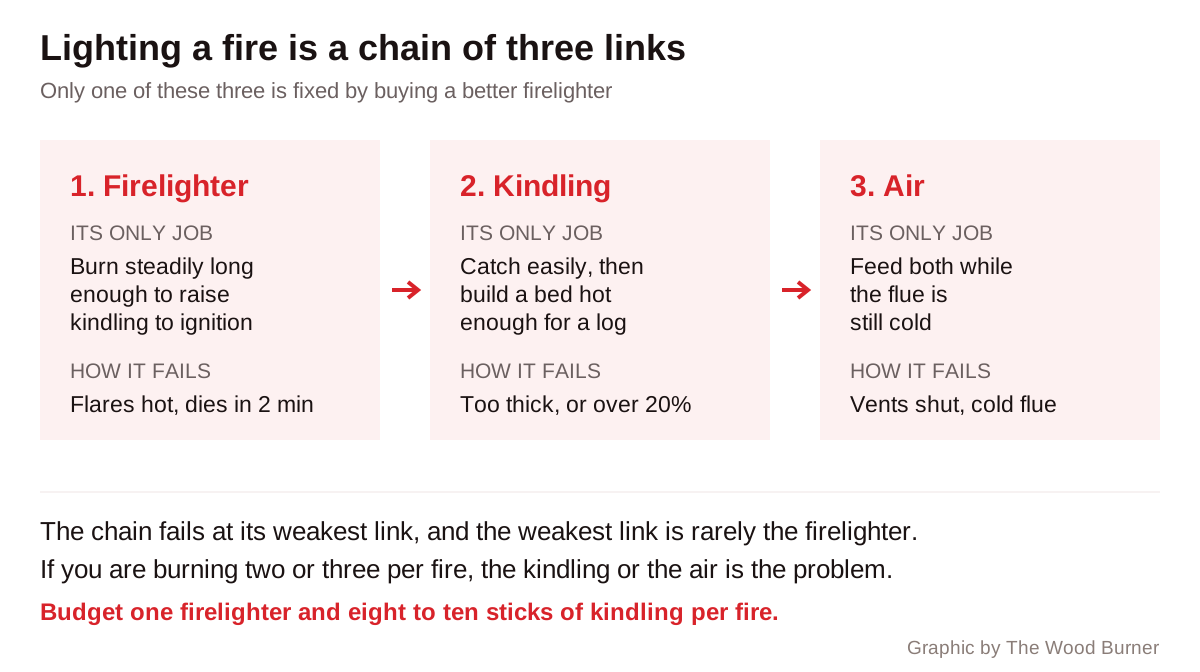
Working out how to choose firelighters and kindling is usually approached as two separate shopping decisions, and that is why so many people end up with an expensive box of firelighters and a stove that still will not light. Lighting a fire is a chain with three links: something that burns for long enough to start the next thing, something thin enough to catch from it, and enough air to keep both going. The chain fails at its weakest link, and in our experience the weakest link is almost never the firelighter.
This page is the decision, not the shopping list. It sets out what each of the three parts has to do, how to tell which one is letting you down, and how much of each you actually need for a season. Where a choice needs more detail than a paragraph, it points at the page that covers it properly.
The three jobs, and what each product has to achieve
| Link | Its only job | How it fails |
|---|---|---|
| Firelighter | Burn steadily for long enough to raise kindling to ignition | Flares hot and dies in 2 minutes |
| Kindling | Catch easily, then build a bed hot enough for a log | Too thick, or over 20% moisture |
| Air | Feed both while the flue is still cold | Vents left shut, cold flue, downdraught |
Read down that table and the diagnosis writes itself. If your firelighter is still burning when the kindling has failed to catch, the firelighter did its job and the kindling is wrong. If the kindling catches beautifully and then everything dies two minutes later, neither product is at fault and you have an air problem.
Buying a better firelighter fixes exactly one of those three failures. That is why the upgrade so often disappoints.
Step one: pick a firelighter type, not a brand
There are really only two designs on sale in Britain, and the choice between them matters more than the choice between brands within each.
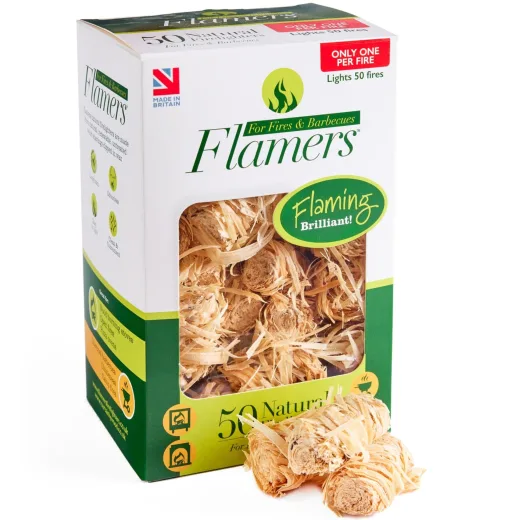
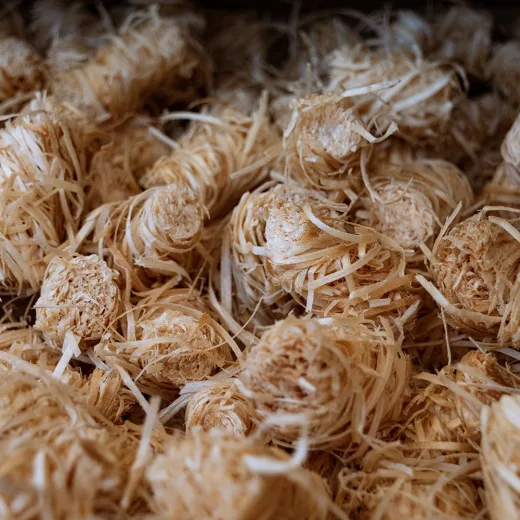
Wood wool firelighters are shredded wood shavings coated in wax, twisted into a nest. They burn for up to about ten minutes with a flame that builds rather than flares, which is the behaviour you want under kindling. They are the default recommendation for a stove.
Cubes are compressed blocks, traditionally soaked in paraffin. A white cube lights instantly, burns hot and is done in a couple of minutes, which is often not long enough for kindling that is any thicker than a pencil. The newer natural cubes behave better than the old paraffin ones. We compared the two designs directly in wood wool vs cube firelighters.
If you cook on the fire, or run a pizza oven or a fire pit, the taint question decides it for you and you want a cube specifically sold as food-safe.
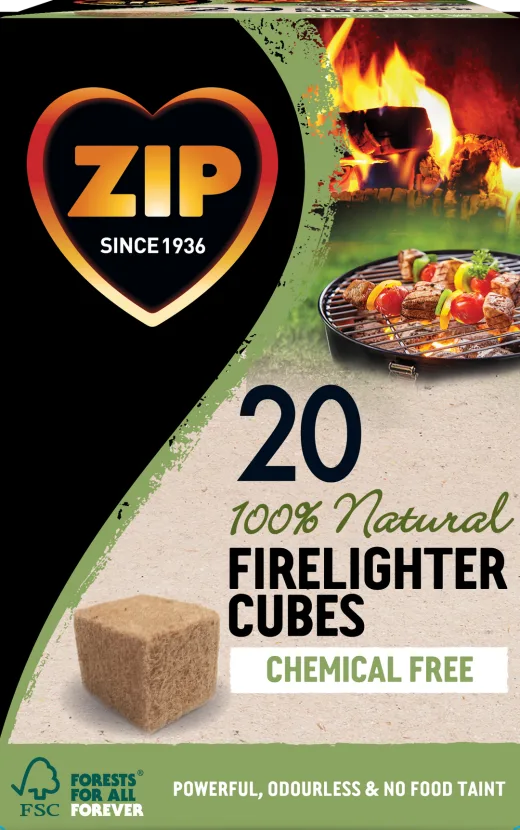
A warning on the word “natural”, because it is doing a lot of unearned work on these boxes. “Natural” is not a regulated term on a firelighter, and several products marketed as natural and chemical-free are coated in a wax the manufacturer declines to name. “Kerosene-free” rules out one petroleum distillate, not petroleum as a category. We went through which brands actually name their wax in best eco firelighters, and compared the two biggest names head to head in Flamers vs Lekto.
For anyone lighting a stove most evenings, the practical decision is box size rather than brand, because the per-fire difference between good wood wool firelighters is small and the difference between a 50 box and a 200 box is a season.
Step two: kindling is where fires are actually lost
Two things matter about kindling and neither is the species.
Thickness. Kindling needs to be thin enough that a ten-minute flame can raise its whole cross-section to ignition. Finger-thick is too thick to start with. You want a first layer nearer pencil thickness, then a second layer of finger-thick pieces once that is away. Most people who think they have bought bad kindling have bought kindling that is fine, and skipped the thin layer.
Moisture. Kindling sold in units under two cubic metres has to be certified at or below 20% moisture under the Air Quality (Domestic Solid Fuels Standards) (England) Regulations 2020. That certification is genuinely worth having, but as we set out in Ready to Burn, the scheme tests a producer’s sample rather than your specific bag. Kindling that has sat on a wet forecourt, or in your porch through a damp autumn, can carry a valid logo and still be too wet to light. Store it indoors.
Softwood beats hardwood for kindling, which is the reverse of the rule for logs. Softwood is less dense and resinous, so it catches faster, and you want it to burn out quickly once the logs are going. There is no advantage to oak kindling. The detail is in best kindling for wood burners.
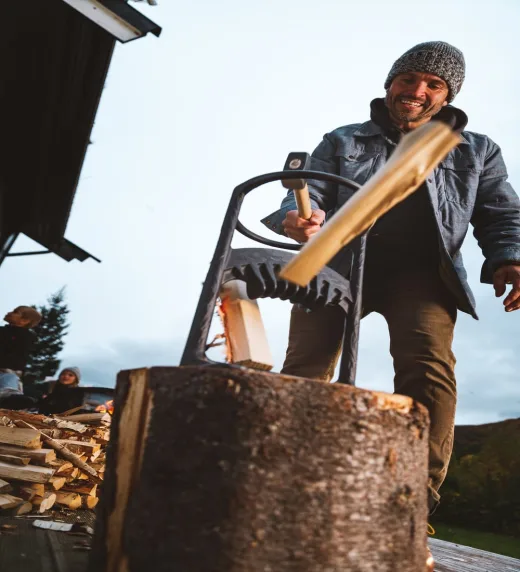
Making your own is the cheapest route by a distance if you already buy logs, and a kindling splitter turns it into a safe two-minute job rather than an axe-and-crossed-fingers job. See how to make kindling for the method.
Step three: the ignition source, briefly
This is the link people overthink. A firelighter nested under kindling needs to be reached and lit, which is all the ignition source has to do. What matters is reach and reliability in a draught, not technology.
Long matches are cheap, need no charging and work in a downdraught. A long-reach gas lighter is more convenient and refillable. An electric arc lighter never needs fuel but the arc is small and fussy in moving air, which is exactly the condition inside a cold stove. We tested the trade-off in gas vs electric arc lighters, with the specific picks in best long-reach lighters and best long matches.
Whatever you use, open the air controls fully before you light anything, and light from the top down. Top-down lighting puts the flame above the fuel, which warms the flue and establishes a draught before the bulk of the fuel is involved, and it produces noticeably less smoke on a cold start. Cutting that start-up smoke is the whole point: Defra’s practical guide to open fires and wood-burning stoves is built around the fact that wet fuel and poor burning practice are what put particulates into the room and the street.
How much you actually need for a season
Work from fires, not from box sizes, because box sizes are designed to be hard to compare.
A household lighting the stove four evenings a week across a five-month burning season gets through roughly 85 fires. On the standard one-firelighter-per-fire claim, that means:
- A 50 box covers about three months. You will buy two.
- A 100 box covers a season with spares for the ones that get damp or wasted.
- A 200 box is comfortably a season and a half, and is usually the best value per fire if you have somewhere dry to keep it.
Kindling is harder to budget because it is sold by weight, by volume and by “net” with no consistency between them. Ignore the bag and count sticks: budget eight to ten pieces per fire, with two or three of those split thin. Once you know your per-fire count you can compare any two bags in a shop in about fifteen seconds, which is not true of any other method.
One honest note on quantity. If you are getting through two or three firelighters per fire, do not buy a bigger box. That is a kindling or air problem announcing itself, and a bigger box just costs more to keep failing.
When it will not light, in order of likelihood
| What you see | Almost always | What to change |
|---|---|---|
| Firelighter burns out, kindling never catches | Kindling too thick, or damp | Split a thinner first layer, store kindling indoors |
| Everything catches, dies after two minutes | Air starved | Open primary air fully, leave the door ajar at light-up |
| Slow, smoky start | Cold flue or downdraught | Light top-down, warm the flue first |
| Kindling burns well, logs will not take | Logs too wet, or added too early | Wait for a proper ember bed, check moisture |
| Chemical smell in the room | Paraffin cube | Switch to wood wool |
Notice that only the last row is solved by changing firelighter.
Frequently asked questions
Do I need both firelighters and kindling? In practice yes. A firelighter alone will not raise a log to ignition, and kindling alone needs a sustained flame to get going. The only common exception is a stove with a good bed of hot embers from an earlier fire, where kindling on its own will take.
How many firelighters should I use per fire? One, if the rest of the chain is right. Every mainstream wood wool firelighter is sold on a one-per-fire basis and they generally deliver it. If you routinely need two or three, the problem is thick or damp kindling, or not enough air, and adding firelighters treats the symptom.
Is softwood or hardwood better for kindling? Softwood, which is the opposite of the rule for logs. Softwood is less dense and catches faster, and you want kindling to burn out quickly once the logs are alight. Paying more for hardwood kindling buys nothing useful.
Does kindling have to be Ready to Burn certified? If it is sold in a unit under two cubic metres in England, yes, it must be certified at or below 20% moisture. That is a real assurance about the producer’s process rather than a measurement of your specific bag, so store kindling somewhere dry regardless of what the logo says.
Are natural firelighters better than paraffin cubes? For a stove, usually, because wood wool burns longer and more steadily and leaves no chemical smell. Be sceptical of the marketing though: “natural” is not a regulated claim, and some products sold as chemical-free use a wax the maker will not name. If avoiding petroleum matters to you, buy from a brand that states what the coating is.
Can I make my own firelighters? Yes, and the classic method of wax in an egg box with dryer lint or wood shavings works. It is genuinely cheaper, though the payoff is smaller than people expect once you price the wax, and consistency is poor compared to a shop-bought wood wool firelighter. Making your own kindling saves far more money for far less effort.
What is the single cheapest improvement to how my fire lights? Splitting a thinner first layer of kindling. It costs nothing, takes two minutes, and fixes the most common failure on this page.
Want the seasoning calendar and our log-price watch in your inbox?
Join the Kindling List