Wood Wool vs Cube Firelighters: Which Lights a Stove Faster?
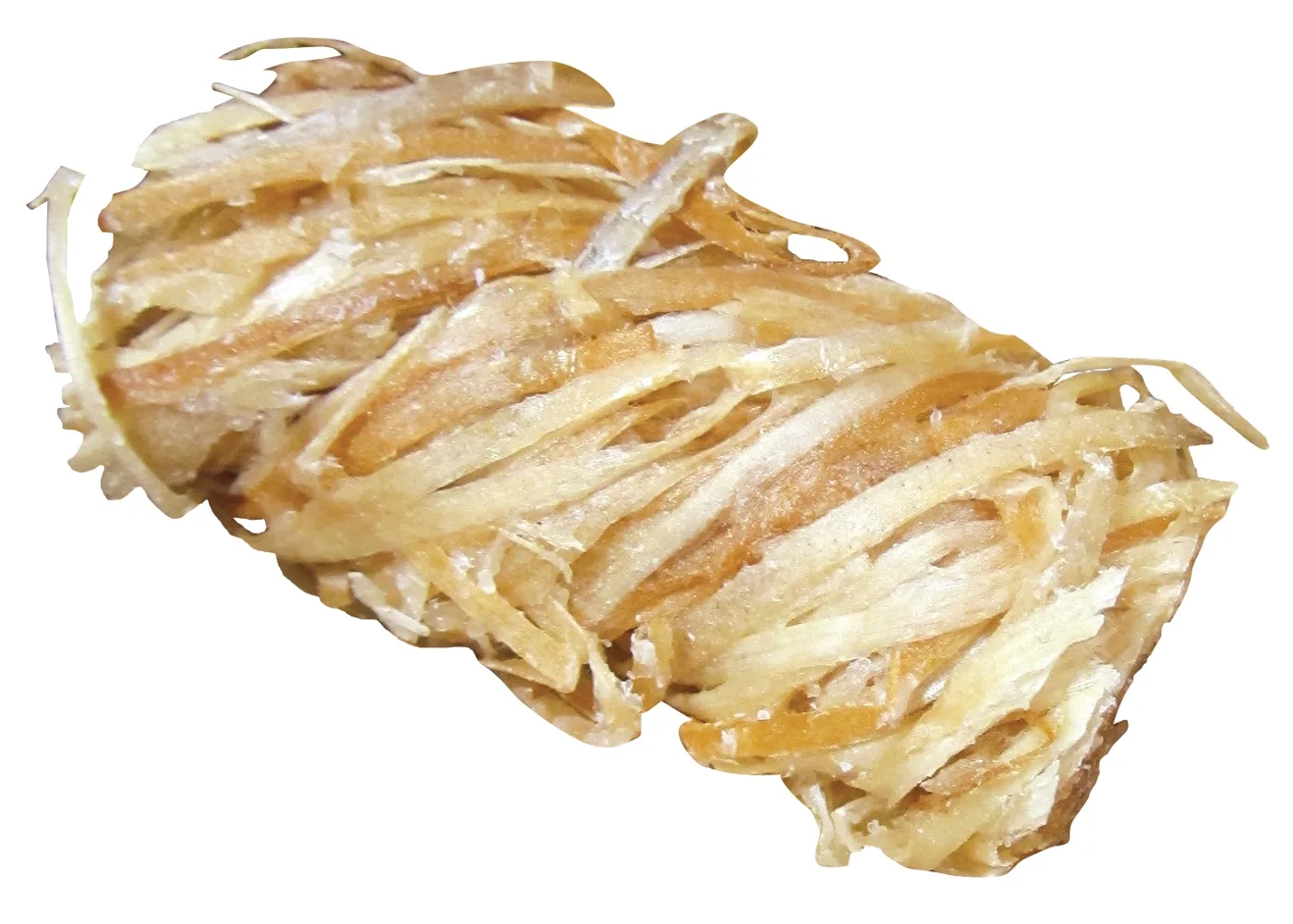
Wood wool vs cube firelighters is really a question about shape, not brand. A wood wool firelighter is a loose nest or twisted rope of shaved wood fibres soaked in wax. A cube is a dense block, either pressed wood and wax or the traditional white block carrying kerosene. The shape decides how fast it catches, how big the first flame is, how much mess it leaves in the log basket, and whether you can snap it in half. The short answer: wood wool lights a cold stove more reliably from one match; cubes are tidier and easier to portion. Here is the detail behind that, using the specifications the brands actually publish.
The two designs, side by side
| Wood wool | Natural cube | Traditional white cube | |
|---|---|---|---|
| What it is | Shaved wood fibres dipped in wax | Wood pressed with wax into a block | Solid block carrying kerosene |
| Catches from a match | Almost instantly, lots of surface | A few seconds for the wood to take | Instantly |
| First flame | Tall and bushy | Smaller, steadier | Hot and fierce |
| Published burn time | Up to 10 minutes (Log Barn, Ecoblaze) | Not published in the UK (Zip) | Not published on Zip’s UK page |
| Smell | Wood and wax | Wood and wax | Paraffin smell on hands and in the room |
| Mess | Sheds loose fibres | Tidy | Can leave residue on fingers |
| Portioning | Pull a nest apart | Snaps cleanly | Snaps into cubes |
| Safe to cook over | Yes, once burnt out | Yes, once burnt out | No |
How wood wool firelighters work
Wood wool is wood shaved into fine strands. Dip a knot of it in wax and you get a firelighter with an enormous surface area, so the flame spreads across the whole thing in a second or two and climbs straight into the kindling above.
Three well-known UK examples, with what their own Amazon UK listings say:
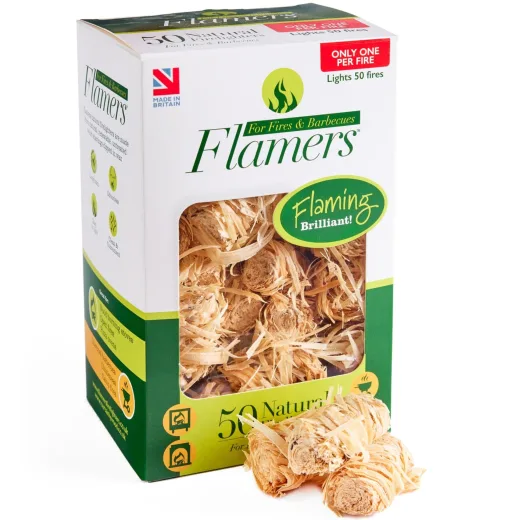
- Flamers Natural Firelighters are made from untreated wood shavings “dipped into paraffin wax”, sold in packs of 50. Read our full Flamers review.
- Log Barn Natural Firelighters are wood wool made from untreated shavings dipped in wax, sold in a box of 200, with a burn time of up to 10 minutes. See the Log Barn review.

- Ecoblaze Natural Firelighters are twisted rope made from shredded softwood and wax, in a box of 200, which the listing says burn for about 8 to 10 minutes.
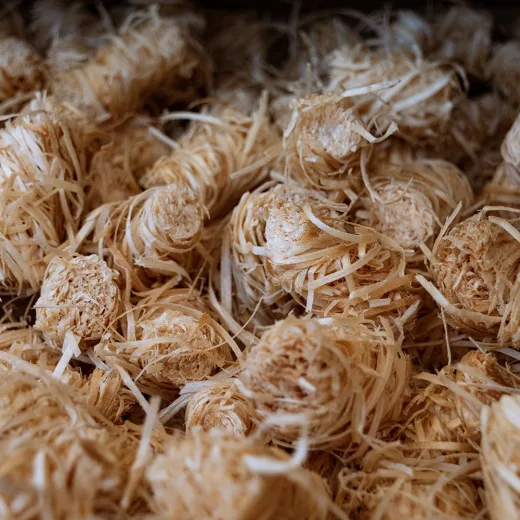
Lekto’s natural firelighters sit between the two camps: the listing describes wood shavings compressed into cylinders with a thin coating of paraffin wax, burning for around 8 to 10 minutes. Our Lekto review covers how that behaves in practice.
How cube firelighters work
A cube concentrates the fuel in a small, dense block. Less surface is exposed, so the flame starts smaller, but the cube holds together and keeps burning in one place under the kindling.
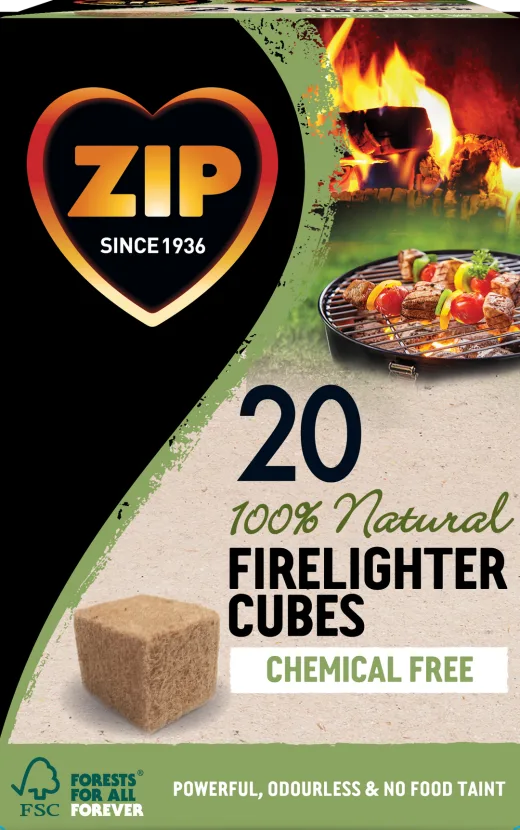
- Zip 100% Natural Firelighter Cubes are made from FSC certified wood and natural waxes, 20 cubes to a pack, and sold for stoves, BBQs and pizza ovens. Zip publishes no UK burn time. Our Zip natural cubes review goes through the claims.
- Traditional white cubes, such as Zip’s High Performance All Purpose Firelighters, are blocks of solid fuel carrying kerosene. Zip says they contain “energy granules” and are formulated to light hard smokeless coal and damp wood. They are the most aggressive starter you can buy and the least pleasant to handle indoors, and the smell makes them unsuitable for anything you cook over.
“Natural” does not always mean no paraffin
This is the detail most comparisons miss. Paraffin wax and kerosene are different things. Kerosene, sometimes called paraffin oil in Britain, is the liquid fuel in traditional white firelighters and the source of their smell. Paraffin wax is a solid, refined wax, and it is what several wood wool brands use to coat their fibres: both the Flamers and Lekto listings say so plainly.
Paraffin wax does not give off the fuel smell of a kerosene block, so these firelighters are still far more pleasant to use. But if your reason for switching is to take petroleum products out of the fire entirely, read the listing for the words “natural wax” or a named plant or bee wax, rather than trusting the word “natural” on the front of the box.
Which one lights a stove best?
For a cold flue, marginal kindling or a stove that sulks: wood wool. The fast, tall flame heats the flue quickly, which gets the draught going, and the flame spreads into the kindling before it has a chance to go out. If you light the fire top-down, one wood wool nest in the top layer is usually all it takes. Our guide to how to light a wood burner shows the layering.
For a warm stove, dry wood and good kindling: a natural cube is plenty. It is tidier to store, there are no loose fibres on the hearth, and half a cube is enough for a small fire.
For hard smokeless fuel on a multi-fuel stove: a traditional white cube is what it is designed for. Close the door as soon as it is lit, wash your hands, and never use one in a pizza oven or on a BBQ with food going on.
Whatever you choose, the wood decides more than the firelighter. If you routinely need two firelighters, check the logs with a moisture meter; kiln-dried or seasoned logs should read below 20%. Dry, split kindling does more for a clean start than any firelighter upgrade.
Getting the most from each type
- Wood wool: pull a large nest in half for a small fire. Place it where a match or a long-reach lighter reaches it easily, then stack kindling loosely over it with air gaps.
- Cubes: snap to size and put the piece in direct contact with the thinnest kindling. A cube with a gap above it burns out without catching anything.
- Storage: keep both in a closed tub. Wood wool sheds fibres, and waxed products pick up damp in an outdoor store.
- Safety: firelighters of every type are a fire product that small children can mistake for sweets. Store them out of reach.
For the ranked shortlist across both designs, see our best firelighters for wood burners and best natural firelighters.
Frequently asked questions
Are wood wool firelighters better than cube firelighters? For reliability, usually yes. Wood wool has far more surface area, so it catches from one match and throws a tall flame into the kindling quickly, which helps a cold flue start drawing. Cubes are tidier, snap to size and are perfectly adequate when the wood and kindling are dry.
How long do wood wool firelighters burn? Log Barn lists up to 10 minutes on its Amazon UK listing, Lekto around 8 to 10 minutes and Ecoblaze about 8 to 10 minutes. That is long enough to get dry kindling burning properly.
Do natural firelighters contain paraffin? Some do. Flamers and Lekto both say their wood wool is coated in paraffin wax, a refined solid wax. That is not the same as the kerosene in traditional white firelighters, and it does not produce the same fuel smell, but it is not plant-based wax either.
Can you use cube firelighters in a wood burner? Yes. Natural wood-and-wax cubes suit wood burners well. Traditional white kerosene cubes also work in a stove, but they smell and are better kept for multi-fuel stoves burning smokeless fuel, never for cooking.
Which firelighters are safe for a pizza oven or BBQ? Use natural firelighters, wood wool or wood-and-wax cubes, and let them burn out completely before food goes on. Zip sells its natural cubes as not tainting food. Avoid traditional kerosene blocks for anything you cook over.
Why does my firelighter burn out without lighting the kindling? Usually because the kindling is too thick, too damp or not touching the flame. Split it thinner, stack it loosely so air can move, keep it in contact with the firelighter, and check your logs are properly dry.
Want the seasoning calendar and our log-price watch in your inbox?
Join the Kindling List