Zip Natural Firelighters Review: Wood, Wax and No Kerosene
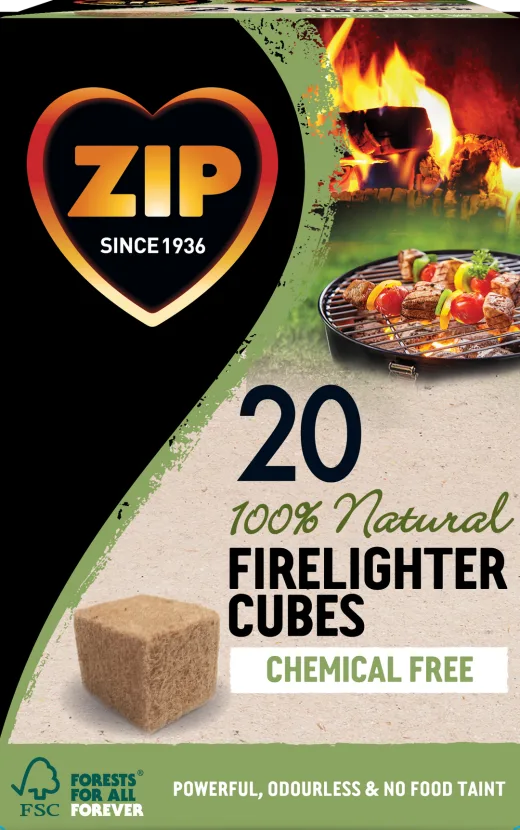
This Zip natural firelighters review is really about one swap. Zip built its name on the white block that smells of paraffin, because that is what it is: a solid block carrying kerosene. The 100% Natural Firelighter Cubes are a different product wearing the same badge, made from wood and natural waxes, and sold on the promise that they will not taint food. If you have been buying Zip out of habit and wondering whether the natural version is a gimmick, the short answer is no, it is a genuine reformulation, and the packet you pick up in the supermarket is not the one your parents used.
What Zip’s natural cubes are made of
Zip’s own product page and the UK retail listing agree on the specification, which is more than can be said for most firelighters:
- Made from sustainable wood and natural waxes, nothing else claimed.
- FSC certified wood, certificate number FSC-C107333.
- Sold in cubes, most commonly a 20-cube pack in supermarkets.
- Made for Standard Brands (Trading) Ltd, Castlebellingham, County Louth, with a UK distribution address.
- Marketed for indoor open fires and stoves in winter, and BBQs, fire pits and chimineas in summer.
Zip calls it its “most powerful natural firelighter”. That is the manufacturer’s claim rather than a measured figure, and it is worth noting what is missing: no burn time is quoted anywhere in the UK material. The equivalent cube sold in the United States carries a “burns up to 13 minutes” claim on its listing, which suggests where the product sits, but a claim on another market’s packaging is not a British specification.
The odour claim, and where it contradicts itself
Here is a small thing that tells you how carefully to read firelighter marketing. Zip’s own website describes the cubes as “powerful and odourless”. The UK retail listing for the same product says they “give off a pleasant odour and will not taint your food”.
Both cannot be true. Our reading is that the intended message is the one that matters to a buyer: whatever smell there is, it is a wood-and-wax smell rather than the petroleum smell of a traditional white cube, and it does not get into the food. For a pizza oven or a kettle BBQ that is the whole point of buying natural cubes. For a stove it matters less, because the door shuts and the smell goes up the flue either way, but it does matter in the thirty seconds between striking the match and closing the door in a small room.
Why the kerosene question is the real one
Traditional firelighters, Zip’s included, are blocks of solid fuel carrying kerosene. They light instantly, they burn hot, and they are cheap. The objections to them in a modern stove are practical rather than moral: the smell lingers on your hands and in the room, some people find the fumes unpleasant in a tightly sealed house, and they are useless anywhere near food.
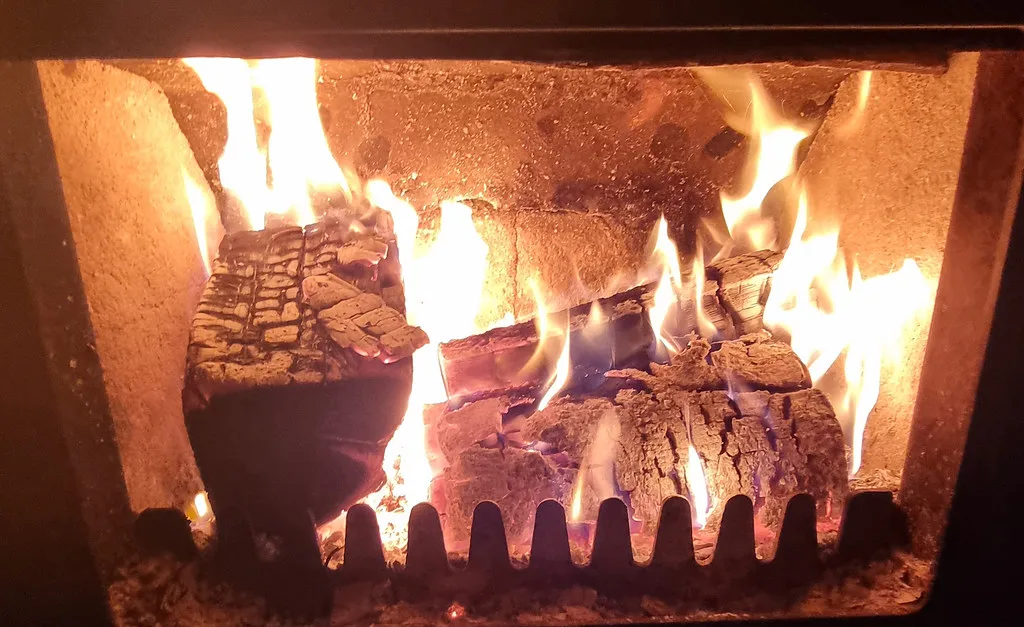
Natural firelighters trade a little of that instant ferocity for none of the smell. The wax lights readily but the wood fibre takes a moment to catch properly, which means you want the cube sitting in contact with the kindling rather than underneath a pile of it, and you want it lit before you build the stack over it. Our guide to how to light a wood burner covers the top-down method these suit best.
How they compare with the ones we rate
The natural firelighter market in the UK splits into two designs, and Zip sits on one side of it.
Compressed cube (Zip, Ecoblaze): wood fibre pressed into a block with wax through it. Dense, tidy, no loose fibres in the log basket, and easy to snap in half when you only need a small fire going. Ecoblaze quotes up to eight minutes on its cubes, which is the closest published figure to compare against. See our Ecoblaze review for the wider range.
Wood wool nest (Flamers, Lekto, Log Barn): shredded wood wool dipped in wax, loose and fibrous. More surface area, so it catches faster and burns with a bigger flame, and it will light when damp. Flamers publish an up to 10 minute burn and are made in Britain from wood wool and refined paraffin wax, which is worth knowing if you switched to get away from paraffin. Lekto’s are the same family.
The honest comparison: wood wool lights more reliably from one match, cubes are cleaner to store and handle. On a cold flue with slightly imperfect kindling, wood wool is the safer bet. On a well-seasoned stack in a stove that draws properly, the cube is plenty and leaves less mess.
Who should buy them
Buy Zip natural cubes if you shop in a supermarket rather than ordering firewood online, you want off the kerosene without a delivery, and you use the same firelighter for the stove in winter and the BBQ in summer. Availability is the real advantage here: this is the natural firelighter you can get on a Sunday.
Buy wood wool instead if your kindling is marginal, your flue is cold and slow to draw, or you light a fire most days and want the most reliable single-match start. Our best natural firelighters roundup ranks the field.
Stay with traditional white blocks if you only light an outdoor fire pit, price per light is the deciding factor and nothing you cook is going near the flame.
Getting the most out of a cube
- One cube is usually enough. If you are reaching for two, the problem is the kindling or the wood, not the firelighter. Check the logs with a moisture meter before blaming the ignition.
- Light it before you bury it. Put the cube where you can reach it with a match, build small kindling around and above it, and do not smother it.
- Snap it. A whole cube is more than a small top-down fire needs. Half a cube and good kindling beats a whole cube and damp sticks.
- Keep them dry. Wood-and-wax cubes are not waterproof in the way a wood wool nest is. A sealed tub in the log store, not an open basket by the back door.
- Keep them away from children and pets. They look like sweets and they are a fire product. The same warning applies to every firelighter on this list.
Verdict
Zip’s natural cubes do exactly what the swap promises: FSC wood and natural wax instead of kerosene, in a pack you can buy with your groceries. The marketing is looser than it should be, with no UK burn time and a straight contradiction on odour, and that costs it against brands that publish a plain specification. But as the natural firelighter that is actually on the shelf when you need one, it earns its place, and for anything you are going to cook over it is the obvious choice from a supermarket shelf.
Frequently asked questions
Are Zip natural firelighters any good for a wood burner? Yes, for a stove with dry wood and decent kindling. They light cleanly, leave no petroleum smell in the room and burn long enough to get small kindling going. If your fire is a struggle to start at the best of times, a wood wool firelighter catches faster and gives you more margin.
What are Zip natural firelighters made of? Sustainable wood and natural waxes, using FSC certified wood under certificate FSC-C107333. That is different from Zip’s traditional white firelighters, which are blocks carrying kerosene.
Can you use Zip natural firelighters on a BBQ or in a pizza oven? That is what they are sold for. The UK listing states they will not taint food, which is the practical difference between these and a kerosene block. Let the cube burn out completely and the charcoal or wood take over before anything goes on to cook.
How long does a Zip natural firelighter cube burn? Zip does not publish a burn time in its UK material. The same cube sold in the United States is listed as burning up to 13 minutes, which puts it in the same range as other natural cubes. For comparison, Ecoblaze quotes up to eight minutes and Flamers up to ten.
Are natural firelighters better than traditional white ones? Better for smell, for food and for keeping petroleum out of the house. Traditional blocks are cheaper and light more violently. If you cook over fire at all, natural is the straightforward answer; if you only light an outdoor fire pit, it is a preference rather than an upgrade.
Do firelighters affect a Ready to Burn or smoke control area? No. Those rules cover the fuel you burn, not the thing you light it with. What does affect smoke is wet wood, so the firelighter is rarely the problem. See our guide to the Ready to Burn rules for what is actually regulated.
Want the seasoning calendar and our log-price watch in your inbox?
Join the Kindling List