How to Light a Fire Without Firelighters: 6 Tinders
You can light a fire without firelighters every time, in a wood burner, an open fire or a fire pit, as long as two things are right: the tinder catches from a single flame and burns long enough to light the kindling, and the kindling is dry and thin enough to take. A firelighter is only a shortcut for the first part. Birch bark, fatwood, a handful of fine wood shavings or a properly made newspaper ball will do the same job, and the right stack does most of the rest.
Below are the six tinders that actually work, how to build the fire around them, and the three things you should never reach for when a fire will not catch.
What a firelighter is really doing
A firelighter gives you a flame that lasts several minutes in one spot. Wood wool firelighters burn for up to about ten minutes, which is why one is usually enough. Anything you replace it with needs to do the same: catch easily, burn hot, and keep burning long enough for pencil-thin kindling to light and then pass the flame on to thicker pieces. Most failed fires fail here, because the tinder flares and dies in thirty seconds.
Six tinders that work
1. Birch bark. The papery outer bark of silver birch is full of oils and burns with a hot, sooty flame even when it is slightly damp. Collect it only from fallen or dead trees, never peel it from a living one. A palm-sized handful, shredded, will light a stove.
2. Fatwood. Resin-soaked pine heartwood, usually from old stumps. A few thin sticks light from a match and burn like a small candle for several minutes. It is sold in bags and boxes in the UK as fatwood or fire sticks, and it keeps indefinitely. It smells of pine resin as it burns, which most people like.
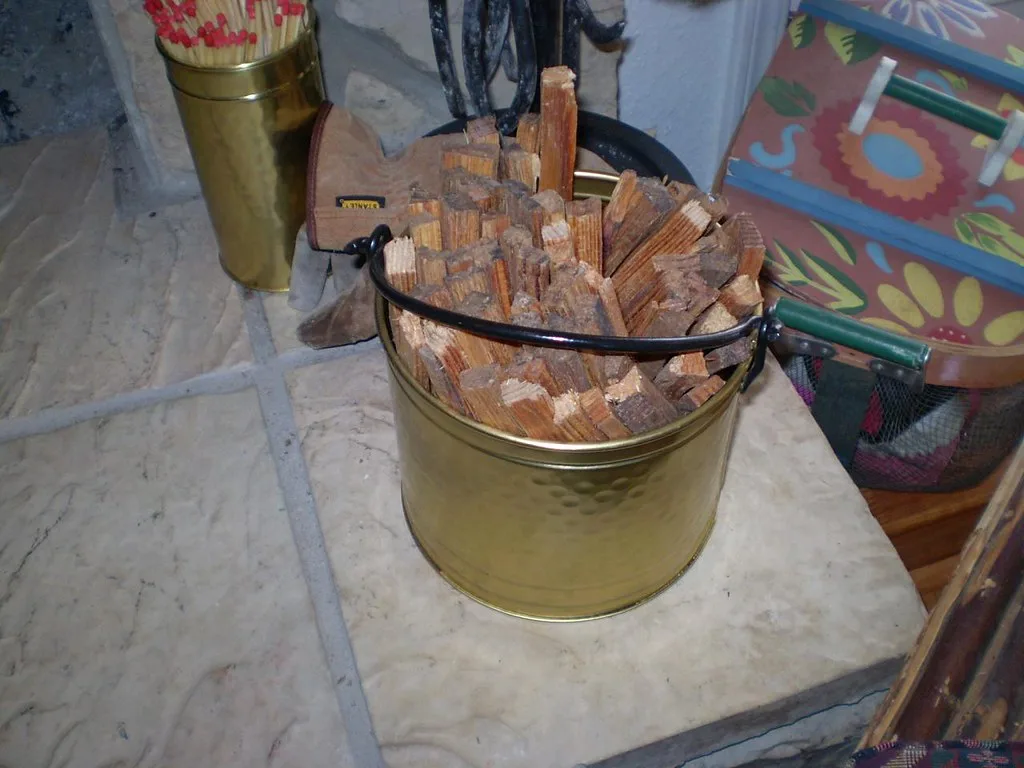
3. Feather sticks and wood shavings. Take a dry piece of softwood kindling and shave thin curls down its length with a sharp knife, leaving them attached at the bottom. Two or three feather sticks catch from a single match. Loose shavings from a plane or a kindling splitter work too, as long as they are dry. Our guide to making kindling at home covers splitting safely.
4. A newspaper ball, made properly. HETAS, the UK’s solid-fuel certification body, still gives newspaper as an option in its lighting advice: two tabloid-size sheets crumpled into a loose ball about the size of a cricket ball. It warns that paper crumpled too loosely burns too fast to light the kindling, and paper crumpled too tightly smoulders and smokes. Not everyone agrees newspaper belongs in a stove: Norwegian research body SINTEF advises lighting with bark, wood chips or firelighters instead, because newsprint burns fast and cool and sends flakes of ash up the flue. HETAS allows small amounts of black and white newspaper only: nothing with colour print, such as magazines and leaflets.
5. Pine cones. Dry, open cones catch well and burn for a few minutes. Collect them in autumn and dry them indoors for a week or two first; a closed or damp cone just smokes.
6. Cotton wool and petroleum jelly. A bushcraft trick that works in a stove too. A cotton wool ball rubbed with a little petroleum jelly burns for a few minutes from a spark or a match. Keep a few in a jar. It is not a fuel to use in quantity, and it does not belong under food on a barbecue or pizza oven.
For an outdoor fire pit, dry bracken or straw also works, though it flares quickly, so pair it with fine kindling. Cardboard is the one people reach for that HETAS says to leave out of a stove, because it often contains glues and inks.
Build it top down
Without a firelighter, how you stack the fire matters more. The top-down (or upside-down) method gives slow tinder the best chance, because the fire burns downwards through dry fuel instead of the small flame having to lift heavy logs above it. HETAS describes it like this: two small logs across the fire bed, five pieces of kindling across those, then four more laid at 90 degrees on top. Put your tinder on the very top, with a few pencil-thin sticks over it.
- Open all the air controls fully (or follow your stove maker’s instructions for lighting).
- Lay two small logs, then two crossed layers of kindling.
- Put the tinder on top, with a small handful of the thinnest kindling touching it.
- Light the tinder in two places.
- Leave the door just ajar for a few minutes if the stove maker allows it, then close it once the kindling is burning well.
Our full walk-through of how to light a wood burner top down covers air settings and what to do if it stalls.
The kindling decides it
Tinder only buys you a few minutes. If your kindling is damp, too thick or too little, no tinder will save the fire. Look for kiln-dried kindling, with a moisture content below 20%, and split some of it thinner than a pencil. The bags vary more than you would expect; our best kindling for wood burners comparison explains what the number on the bag tells you.
Never use these
Petrol, diesel, barbecue lighter fluid or paraffin. HETAS warns that accelerants are extremely dangerous and prone to igniting explosively. In a closed stove, the vapour can ignite all at once, blow the door open and throw burning fuel into the room. There is no safe amount.
Colour-printed paper, cardboard, painted or treated wood, and pallets. HETAS lists all of these among the things you should never burn in a wood burner: they release harmful fumes and can damage the stove and the chimney liner.
Anything that is still wet. Damp tinder or kindling just smokes, soots the glass and fills the flue with tar.
If you want the convenience without the paraffin, natural wood wool firelighters are the middle ground; our guide to eco and natural firelighters explains what the labels actually mean.
Frequently asked questions
What can I use instead of firelighters? Birch bark, fatwood, feather sticks or dry wood shavings, dry pine cones, a loose ball of plain newspaper, or cotton wool with a little petroleum jelly. Whatever you use, pair it with dry, pencil-thin kindling.
Can I light a wood burner with just newspaper and kindling? Yes. HETAS suggests two tabloid-size sheets crumpled into a loose, cricket-ball-sized ball under dry kindling. Some researchers prefer bark or wood chips because newsprint burns fast and can send ash up the flue.
How do I light a fire without firelighters or paper? Use birch bark, fatwood or feather sticks as tinder, stack the fire top down, and open the air controls fully until the kindling is burning well.
Is it safe to use lighter fluid on a wood burner? No. HETAS warns that accelerants such as petrol and diesel can ignite explosively. In a closed stove, the vapour can blow the door open.
Why does my fire go out after the paper burns? The tinder is burning out before the kindling catches. Use thinner, drier kindling, put more of it in direct contact with the flame, and use a slower tinder such as fatwood or birch bark.
Can I use cardboard to light a fire? Not in a wood burner. HETAS advises against burning cardboard because it often contains glues and inks that can damage the appliance and chimney liner. Use bark, fatwood or wood shavings instead.
Sources
- HETAS: how to light a fire in your wood-burning stove (newspaper method and top-down stack).
- HETAS: 16 things you should never burn in your wood burner (accelerants, cardboard, colour print, treated wood).
- SINTEF guidance on lighting wood stoves (bark, wood chips or firelighters rather than newspaper).
Want the seasoning calendar and our log-price watch in your inbox?
Join the Kindling List