Logmaster 7 Ton Kinetic Log Splitter Review: Faster Than Hydraulic?
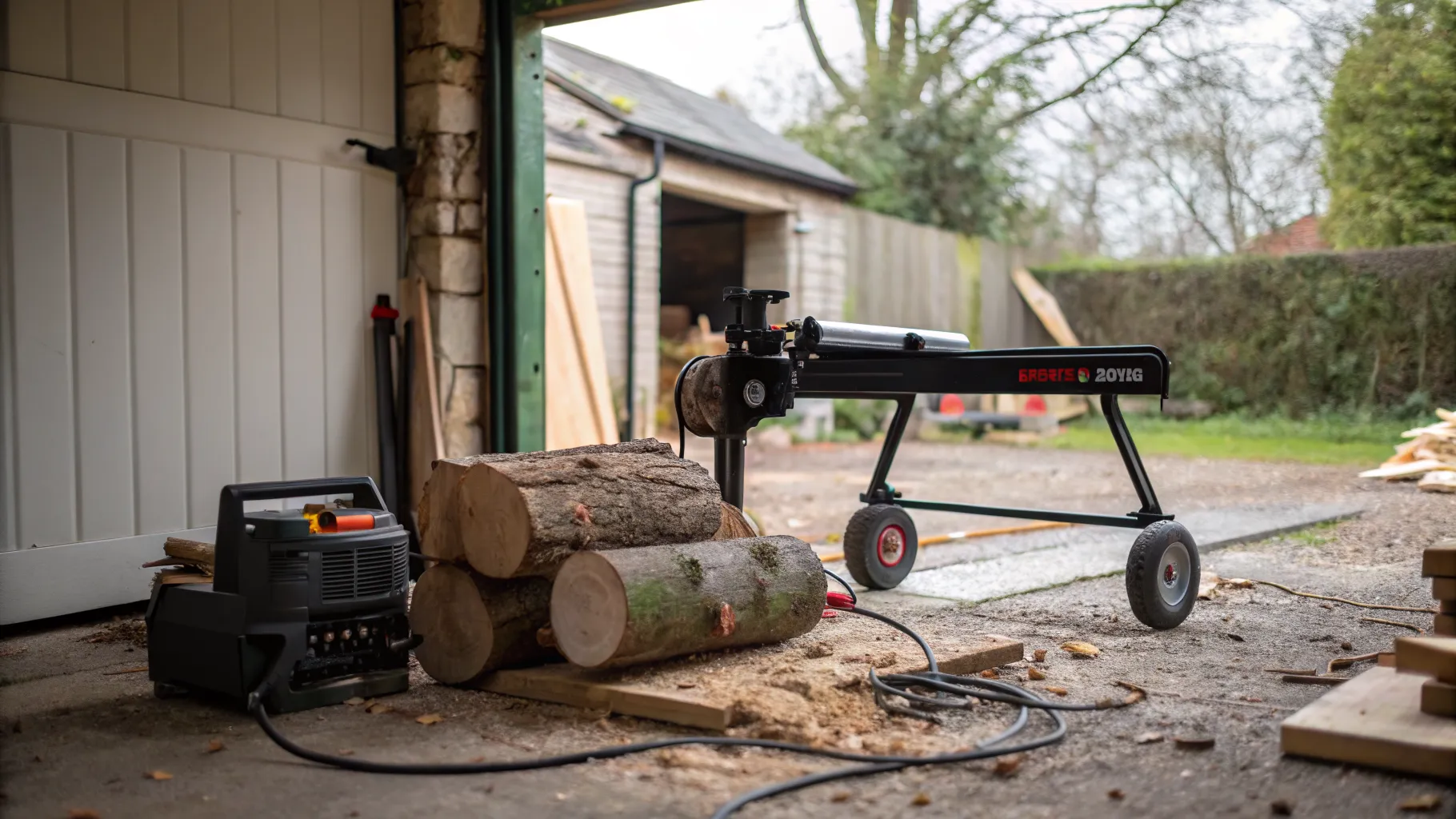
If you have searched for a Logmaster log splitter review hoping to confirm it is a “7 ton kinetic” machine, here is the first thing worth knowing: the genuine Logmaster 7 tonne splitter sold in the UK is hydraulic, not kinetic. The product listing, retailer copy and even the URL slug all describe a hydraulic ram. The “kinetic” label has been pasted onto this model by a handful of affiliate sites that scraped specs without checking, so before you spend a penny it is worth untangling what the machine actually is and whether kinetic would have been faster anyway.
Is the Logmaster 7 tonne kinetic or hydraulic?
It is hydraulic. The real product, sold on Amazon UK and through retailers like Clifford James and Robert Dyas, is described on the Logmaster listing as having a “self-lubricating hydraulic ram with automatic return.” A kinetic splitter has no hydraulic ram at all; it uses a spinning flywheel to fire a rack-and-pinion driven blade. The two are fundamentally different machines, and no genuine Logmaster page describes a flywheel.
Several review pages float a spec sheet for a “Logmaster 7 ton kinetic flywheel” unit (1500W motor, 1.6m cord, 40cm x 30cm logs, 60kg). We could not corroborate that against any real UK retailer or Logmaster page, and it conflicts with the verified listing below. Treat those kinetic specs as unverified and most likely copied from a different machine. If genuine sub-second kinetic speed is what you are after, the real UK option is the Portek QuikSplit, covered later.
What the real Logmaster 7 tonne is
Here are the figures taken from the live Amazon UK listing rather than from secondhand review pages:
| Spec | Logmaster 7 tonne (hydraulic) |
|---|---|
| Splitting force | 7 tonnes |
| Motor | 2200 W |
| Voltage | 230 V mains |
| Ram type | Self-lubricating hydraulic, automatic return |
| Throughput | up to 100 logs per hour |
| Max log length | 520 mm |
| Max log diameter | 250 mm |
| Weight | 56 kg |
| Build | wheeled, supplied with stand |
That is a conventional mid-range electric hydraulic splitter, and a reasonably specified one. The 520mm log length is generous (longer than the Forest Master FM5’s 300mm bed), and 7 tonnes through a 250mm opening puts it in the domestic sweet spot for mixed UK firewood. The listing also references a safety guard and an EN compliance string written as “EN 60-1:2017,” which looks like a garbled reference; the standard that actually governs log splitter safety in the UK is BS EN 609-1, more on which below.
For where 7 tonnes sits against everything else, our guide to what tonnage log splitter you need breaks it down by wood type and diameter.
Are kinetic log splitters genuinely faster than hydraulic?
On paper, yes, and by a wide margin. The cycle time is the whole story:
| Type | Typical cycle time |
|---|---|
| Hydraulic (electric) | 12 to 15 seconds |
| Kinetic (flywheel) | 2 to 3 seconds |
| Top kinetic (twin flywheel) | under 1 second |
A hydraulic ram has to push out under pressure and then retract, which is why a full cycle on a machine like the Logmaster sits around the 12 to 15 second mark. A kinetic splitter stores energy in a heavy spinning flywheel, then releases it in one fast burst and snaps back, so the working cycle can be three to ten times quicker. Portek markets its QuikSplit Charger as splitting “14 logs in the time a normal hydraulic splitter does 3.” Forest Master’s “Fast Fire” kinetic claims a roughly three-second cycle. The “faster than hydraulic” premise behind the Logmaster headline is true of kinetic machines in general, even if the Logmaster itself is not one of them.
The single-operator catch nobody mentions
Here is the part most reviews leave out. A sub-second cycle only helps if you can load and clear logs that fast, and one person cannot. By the time you have lifted the next round, positioned it and pulled your hands clear, the theoretical throughput advantage has mostly evaporated. The flywheel speed shines when two people work the machine, one feeding and one clearing. For a lone home user splitting a trailer-load on a Saturday, a kinetic splitter is faster than hydraulic, but nothing like the headline multiples suggest. Honest expectation: noticeably quicker, not three times the firewood.
Will a 7 tonne machine handle knotty UK hardwood?
This is where the kinetic-versus-hydraulic argument flips, and it matters more than raw speed.
A hydraulic two-stage pump can effectively gear down when it meets resistance: it slows, builds pressure and grinds through a knot. A kinetic splitter delivers one fixed burst of flywheel energy and then it is done. If that burst splits the log, brilliant. If it does not, the blade bounces or jams and you re-cock and try again. On knotty, twisted, stringy or large-diameter hardwood like oak crotches and elm, kinetic machines struggle far more than equivalent hydraulics. Owners report belt slip and even belt burn on tough knots, and the drive belt is a wear item you will eventually replace.
Lower-tonnage kinetic units (7 to 8 tonne) are genuinely good on clean, straight, seasoned rounds. Push them into gnarly hardwood and they bounce off. If most of your wood is knotty seasoned hardwood, a hydraulic Logmaster, or a DuoCut-style machine like the Forest Master FM10D, will be less frustrating than a budget kinetic, despite being slower per cycle.
Do kinetic splitters work on green wood?
Green wood is generally easier to split than the same species fully seasoned, which works in a hydraulic machine’s favour. Kinetic splitters are the opposite: they prefer seasoned wood and often need multiple passes on green or wet rounds, because the single energy burst gets absorbed by the damp, flexible fibres rather than cracking them. If you tend to split green and stack to season (which is the sensible firewood routine), that is another point towards hydraulic.
The genuine UK kinetic options, if speed is the priority
If you have read this far and still want true flywheel speed, buy a machine that is actually kinetic rather than one mislabelled as such:
- Portek QuikSplit / QuikSplit Charger 8.5 (made by Portek Ltd): a 1.5kW twin-flywheel machine rated at 8.5 tonnes impact force with a sub-one-second cycle. This is the established genuine UK kinetic unit.
- Forest Master “Fast Fire” 8 Ton Kinetic: a UK-brand flywheel splitter marketed at around a three-second cycle, from a maker most firewood buyers already know.
Both are real, UK-supported kinetic machines with no hydraulic oil to top up or leak, which is part of the appeal. They cost more than a hydraulic Logmaster, and they carry the knotty-wood weakness described above, so the speed comes with a trade-off rather than for free.
Safety: fast cycles raise the stakes
All log splitters sold in the UK should meet BS EN 609-1, the safety standard for log splitters, which is why these machines require two-handed control: one hand on a button, the other on a lever, so both hands are clear of the splitting zone when the blade moves. Kinetic speed makes that discipline more important, not less. The fast cycle invites complacency, and a flywheel blade that fires in under a second leaves no time to react if a hand is in the wrong place.
The Health and Safety Executive has published a safety bulletin on firewood processing machines covering trapping and crushing hazards and guarding failures; it is aimed at larger processors but the principles apply. Whatever you buy, wear eye protection (split wood throws high-velocity chips), never reach across the bed mid-cycle, and keep bystanders well back.
Who should buy what
Buy the hydraulic Logmaster 7 tonne if you want a well-priced, plug-in machine that takes long logs, copes with the occasional knot by grinding through it, and handles green and seasoned wood alike. It is the safer all-round choice for a single home user, and the “kinetic” label some sites pin on it is simply wrong.
Buy a genuine kinetic machine (Portek QuikSplit or Forest Master Fast Fire) if you mostly split clean, straight, seasoned rounds, you value speed and zero hydraulic maintenance, and ideally you have a second person to feed it. Accept that knotty hardwood will fight back.
If you are still weighing brands, our best log splitter UK roundup and the best electric log splitter UK guide compare the mains options side by side.
Check price on Amazon UK for the current Logmaster listing before buying, since availability and the exact bundle change.
Frequently asked questions
Is the Logmaster 7 tonne log splitter kinetic or hydraulic? It is hydraulic. The genuine UK listing describes a self-lubricating hydraulic ram with automatic return. The “7 ton kinetic” label has been copied onto this model by some affiliate sites in error; no real Logmaster page describes a flywheel.
Are kinetic log splitters genuinely faster than hydraulic? Per cycle, yes: kinetic runs 2 to 3 seconds (sub-1 second on twin-flywheel units) versus 12 to 15 seconds for hydraulic. In practice a single operator cannot load logs that fast, so the real-world gain is smaller than the headline multiples suggest.
Will a 7 tonne splitter handle knotty oak, ash or elm? A 7 tonne hydraulic copes with most mixed UK firewood up to about 250mm and can grind through knots by building pressure. A 7 to 8 tonne kinetic struggles on knotty, twisted or large-diameter hardwood, where the single energy burst bounces rather than splits. Elm beats almost any domestic machine.
Do kinetic log splitters work on green or unseasoned wood? Less well. Kinetic units favour seasoned wood and often need several passes on green or wet rounds, because the flywheel’s single burst is absorbed by damp, flexible fibres. Hydraulic machines handle green wood more reliably.
What is the maximum log size for the Logmaster 7 tonne? The listing quotes up to 520mm long and 250mm in diameter, with a claimed throughput of up to 100 logs per hour. As with any splitter, the length and diameter limits bite before the tonnage does.
Are kinetic log splitters worth it for a home user? Only if you mostly split clean, seasoned, straight rounds and value speed plus no hydraulic oil to maintain. For mixed or knotty wood, and for a lone operator, a hydraulic machine like the Logmaster is usually the less frustrating buy. If your machine ever stalls or won’t reset, see our troubleshooting guide.
The Wood Burner is reader-supported. We may earn a commission on purchases made through links on this page, at no extra cost to you. See our affiliate disclosure. Prices and availability change, so always check the current price on Amazon before buying.
Want the seasoning calendar and our log-price watch in your inbox?
Join the Kindling List