Stove Glass Cleaner Spray vs Paste: Which for Tar?
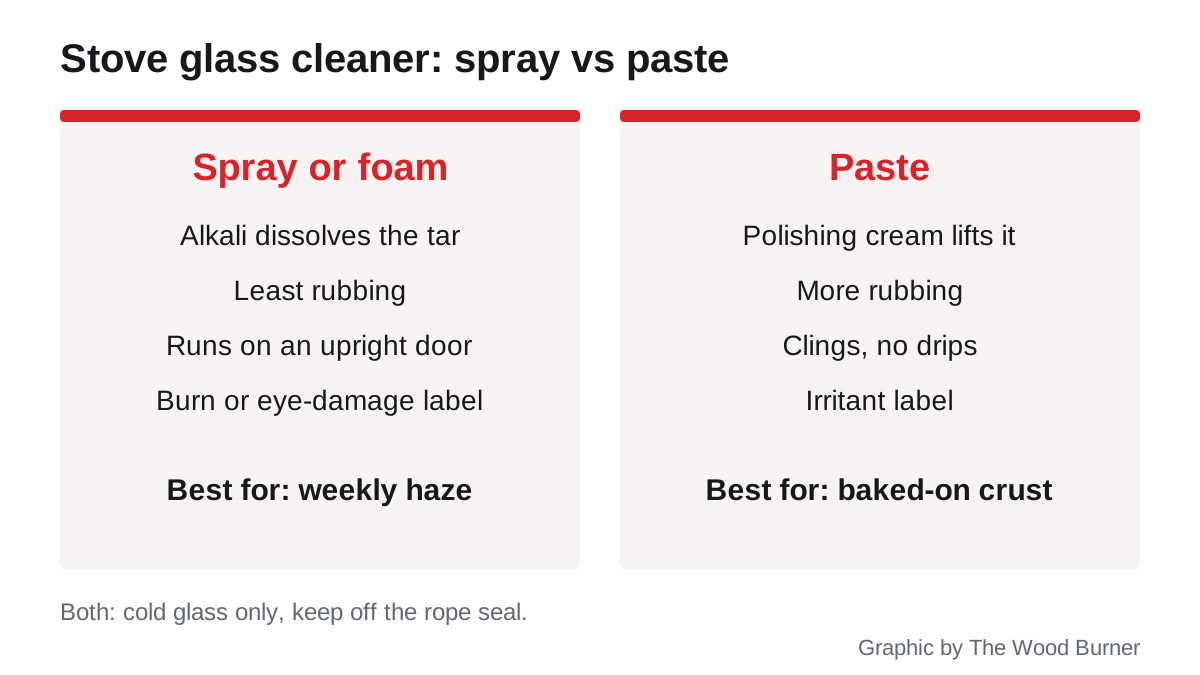
Stove glass cleaner spray vs paste is not a contest one wins outright, because the two work in different ways. Most sprays and foams use a strong alkali to dissolve soot and tar chemically, so they need less rubbing and suit a regular clean. A paste is a fine polishing cream that clings to the glass and lifts the deposit as you work it, so it suits thick, baked-on crust that a spray runs straight off. If your glass goes from clear to grey in a week, buy a spray. If it is coated in a brown-black layer that sprays have not shifted, buy a paste.
This comparison draws on the labels, safety statements and Amazon UK listings of the cleaners we have already reviewed: HG and Vitcas (sprays), and Dirtbusters (paste). We have not run a laboratory test.
The difference in one table
| Spray or foam | Paste | |
|---|---|---|
| How it works | Alkali (HG names sodium hydroxide) breaks down tar | Surfactants in a fine polishing cream lift it off |
| Rubbing needed | Least | More, especially on heavy deposits |
| On an upright stove door | Runs down; foam clings better than liquid | Stays where you put it |
| Hazard label | HG: severe skin burns and eye damage. Vitcas: serious eye damage, skin irritation | Dirtbusters: skin and eye irritation, may cause an allergic reaction |
| Best for | Weekly haze and light soot | Thick, burnt-on tar and neglected glass |
| How long a bottle or tub lasts | A few spritzes a clean | A small dab a clean; buyers say a tub lasts years |
When a spray is the better choice
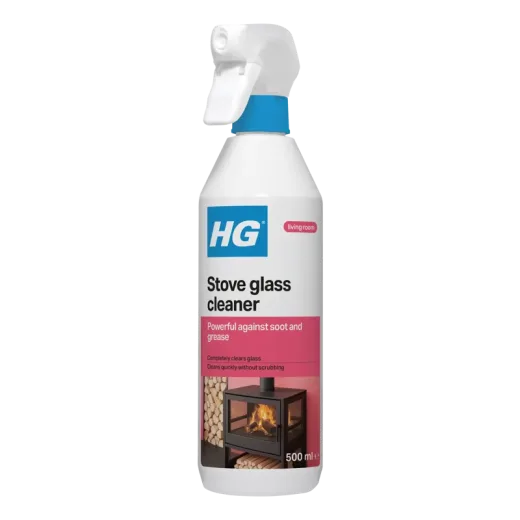
A spray is quicker. You spritz, wait a few minutes, wipe off and buff. HG’s foam asks for 3 to 5 minutes, and because it is a foam it clings to vertical glass better than a thin liquid. Vitcas is a liquid in a bigger 650ml bottle; Vitcas says to leave it “a few minutes”.
For the light grey or brown film most stoves build up over a few evenings of burning, that is all you need. The chemistry does the work, so there is very little scrubbing, and less scrubbing means less risk of rubbing cleaner into the rope seal or scratching the glass.
The downside is the label. HG carries a DANGER warning (H314, causes severe skin burns and eye damage), which is normal for a caustic cleaner but means gloves are not optional, and you should keep it well away from children and pets. Our HG stove glass cleaner review covers it in detail.
Our spray pick: HG Stove Glass Cleaner, for the foam that stays put better than a liquid.
When a paste is the better choice
A paste wins on deposits a spray cannot reach for long enough. On an upright door, a liquid runs down before it has finished working, so a thick crust can need two or three rounds of spray. A paste stays as a thin layer exactly where you spread it, does not drip onto the hearth or the rope seal, and you can leave it for its full time.
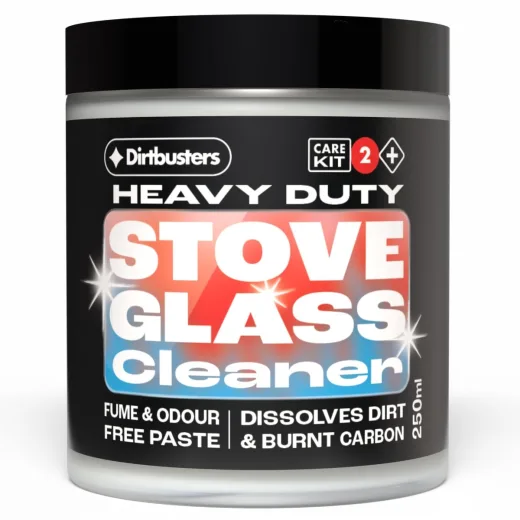
Dirtbusters’ 250g paste is the one we have reviewed. Its label is an irritant warning rather than a corrosive one, which makes it the milder product to handle. The trade-off is effort: it loosens the tar and the polishing action takes it off, so your arm does part of the work. Buyers who rate it highly still mention elbow grease, and say a small amount goes a long way. Our Dirtbusters paste review has the full ingredients and safety panel.
Our paste pick: Dirtbusters Stove Glass Cleaner Paste.
Using both: the routine that works
If you burn most evenings through winter, the most effective approach is both:
- Once, to reset: use the paste on the cold glass to take off the built-up crust. Spread thin, leave for the time on the tub, then work it in small circles with a damp cloth and wipe clean.
- Every week or two: a spray or foam, or the free newspaper-and-ash method, on the light film before it bakes on.
Glass that is cleaned little and often never builds the hard crust that needs a paste in the first place.
How to use either without damaging the stove
- Cold glass only. Cleaner on warm glass bakes on, and both HG and Vitcas say cold. Clean in the morning before lighting.
- Spray onto the cloth near the edges. The rope seal round the glass keeps the stove airtight; do not soak it.
- Wipe off any that touches the paint. Stove paint resists heat, not chemicals.
- No metal scourers or blades unless your stove maker says so. Scratches hold soot and make the glass blacken faster.
- Gloves for both, and eye protection with the caustic sprays.
- Check the stove manual. A few makers specify a cleaner or warn against particular products for their glass.
The real fix: stop it going black
Both products treat a symptom. Glass blackens fast when the fire burns cool and smoky, and the most common cause is wet wood. Logs above 20% moisture content waste their heat boiling off water, the fire smoulders, and tar condenses on the coolest surface, which is the glass. The Woodsure Ready to Burn scheme certifies wood sold at 20% or less.
Check your logs with a meter (our guide on seasoning firewood to under 20% explains the method) and burn with the airwash control open enough for a lively flame. Our best stove glass cleaner page covers the other reasons glass goes black, including closing the air down too soon after reloading.
Frequently asked questions
Is paste or spray better for stove glass? Spray is better for regular cleaning because it dissolves light soot with little rubbing. Paste is better for thick, burnt-on tar because it clings to the glass instead of running off. Many owners keep both.
Why does stove glass cleaner spray not work on my glass? Usually because the deposit is too thick and the liquid runs off the upright door before it has time to work. Try a paste, or lay the door flat if your stove allows it, and check your logs are dry enough.
Is stove glass cleaner paste abrasive? It has a fine polishing action, much gentler than a scouring powder. Used with a soft damp cloth on cold glass it should not scratch ceramic stove glass. Avoid metal scourers.
Can I use oven cleaner on stove glass? Some oven cleaners are similar caustic products, but they are not designed around stove rope seals and paint. Use a stove-specific cleaner, and check the stove manual first.
How often should I clean my wood burner glass? Wipe it whenever a light haze builds, often weekly in the heating season. Little and often stops the hard crust forming, so you rarely need the paste.
Want the seasoning calendar and our log-price watch in your inbox?
Join the Kindling List