HG Stove Glass Cleaner Review: Strong Foam, Wear Gloves
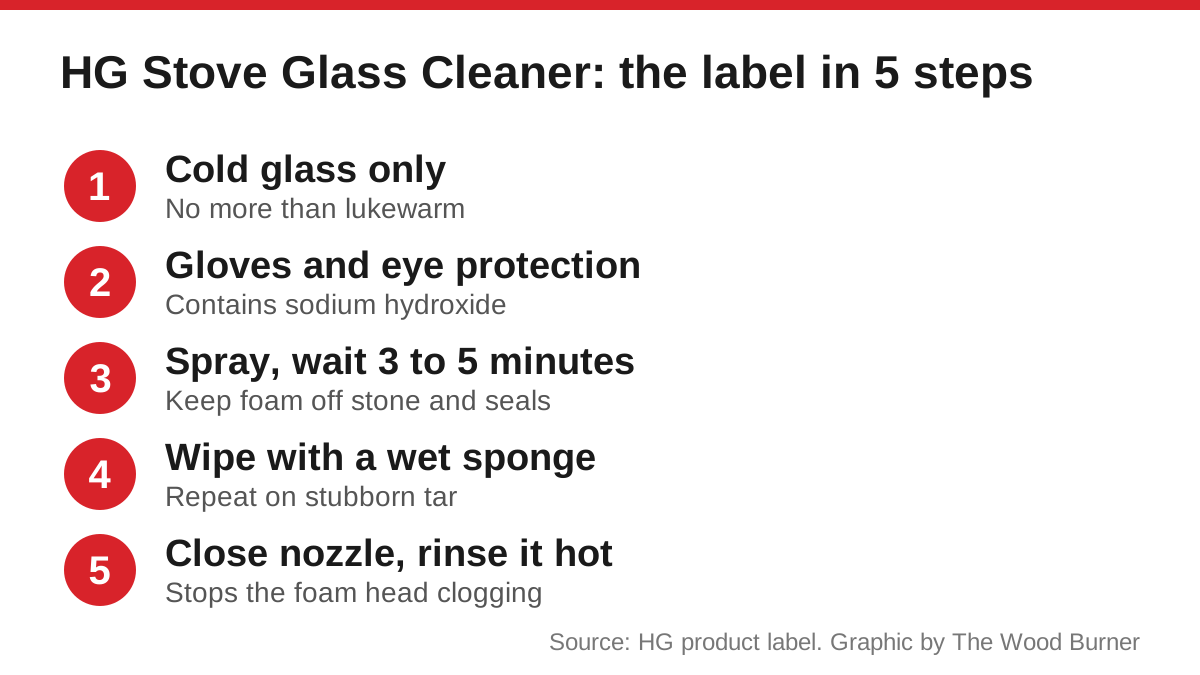
This HG stove glass cleaner review starts with the label, because that is where the answer to “does it shift baked-on soot?” sits. HG’s Stove Glass Cleaner is a foam that contains sodium hydroxide, the strong alkali also known as lye or caustic soda. That is why it dissolves brown wood tar that plain glass cleaner only smears. It is also why HG prints a DANGER warning on the bottle, classifies it as causing severe skin burns and eye damage, and tells you to wear gloves and eye protection. Used that way, on cold glass, it is the stove glass cleaner we would buy first, and it is our top pick in our best stove glass cleaners round-up.
What follows is drawn from HG’s own product page and the full printed label, read on 26 October 2026, plus buyer feedback on UK retailer listings. We have not run a laboratory test, and we say where buyers disagree.
What it is
| Detail | From HG’s label and product page |
|---|---|
| Format | Foam from a trigger nozzle, 500ml bottle |
| Active ingredients named | Sodium hydroxide; anionic and non-ionic surfactants and phosphonates (under 5%) |
| Hazard | DANGER, H314: causes severe skin burns and eye damage |
| Leave on for | 3 to 5 minutes |
| Glass temperature | Cold, and no more than lukewarm |
| Do not use on | Marble and other chalky natural stone, untreated aluminium, plastic |
| Also for | Light soot on bricks and mantelpieces |
| Made by | HG International, the Netherlands; UK importer HG UKI Ltd, Essex |
Does the foam really shift baked-on soot?
On the brown, glossy tar that builds up when a stove is run low overnight, yes: that is what the sodium hydroxide is there for. Alkalis break down the sticky organic tar that wood smoke leaves on cold glass, and the foam holds the product on the glass for the few minutes it needs. HG’s directions are to spray, leave it for three to five minutes, wipe off with a wet sponge and repeat on persistent marks. Heavy, years-old deposits may need two or three rounds rather than one.
Buyer feedback is mostly positive, and HG’s product page shows an average of 4.6 out of 5 across its own site and UK retailers at the time of writing. The one recurring complaint is that the foam can slide down vertical glass before it has done its work. A trick one buyer describes is to spray, then press a sheet of damp newspaper over the foam so it stays put while it soaks. On a door you can lift off its hinges, laying it flat on an old towel does the same job.
How to use it safely
- Let the stove go fully cold. HG says the glass must be cold, certainly no more than lukewarm. On warm glass the product dries before it works and can leave streaks.
- Put on gloves and glasses. The label’s own advice, and not optional with a product classed as corrosive.
- Protect the area. HG warns against marble and chalky stone, untreated aluminium and plastic, and says to keep the liquid from running onto other surfaces. Lay a towel over a limestone or slate hearth and keep the foam off the rope seal and the painted door frame.
- Open the nozzle. Press the front of the nozzle and turn it a quarter turn.
- Spray, wait, wipe. Leave three to five minutes, then wipe off with a wet sponge. Rinse the sponge often.
- Repeat on stubborn patches, then buff dry with a clean cloth.
If any gets on your skin, take off contaminated clothing and rinse with water; if it gets in your eyes, rinse for several minutes and get medical advice. Keep it well away from children.
The nozzle tip most people miss
The label tells you to turn the nozzle a quarter turn back to its closed position after use, then rinse it straight away under hot tap water, running water through the air holes in the side of the foam pipe. The point is to stop dried product clogging the foaming head, so it still sprays next time. Skip it and the bottle can be half full and useless by the end of winter. HG also says to store and carry the bottle upright.
Where it falls short
- It does not fix the cause. Glass that goes black every night is a sign of wet wood or a stove run too slowly. HG’s own advice is that soot and tar stick most to cold glass, so burning hotter keeps the window clear. Check your logs are below 20% moisture; our guide to what moisture firewood should be explains how, and kiln-dried logs are the quick fix.
- It is not a hearth cleaner for stone. The marble and chalky stone warning rules it out for most limestone hearths.
- It needs respect. If you want something milder for light grey haze, the free method of damp newspaper dipped in fine wood ash works on cold glass, as we explain in our cleaner round-up.
Who should buy it
Buy it if your glass has brown, baked-on tar that a damp cloth will not shift, and you are happy to wear gloves. If you burn every night and want a bigger bottle, or a paste for the very worst deposits, the alternatives are in our stove glass cleaner comparison. Once the glass is clear, a tidy stove body finishes the job: see our picks for stove polish and heat-resistant stove paint.
HG Stove Glass Cleaner is sold on Amazon UK and in DIY stores. Check price on Amazon UK.
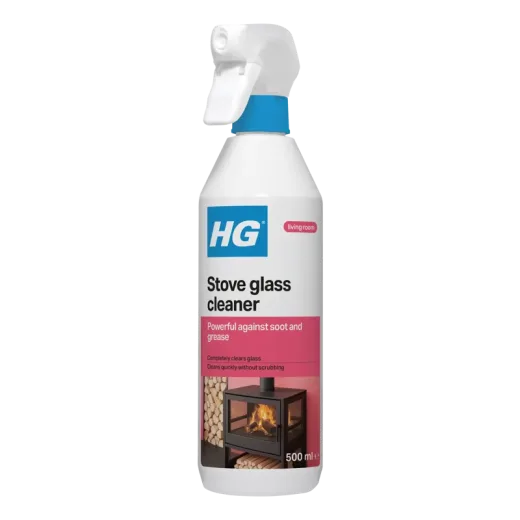
For the full instructions and safety information, see HG’s product page.
Frequently asked questions
Is HG stove glass cleaner safe to use? Yes, if you follow the label. It contains sodium hydroxide and is classed as causing severe skin burns and eye damage, so wear gloves and eye protection, use it on cold glass only, and keep it away from children.
Can I use HG stove glass cleaner on hot glass? No. HG says the glass must be cold, or at most lukewarm. Wait until the stove has gone out and cooled before you clean it.
How long do you leave HG stove glass cleaner on? Three to five minutes, then wipe it off with a wet sponge. Repeat on stubborn marks rather than leaving it on for much longer.
Why has my HG stove glass cleaner stopped spraying? Dried foam has probably blocked the nozzle. HG says to turn the nozzle back a quarter turn after use and rinse it under hot tap water, running water through the air holes on the side of the foam pipe.
Can I use HG stove glass cleaner on bricks or the hearth? It is sold for light soot on bricks and mantelpieces, but not marble or other chalky natural stone, untreated aluminium or plastic. Test a hidden spot first and protect stone hearths.
Why does my stove glass keep going black? Usually damp wood or a stove run with the air turned down too far. Burn logs under 20% moisture and give the fire enough air to burn hot, and the glass stays clearer.
Want the seasoning calendar and our log-price watch in your inbox?
Join the Kindling List