VODA Stove Fan Review: 13,000 Ratings, Specs That Disagree
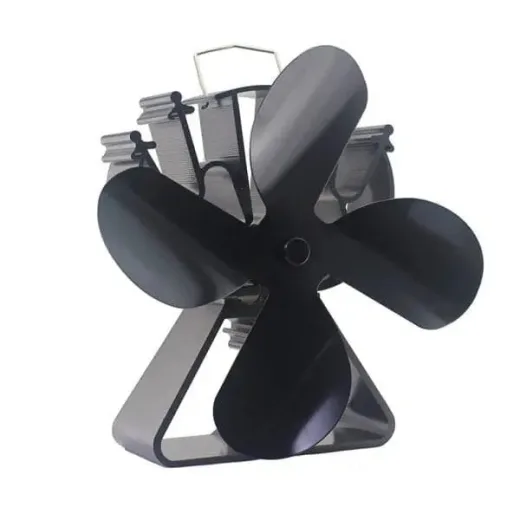
This VODA stove fan review covers the four-blade VDSF624, the plain black fan that sits near the top of Amazon UK searches for a stove fan. When we checked on 6 October 2026 it had 13,227 ratings averaging 4.2 stars, which makes it one of the most-bought heat-powered fans in the country. It is cheaper than the branded alternatives, it moves air, and most owners are happy. The catch is that VODA’s own published figures do not agree with each other on the one number that decides how long a stove fan lasts: how hot it can safely get.
We have read the Amazon UK and US listings for this exact model (both carry the same product code), VODA’s own shop page, and the pattern of owner reports, and set them against the branded fans in our stove fan comparison. This is a desk review, not a lab test.
VODA VDSF624 at a glance
| Spec | What VODA says | Where |
|---|---|---|
| Model | VDSF624B (black); gold and nickel versions also listed | Amazon UK, VODA shop |
| Blades | 4, aluminium, 210mm diameter | VODA shop |
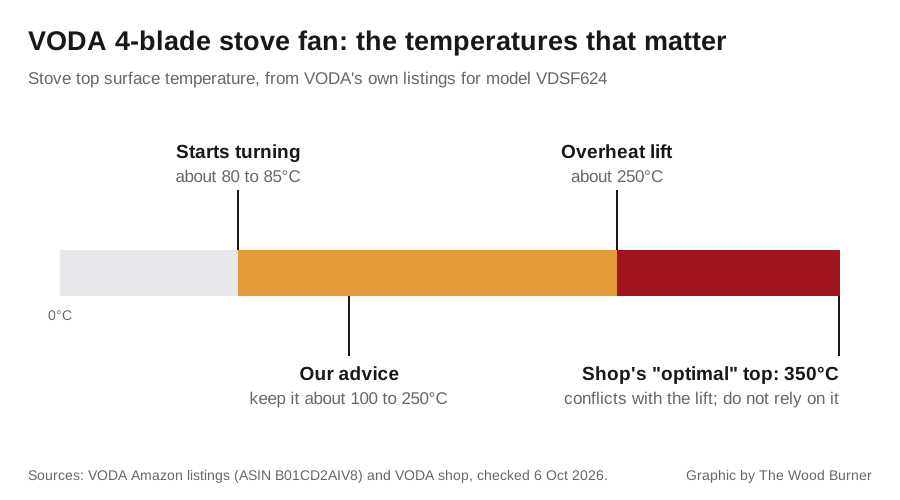
| Starts turning | “around 80°C” | Amazon US listing |
| Overheat protection | Lifts the front of the fan at about 250°C (482°F) | Amazon US listing |
| Optimal running temperature | 85 to 350°C | VODA shop |
| Claimed airflow | 240 CFM | Amazon UK, VODA shop |
| Noise | Under 25dB | Amazon UK, VODA shop |
| Weight | 600g (Amazon UK) or 1.10kg (VODA shop) | Both |
| Size | 21 x 21 x 12cm | Amazon UK |
The specs do not add up
Three figures conflict, and they matter.
The top temperature. VODA’s shop says the fan’s optimal running range runs up to 350°C. The Amazon listing for the same model says the bimetal strip underneath lifts the fan at about 250°C to protect the generator module and motor. Both cannot be the safe ceiling. The protection device exists because the module is damaged by heat, so treat 250°C as the real limit and never rely on the 350°C figure.
The start temperature. One listing says the fan starts at about 80°C; the shop says 85°C. An owner review in the Amazon listing reported it starting closer to 50°C on their stove. The same owner said it began turning 5 to 10 minutes after lighting. Expect it to turn slowly at first and pick up only once the stove is properly up to temperature.
The airflow. 240 CFM appears in the listings with no test method, alongside a listed speed of 240 RPM. An identical number for airflow and speed is a coincidence we would not take at face value. Owners say it moves noticeable air, but do not use the figure to compare it with other fans.
None of this means the fan is bad. It means you should run it as though its limits are lower than the box suggests, and use a magnetic stove thermometer next to it.
How it compares with the Valiant Premium IV
The closest branded rival is the Valiant Premium IV, which we cover in detail in our Valiant Premium IV review. Valiant publishes a user guide with a clear set of numbers: starts at about 50°C, top speed at about 230°C, self-lifting above 250°C, and do not use above 300°C.
| VODA VDSF624 | Valiant Premium IV | |
|---|---|---|
| Blades | 4 | 4 |
| Start temperature | about 80 to 85°C (listings) | about 50°C |
| Overheat lift | about 250°C | about 250°C |
| Published maximum | Conflicting (250°C lift vs 350°C “optimal”) | 300°C |
| Amazon UK ratings, October 2026 | 13,227 at 4.2 stars | more than 5,500 at 4.5 stars |
| UK brand and support | Sold via Amazon; manufacturer listed as L-Best | Hertfordshire-based brand with a user guide |
The Valiant starts on a cooler stove and tells you plainly where its limits are. The VODA is usually cheaper. If your stove top is easy to keep between about 100°C and 250°C, the VODA will do the same job for less. If you run a stove hot, or you want a fan that starts on a smaller, cooler stove, the Valiant or one of the Ecofan models in our comparison is the safer buy.
What owners report
The ratings break down as 66% five-star and 9% one-star. Amazon’s summary of written reviews says owners like how quietly it runs and how it pushes heat into the room, while reliability is the most common complaint, with some saying their fan stopped within the first month or failed after a winter or two. A smaller group says it rattles or buzzes as it ages.
That pattern is typical of budget heat-powered fans, and the main cause is almost always the same: the thermoelectric module or motor overheating. Which brings us back to the temperature figures above.
How to make a VODA fan last
- Put it in the right place. Stand it at the back of the stove top, away from the flue pipe, on a flat surface. Placing it right up against a hot flue collar is the quickest way to cook the module.
- Use a thermometer. Keep a stove thermometer near the fan and aim to run the stove in its normal burning zone. If the surface regularly passes 250°C, the fan will lift itself and you are running too hot for it.
- Check the lift still works. Watch the first few hot burns. If the front of the fan tilts up when the stove is very hot, the protection is doing its job. If it never moves and the blades slow dramatically, take it off.
- Do not leave it on a stove that is being over-fired. If you are burning wet wood with the air wide open, the problem is the fuel, and the fan is the first casualty. Our guide to best budget stove fans covers what cheap fans leave out.
- Lift it off by the handle when the stove is hot. The base and blades get hot enough to burn.
- Clean the blades and fins once or twice a season with a dry cloth so dust does not unbalance the blades or insulate the cooling fins.
Who should buy the VODA 4-blade fan
Buy it if you have a stove with a flat top that you run at a steady, moderate heat, you want a fan that is quiet and moves warm air across the room, and you are happy to pair it with a thermometer and treat 250°C as its ceiling.
Look elsewhere if your stove top often runs hot, if you have a small stove that barely gets above 80°C on top, or if you want clear, consistent published limits and a UK brand to deal with.
Frequently asked questions
Is the VODA stove fan any good? For the money, yes, if you run it within its limits. It has 13,227 Amazon UK ratings averaging 4.2 stars as of October 2026. Its weak point is reliability when it gets too hot, and VODA’s published temperature limits conflict, so use a thermometer and keep the stove top below about 250°C.
What temperature does the VODA stove fan start at? The listings say about 80 to 85°C on the stove top. Some owners report it turning earlier, and it spins faster as the stove heats up.
What is the maximum temperature for a VODA stove fan? The Amazon listing says its overheat protection lifts the fan at about 250°C. VODA’s shop quotes an optimal range up to 350°C, but we would treat 250°C as the safe limit because that is where the fan’s own protection kicks in.
Why has my VODA stove fan stopped working? The most common cause is overheating, which damages the thermoelectric module or motor. Other causes are a stove top that is not getting hot enough, a bent blade rubbing the frame, or a warped base not sitting flat.
Is the VODA stove fan the same as other brands? Very similar fans are sold under several names on Amazon, and some listings name VODA as the manufacturer. Check the model number, VDSF624 for this one, so reviews you read belong to the fan you are buying.
Does a stove fan really save wood? VODA claims 28% less wood use on its US listing, without saying how it was measured. A stove fan does not make your stove more efficient; it moves warm air away from the stove so the room heats more evenly, which may let you run the stove less.
Sources
- Amazon UK listing for the VODA 4-Blade Heat Powered Stove Fan, ASIN B01CD2AIV8, checked 6 October 2026
- VODA shop: 4 Blades Wood Stove Fan VDSF624
- Amazon US listing for the same ASIN, checked 6 October 2026
Want the seasoning calendar and our log-price watch in your inbox?
Join the Kindling List