4 Blade vs 6 Blade Stove Fan: 90 vs 100 CFM, Same Maker
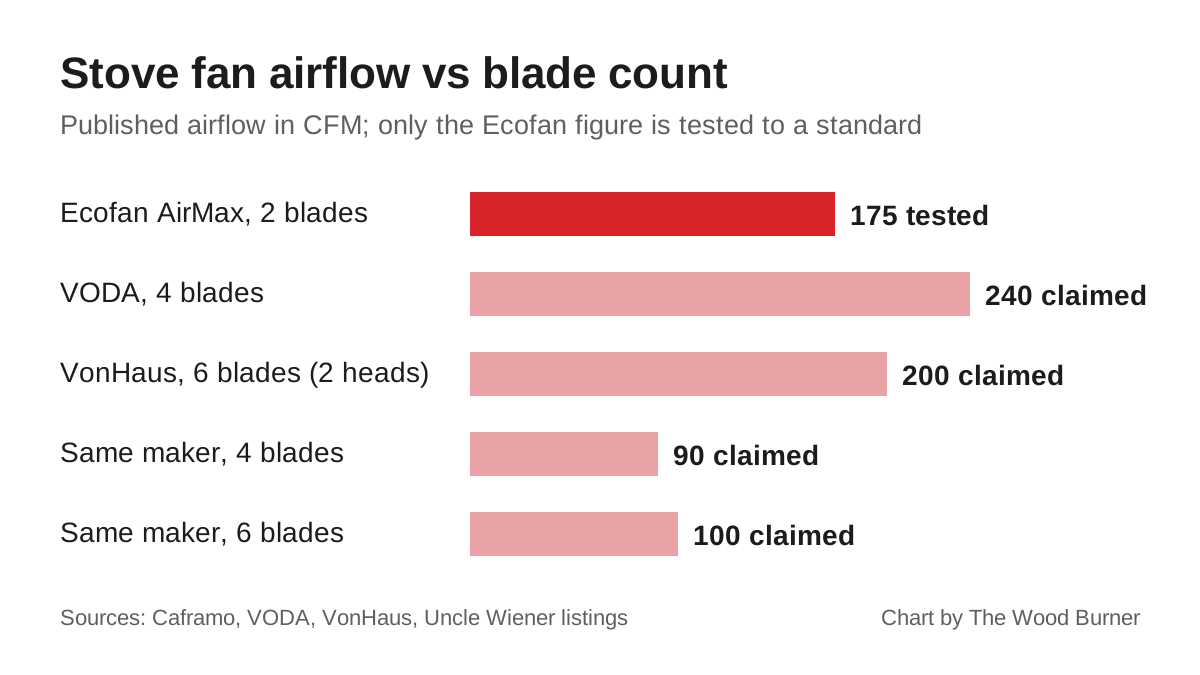
The 4 blade vs 6 blade stove fan question has a short answer: blade count on its own tells you very little. The cleanest comparison we could find is one maker selling a 4-blade and a 6-blade fan side by side with the same motor rating and temperature range. The 6-blade claims 100 CFM against the 4-blade’s 90 CFM, about 11% more air, and it turns more slowly to do it: 1,000 RPM against 1,100. Meanwhile the highest airflow figure backed by a stated test standard on a fan sold in the UK belongs to the Ecofan AirMax, which has just two blades.
So more blades can mean a little more air, but blade size, blade shape and the motor matter more. Here is why, and what to look at instead.
Why more blades is not more air
A heat-powered fan runs on a tiny current. The base sits on the stove top, the fins at the top stay cooler, and a thermoelectric module between them turns that temperature difference into electricity for a small motor. There is not much power to go round.
Every blade adds drag. On the same motor and the same heat, a fan with more blades has to work harder to turn, so it spins more slowly. Each blade is also moving less of the air on its own. The two effects partly cancel out, which is exactly what the matched pair above shows: two more blades, 10% fewer revolutions, around 10 CFM more air.
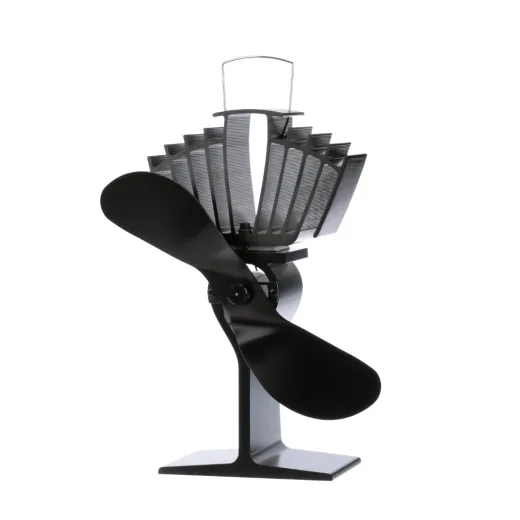
What moves more air for the same power is a bigger blade with a better profile. The Ecofan AirMax uses a single 9 inch, two-blade rotor and is rated at 175 CFM. Its smaller sibling, the UltrAir, has an 8 inch blade and is rated at 125 CFM. Same maker, same design approach, and an inch of blade diameter is worth 50 CFM, far more than two extra blades are worth in the matched pair.
The airflow figures, side by side
| Fan | Blades | Published airflow | How the figure is backed |
|---|---|---|---|
| Ecofan AirMax 812 | 2, on one 9 inch rotor | 175 CFM | Caframo says tested to ANSI/AMCA standards |
| Ecofan UltrAir 810 | 8 inch rotor | 125 CFM | As above |
| VODA VDSF624 | 4 | 240 CFM | Listing claim, no test method |
| VonHaus 6 Blade Double | 6, on two heads of 3 | 200 CFM | Listing claim, no test method |
| Valiant Premium IV | 4 | Not published | Valiant gives start and safe temperatures instead |
| Uncle Wiener FG9004-4 | 4 | 90 CFM at 1,100 RPM | Listing claim |
| Uncle Wiener FG9009-6 | 6 | 100 CFM at 1,000 RPM | Listing claim |
Figures from the makers’ own pages and listings, checked October 2026. The Uncle Wiener pair is a US listing; we include it only because it is a rare case of one seller publishing both versions with the same temperature range, which isolates the effect of blade count.
Read the table with care. A budget 4-blade fan claiming 240 CFM is not proof it outperforms a 175 CFM Ecofan, because the Ecofan figure comes from a stated test standard and the budget figure does not. In our VODA stove fan review we found its listed airflow and listed RPM were the same number, 240, which is not a figure we would compare against anything.
Where blade count does make a difference
Noise. A fan with more, shorter blades turning more slowly can be quieter, and a 6-blade fan’s air tends to feel smoother. Every fan here claims around 25 to 30dB, so in practice the difference is small.
Height. For the same airflow, a 6-blade fan can use shorter blades. That can mean a lower fan, which helps under a tight mantel. But height is published, so check the number rather than inferring it from the blades. The 4-blade Valiant Premium IV is 199mm tall, lower than many 6-blade fans.
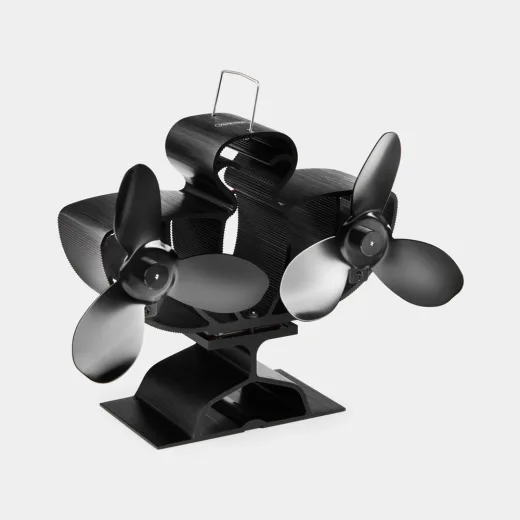
Twin heads. Some “6 blade” fans are really two 3-blade heads side by side, like the VonHaus Double. That spreads air in two directions, useful on a wide stove or one set back in a fireplace recess. Our VonHaus review explains why its blade count should not be compared with a single-head fan.
Start temperature. This depends on the module and motor, not the blades. Valiant’s 4-blade Premium IV starts at about 50°C; the 4-blade VODA at about 80 to 85°C; Ecofan’s AirMax at 85°C. Blade count tells you nothing about which fan will turn on a cool modern stove.
What to compare instead
- Your stove top temperature. Put a stove thermometer on the top plate for a few evenings. A fan that starts at 85°C will barely turn on a stove that runs at 120°C.
- A stated maximum temperature and overheat protection. The thermoelectric module is damaged by too much heat. A fan with a published ceiling and a lift or bimetal protector will last longer.
- A tested airflow figure, if you want to compare airflow at all. Only some brands publish one.
- Height, against the gap under your mantel or alcove.
- Spare parts. Caframo sells replacement motors and blades for Ecofans. Most budget fans are thrown away when the motor wears out.
Which should you buy?
On a typical stove with a cooler modern top plate and low headroom, a well-documented 4-blade fan such as the Valiant Premium IV is the safe choice. It starts at about 50°C, stands 199mm tall and has a published safe limit. Our Valiant Premium IV review covers it in detail.
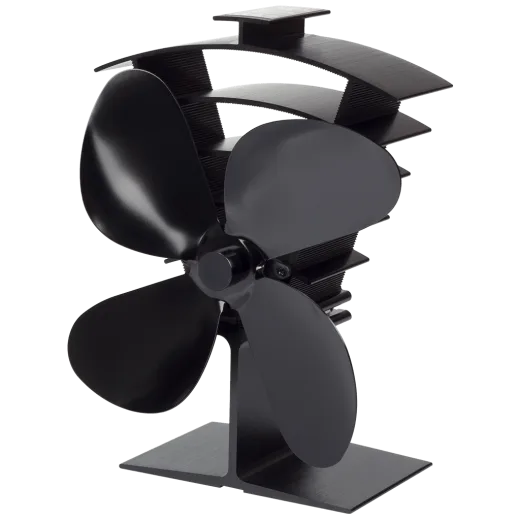
On a wide stove, or one recessed into a fireplace, a twin-head 6-blade fan like the VonHaus Double spreads the air in two directions. Treat its 200 CFM as a claim, and keep a thermometer beside it, because it does not state an overheat lift.
For the most air you can verify, on a stove that runs properly hot, the 2-blade Ecofan AirMax is the one with a tested 175 CFM figure and spare parts. It needs 85°C to start and stands 25.4cm tall, so check both first. Our Ecofan AirMax review has the detail, and our stove fan comparison covers the rest of the range.
Frequently asked questions
Is a 6 blade stove fan better than a 4 blade? Not automatically. In one maker’s matched pair, the 6-blade version claims 100 CFM against 90 CFM for the 4-blade, about 11% more, while turning more slowly. Blade size, shape and the motor matter more than the count.
Do more blades on a stove fan move more air? Slightly, at best. More blades add drag, so the fan spins more slowly on the same heat. The highest-airflow fan with a tested figure, the Ecofan AirMax at 175 CFM, has two blades on a large 9 inch rotor.
Are 6 blade stove fans quieter? They can be, because the blades turn more slowly. But most heat-powered fans claim 25 to 30dB, so the difference in a living room is small.
Does blade count affect the start temperature? No. The start temperature depends on the thermoelectric module and motor. Four-blade fans on sale in the UK start anywhere from about 50°C (Valiant Premium IV) to about 85°C (VODA).
Why do some 6 blade fans have two heads? Twin-head fans such as the VonHaus Double use two 3-blade heads to push air in two directions. It suits wide or recessed stoves, but it is not the same as a single head with six blades.
Sources
- Caframo Ecofan specifications for the 810 UltrAir and 812 AirMax (airflow, blade size, minimum stove top temperature)
- VODA shop and Amazon UK listing for the VDSF624, checked 6 October 2026
- VonHaus 6 Blade Double Stove Fan product page, checked 9 October 2026
- Valiant Premium IV user guide and product page
- Uncle Wiener listing for the FG9004-4 and FG9009-6 heat-powered fans, checked 12 October 2026
Want the seasoning calendar and our log-price watch in your inbox?
Join the Kindling List