Forest Master Smart Splitter: 3.5kg drop, 20cm real limit
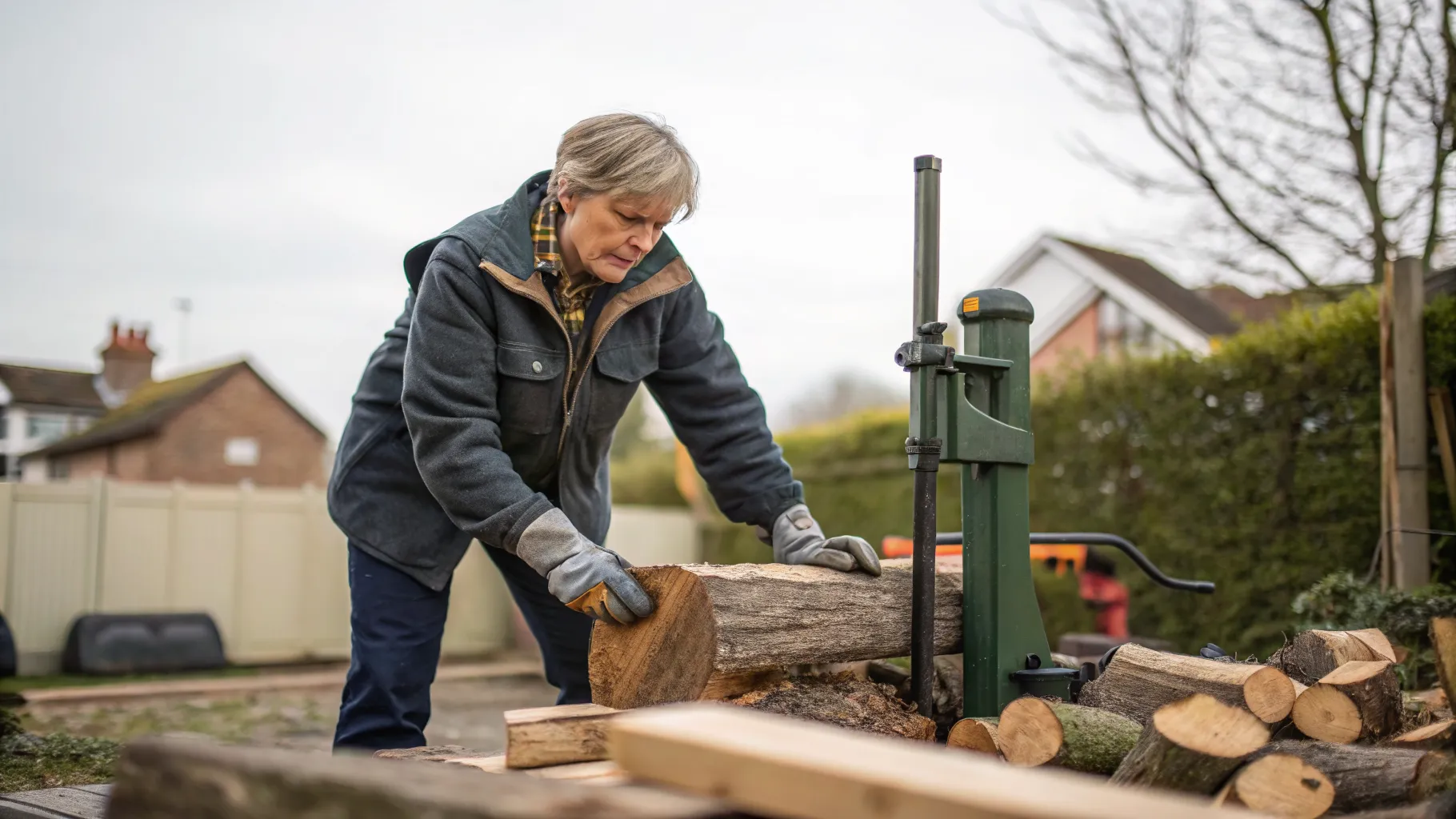
This Forest Master Smart Splitter review is written for one type of buyer in particular: someone who wants to split their own firewood but does not want, or cannot safely manage, to swing an axe. The Smart Splitter (model code FMSS) is a manual drop-weight splitter, sometimes called a slide-hammer. Instead of swinging a sharp blade through the air, you lift a steel weight a few inches up a pole and let it drop onto a fixed blade that sits on top of your log. It is a clever, very British sort of compromise: most of the splitting power of a maul, with almost none of the risk. The question is whether the trade-offs are worth it, because the spec sheet hides two of them.
Forest Master Smart Splitter specifications
Taken from Forest Master’s own product page, checked on 8 September 2026. The maker notes that all dimensions and weights are approximate.
| Specification | Figure |
|---|---|
| Model code | FMSS |
| Drop weight | 3.5kg |
| Total weight | 12kg |
| Blade width | 60mm |
| Blade thickness | 70mm |
| Guide pole length | 1.05m |
| Overall height, excluding base | 1.485m |
| Base blade height | 100mm |
| Max log length, without base blade | 550mm |
| Max log length, with base blade fitted | 450mm |
| Max log diameter, as stated | “Unlimited, dependent on size of base block” |
| Max log diameter, in practice | Around 15cm to 20cm before it becomes hard work |
| Shipping box | 950 x 195 x 90mm |
Two lines in that table are worth reading together. The manufacturer’s “unlimited” diameter is a description of the technique, not the tool: you work round the outside of a big round, splitting the edges off. It is true in principle and misleading in practice, which is why we give the real working limit next to it. And note the length figures move in opposite directions to what you might expect: fitting the base blade, the part that makes the tool usable, costs you 100mm of log length.
How the slide-hammer actually works
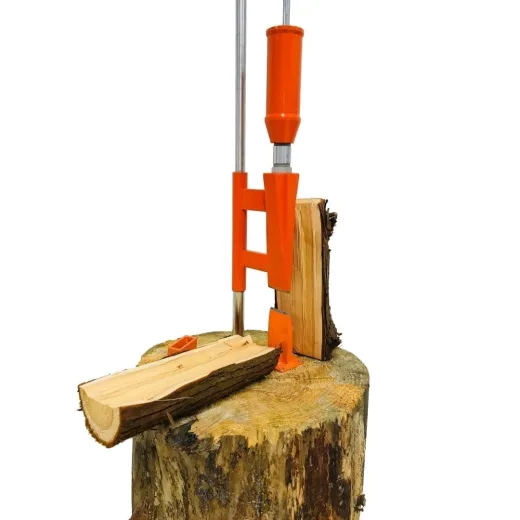
The mechanism is simple, which is the whole point. A 3.5kg steel drop weight rides on a vertical guide pole. Below it sits a wedge-shaped steel blade, 60mm wide and 70mm thick, that rests on the log you want to split. Force travels from the falling weight to the blade through a metal-shielded nylon impact bush, so the energy goes straight down into the wood rather than bouncing back at you. You lift, you drop, the wedge bites a little deeper each time. Three or four strikes split most reasonable rounds.
The tool weighs 12kg in total and is not freestanding. The base blade has to be screwed down onto a chopping block before you use it, which we will come back to, because getting that step wrong is the single biggest cause of two-star reviews.
The headline appeal is safety. There is no swung edge, no follow-through past the log, and no glancing blow off a knot sending an axe head towards your shin. All the force is vertical and contained. The HSE’s manual handling guidance is mostly about lifting loads at work, but the same principles apply in the garden: repetitive heavy swinging with poor technique is exactly the sort of activity that wrecks backs and shoulders over time. A tool that lets you split logs without the swing, and without bending double, genuinely reduces that risk.
What’s in the box
The version we would point people to is the bundle that includes the base blade, because the bare tool needs that part to be useful. You get:
- The Smart Splitter itself: drop weight, guide pole and blade assembly.
- The Ultimate (also sold as Universal) Splitting Base Blade, which mounts to your chopping block.
- A wood drill bit and the mounting screws to fit it.
A small but real gripe: several buyers report the blade arriving fairly dull. A few minutes with a file before first use makes a noticeable difference, and it is worth doing rather than fighting blunt steel and blaming the tool.
Setup is most of the battle
Skip this section and you will probably leave a bad review. Read it and the Smart Splitter behaves.
You need a solid chopping block, roughly 30cm across and 30cm tall, sitting on firm ground. The base blade screws onto the top of that block. When you drill the mounting hole, go deeper than feels necessary. The most common complaint after a few weeks is not that the tool breaks, it is that the whole assembly twists in the block under repeated strikes, throwing your aim off and stressing the pole. A deeper, snug mount stops the twist.
One more setup truth the affiliate pages skate over: max log length is 550mm on the tool alone, dropping to 450mm when you use the base blade. So measure your rounds. If you are buying in logs cut to 250mm for a small stove, you have plenty of room. If you are processing long lengths off your own land, cut them down first.
The two weak points the spec sheet hides
Forest Master is reasonably honest, but two things only show up once you actually use it.
First, the guide pole. It is on the thin side. Used squarely on seasoned wood it is fine, but if you lever sideways trying to free a stuck weight, or you keep hammering a round that is too big, the pole can bend, twist or in the worst cases snap. The redeeming detail is that Forest Master has a good reputation for posting out replacement parts quickly, and buyers report this consistently. So treat it as a wear part, work it straight up and down, and you will likely never test that policy.
Second, “unlimited log diameter.” The manufacturer states there is no diameter limit because, in theory, you keep working round the outside of a big round, splitting off the edges. In practice, reviewers and our reading of the user feedback put the comfortable working limit at around 15cm to 20cm diameter. Above that you are in for a lot of repeated strikes and a much higher chance of stressing the pole. If most of your wood is bigger than a dinner plate, this is not the right tool and we will tell you what is below.
Seasoned wood splits, green wood fights back
This matters more with a drop weight than with a heavy swung maul, because you have less raw momentum to overcome wet, stringy fibres. On properly seasoned wood, around 20% moisture or below, the Smart Splitter is genuinely pleasant: a few drops and the round falls apart. On green or wet wood the blade tends to wedge in and stick rather than cleave through, and you end up working far harder than the design intends. If you are splitting to season, expect more effort; if you are splitting wood that is already dry, this is where the tool shines. Our guide to the best log splitter in the UK covers how moisture changes what any splitter can do.
How it compares to the alternatives
No single page we found does a clean cross-category comparison, so here it is.
| Tool | Safety | Effort | Max log size | Portability | Best for |
|---|---|---|---|---|---|
| Smart Splitter (FMSS) | Very high, no swung blade | Low to moderate | Up to ~15-20cm comfortably | Heavy at 12kg, bolts to a block | Bad backs, older users, nervous beginners, medium volume |
| Splitting axe or maul | Lower, swung edge | High, technique dependent | Large rounds for the fit and strong | Very portable | Fit users, speed, big rounds |
| Kindling Cracker | High, contained ring | Low | Up to ~16.5cm (King ~22cm) | Static, heavy cast iron | Kindling and small splits, not full logs |
| Entry electric splitter | High, hands clear of ram | Very low | Depends on tonnage | Mains-tied, bulky | Higher volume, repeated use |
A few honest notes on that table. A good splitting axe or splitting maul is cheaper and faster if you are fit and your technique is sound, and it handles bigger rounds. But it carries the risk the Smart Splitter removes. The Kindling Cracker is a different job: brilliant for turning splits into kindling, wrong for full logs. And if you are getting through real volume, the powered route is the answer. Forest Master’s own FM5 (5 ton) and FM10 (7 ton) electric hydraulic splitters do the work for you, and we cover the smaller of those in our Forest Master FM5 review.

Who it’s for, and who should skip it
Buy the Smart Splitter if you split occasional to medium amounts of firewood, your rounds are seasoned and a sensible size, and either you cannot safely swing an axe (a bad back, a shoulder problem, older age) or you simply do not want a swung blade in your hands. For a nervous beginner it is a forgiving, low-drama way to make your own wood. With kids around, supervised, it is far less frightening than a maul.
Skip it if you process big volumes, if most of your rounds are over 20cm across, or if you are buying unseasoned wood to split and stack wet. In those cases the repeated lifting stops being relaxing and you are pushing the thin pole towards its limits. Step up to a hydraulic splitter instead.
The verdict
The Smart Splitter is worth it for the right buyer, and a poor choice for the wrong one. The marketing oversells diameter and underplays the pole, but neither flaw is hidden once you know to look for them, and both are manageable: mount it deep, split seasoned wood, work straight up and down, and keep the blade sharp. Do that and you have a quiet, low-risk way to make your own firewood without ever swinging a blade. With a roughly 4.6 out of 5 rating across the manufacturer site and Amazon UK, most owners clearly agree, and the ones who do not are usually the ones who skipped the setup.
For the full spec, see the Forest Master Smart Splitter manufacturer page.
Frequently asked questions
How does the Forest Master Smart Splitter actually work? It is a slide-hammer, or drop-weight, splitter. A 3.5kg steel weight slides up and down a vertical pole and drops onto a fixed wedge blade resting on your log. The force is delivered straight down through a nylon impact bush, so a few drops split the round. There is no swinging and no airborne blade.
What size logs can it split, and is “unlimited diameter” true? Max log length is 550mm alone, or 450mm with the base blade fitted. On diameter, the manufacturer says unlimited because you can keep splitting off the edges of a big round, but in real use it works best up to around 15cm to 20cm. Bigger than that and it becomes hard work and stresses the guide pole.
Does it work on green or wet wood? Not well. It is designed for seasoned wood, around 20% moisture or below, where it splits cleanly in a few strikes. Green or wet logs tend to grip the blade rather than split, so you work much harder. Split your wood once it is dry, not while it is still wet.
Does the guide pole really bend or snap? It can. The pole is fairly thin and will bend, twist or snap if you lever it sideways or keep hammering oversized rounds. Used straight up and down on the right wood it holds up fine, and Forest Master is known for sending out replacement parts quickly if you do damage it.
Do I need a chopping block, and what size? Yes. It is not freestanding. You screw the base blade onto a solid chopping block roughly 30cm across and 30cm tall. Drill the mounting hole deep so the assembly cannot twist under repeated strikes, which is the single most common cause of frustration.
How tall is the Forest Master Smart Splitter, and how much does it weigh? The guide pole is 1.05m and the overall height excluding the base is 1.485m. The whole tool weighs 12kg, of which the sliding drop weight is 3.5kg. It ships in a box 950 x 195 x 90mm. Forest Master describes all of these as approximate.
What comes in the box? The Smart Splitter itself, the Ultimate Splitting Base Blade, a wood drill and the mounting screws. The base blade is the part that makes it work, so buy the bundle that includes it rather than the bare tool.
Is it safer than a splitting axe? For most people, clearly yes. There is no swung edge and no follow-through, and all the force is vertical and contained, which removes the glancing-blow risk that makes axes dangerous. That is exactly why it suits older users, anyone with a bad back, and nervous beginners.
Want the seasoning calendar and our log-price watch in your inbox?
Join the Kindling List