Kiln Dried vs Air Dried Kindling: Storage Decides It
The kiln dried vs air dried kindling question has a simple answer on the day you buy it and a more interesting one a month later. Out of the bag, kiln dried kindling is drier: AMOS, for example, publishes an average of around 8% moisture for its kiln dried pine and spruce, while air dried kindling sold legally in England only has to be at or under 20%. Drier kindling catches faster, burns hotter and leaves less soot on the glass. But kindling is thin, and thin wood swaps moisture with the air around it quickly. Store either kind in a damp shed and within weeks they will both be sitting at roughly the same figure, set by the shed, not by how they were dried.
So the useful question is not just which to buy, but where you are going to keep it.
What the two labels actually mean
Kiln dried kindling has been dried in a heated chamber with forced air until it reaches a target moisture, often well under 20% and sometimes under 10%. The process takes days rather than months and gives a consistent result from batch to batch.
Air dried (or “seasoned”) kindling has been split and left under cover to dry naturally, usually over one or two summers. In the UK climate, air drying outdoors under cover has a floor: the wood cannot get much drier than the air around it allows, which on a typical damp British day is somewhere in the mid to high teens.
Both can carry the Ready to Burn logo. The Air Quality (Domestic Solid Fuels Standards) (England) Regulations 2020 require wood sold in England in units under two cubic metres, which includes every net of kindling, to be certified and at 20% moisture or less. They do not require kilning. Our guide to the best kindling for wood burners explains what a compliant bag has to print.
Why kiln dried lights faster, at first
Every percentage point of water in a stick has to be boiled off before the wood itself can burn. At 8% there is very little to drive off, so a stick catches from a firelighter in seconds and flames up hard enough to heat the flue and get the first logs going. At 18 to 20%, the same stick hisses briefly, takes longer to catch and burns cooler for the first minute. That cooler start is where smoky, sooty lighting comes from: a cold flue does not draw well, and the smoke condenses on the glass.
In practice, both work. Kindling at 18% is dry enough to light a stove perfectly well with a decent firelighter and a top-down lay. Kiln dried kindling is more forgiving: fewer sticks, fewer failed lights, less glass cleaning.
The storage catch: wood moves towards the air around it
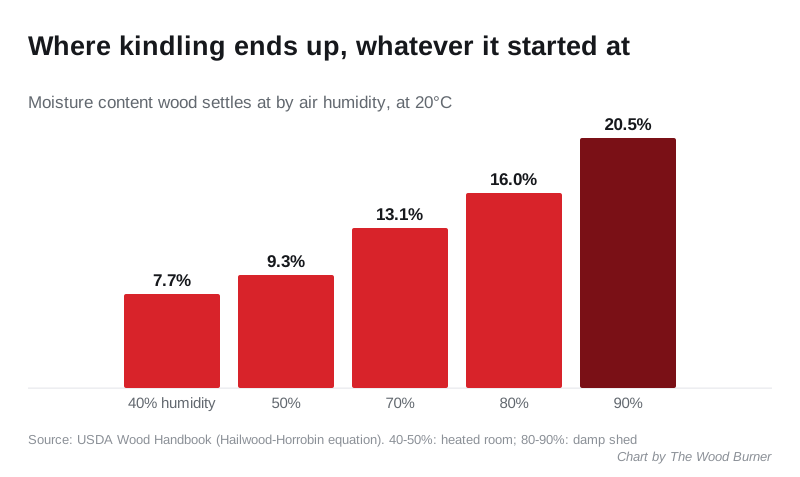
Wood is hygroscopic. It takes on or gives up water until it matches the humidity of the air it is kept in, a figure called its equilibrium moisture content. The chart above shows the values from the equation in the US Department of Agriculture’s Wood Handbook, at 20°C:
| Where it is kept | Typical air humidity | Moisture the wood settles at |
|---|---|---|
| Heated living room | 40% | about 7.7% |
| Living room, less heating | 50% | about 9.3% |
| Dry garage or porch | 70% | about 13% |
| Unheated shed in autumn | 80% | about 16% |
| Damp shed or lean-to in winter | 90% | about 20.5% |
The humidity figures for each place are typical rather than measured in your home, and temperature shifts the numbers a little, but the pattern holds. Put a bag of 8% kiln dried kindling in a shed that sits at 90% humidity through a British winter and it will head towards 20%. Bring 18% air dried kindling into a warm living room and it will head towards 8 or 9%.
The speed is what makes this matter for kindling in particular. A log takes a season to shift; a split stick a finger thick has so much surface area for its size that it gains or loses moisture over days to a few weeks. Our AMOS kindling review makes the same point about its 8% product: left where damp can reach it, it climbs back towards the high teens.
Which to buy
Buy kiln dried if:
- you light the stove from cold most days and want quick, reliable lights with minimal smoke
- you can keep a working supply indoors, or in a dry garage, so it keeps its low moisture
- you buy small quantities through the season, in sealed bags, and use each one within a few weeks of opening
Air dried is fine if:
- you buy in bulk from a local merchant or split your own, and have somewhere to bring a few days’ supply indoors before use
- you already get good lights with a top-down lay and a firelighter
- you would rather not pay for kilning energy on a product you will dry by the stove anyway
The approach that makes the kiln-dried versus air-dried choice matter least: keep the main stock off the ground, under cover and away from walls, and bring a basket indoors a few days before you need it. After three or four days near a warm room, air dried kindling will be most of the way to kiln dried performance. Our guides to storing firewood dry and storing firelighters and kindling safely cover the details, including keeping kindling a safe distance from the stove itself.
How to check what you have
A moisture meter settles it in seconds. Split a stick, press the pins into the fresh inner face, and read it. Anything under 20% will light; under 15% will light easily. Readings taken on the outside of a stick straight from a cold shed tend to read higher than the core, so always test a fresh split face. Our guide to using a moisture meter on firewood explains the technique.
If you are making your own, split it thin and dry it under cover, then finish it indoors. Our page on how to make kindling covers tools and sizes.
Frequently asked questions
Is kiln dried kindling better than air dried? It starts drier, often under 10% against up to 20% for air dried, so it lights faster and cleaner. But both settle at the moisture set by where you store them, so kiln dried kindling kept in a damp shed loses most of its advantage within weeks.
Does kiln dried kindling absorb moisture? Yes. Wood always moves towards the moisture level of the surrounding air. In a shed at 80 to 90% humidity it heads towards 16 to 20%; in a heated room at 40 to 50% it settles around 8 to 9%. Thin kindling changes much faster than logs.
Is air dried kindling legal to sell? Yes, if it is certified and at 20% moisture or less. The Ready to Burn rules in England set a moisture limit for wood sold in units under two cubic metres; they do not require kiln drying.
What moisture content should kindling be? Under 20% at the very most, and ideally under 15% for easy lighting. Kiln dried kindling is often sold well below that, and any kindling kept in a warm room for a few days will get there.
How should I store kindling so it stays dry? Keep the bulk supply off the floor, under cover and in a ventilated space, and bring a few days’ worth indoors before use. Keep sealed bags closed until you need them, and do not store kindling right next to the stove.
Is kiln dried kindling worth the extra cost? If you light from cold most days and can keep it dry, yes: fewer failed lights and cleaner glass. If you buy in bulk and dry batches indoors before use, air dried kindling does almost as well for less.
Sources
USDA Forest Products Laboratory, Wood Handbook (equilibrium moisture content, Hailwood-Horrobin equation; values calculated by us at 20°C); the Air Quality (Domestic Solid Fuels Standards) (England) Regulations 2020; AMOS’s published moisture figure for its kiln dried kindling, as covered in our review. Checked 30 September 2026.
Want the seasoning calendar and our log-price watch in your inbox?
Join the Kindling List