HG vs Vitcas Stove Glass Cleaner: Foam Beats Spray on Tar
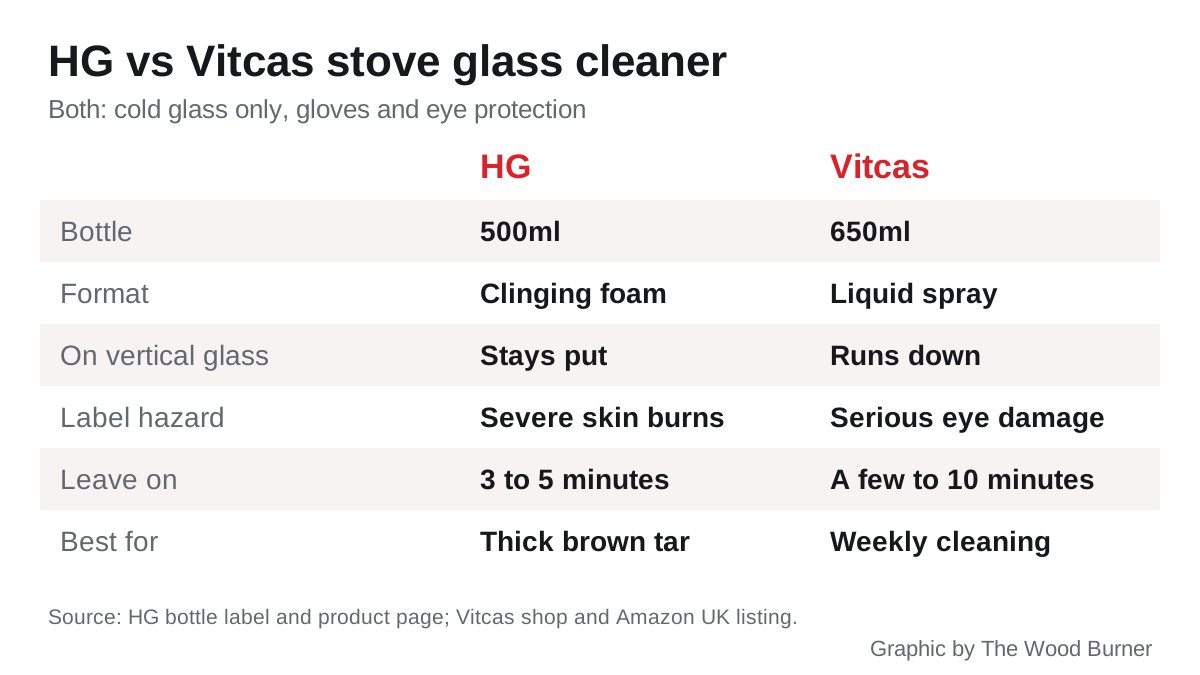
HG vs Vitcas stove glass cleaner comes down to what is on your glass. If it is thick, glossy brown tar on an upright stove door, HG wins: its foam clings to vertical glass long enough to dissolve the deposit, where a liquid runs off. If you clean a light grey or brown film once or twice a week, Vitcas makes more sense: you get 650ml against HG’s 500ml, from a British firm that makes stove rope and fire cement, and it does that job well.
Neither is gentle. Both labels carry a DANGER warning, both are for cold glass only, and both need gloves and eye protection.
This comparison draws on our two full reviews, of HG and of Vitcas, which read each bottle’s label, the makers’ own pages and UK buyer feedback in late October 2026. We have not run a laboratory test.
Side by side
| HG Stove Glass Cleaner | Vitcas Stove Glass Cleaner | |
|---|---|---|
| Bottle | 500ml | 650ml |
| Format | Foam from a trigger nozzle | Liquid trigger spray |
| Stays on upright glass | Well | Runs down more quickly |
| Active ingredient named | Sodium hydroxide, on the label | Not named on the maker’s page |
| Hazard warning | DANGER: severe skin burns and eye damage | DANGER: serious eye damage, skin irritation (Amazon UK safety panel) |
| Leave on | 3 to 5 minutes | “A few minutes” (Vitcas shop); about 10 (Amazon listing) |
| Do not use on | Marble, chalky stone, untreated aluminium, plastic | Keep off paint, rope seal and stone |
| Made by | HG, the Netherlands | Vitcas, Bristol |
| Best for | Thick, baked-on tar | Regular cleaning, more liquid per bottle |
Which is more powerful?
On the evidence, HG, for two reasons.
The foam stays where you put it. Stove glass is vertical, and tar needs a few minutes of contact to soften. HG’s foam holds on the glass for its three to five minutes; a liquid like Vitcas slides down and pools on the bottom of the frame. Vitcas buyers who mention effort are mostly the ones with heavy deposits, who say a second application was needed. That matches what a liquid does on an upright surface.
HG says what it is. The label names sodium hydroxide, the strong alkali (caustic soda) that breaks down wood tar, and classes the product as causing severe skin burns. That is a stronger hazard class than the eye damage and skin irritation shown for Vitcas. A stronger hazard does not prove a stronger clean, but it is consistent with what buyers report on heavy tar.
You can close most of the gap with Vitcas by changing how you use it. Lift the door off and lay it flat on an old towel if your stove allows it, or spray and then press a sheet of damp kitchen roll over the glass so the liquid stays in contact. Our page on spray vs paste stove glass cleaners covers when neither spray is enough.
Which is better value?
Vitcas gives you 30% more liquid per bottle, 650ml against 500ml. Prices on both move often, so compare them the fair way: divide each bottle’s price by its size and multiply by 100 to get a price per 100ml on the day you buy. Check current price on Amazon UK for both before you decide.
Value is not only the bottle, though. If a liquid needs two rounds on your glass and the foam needs one, the cheaper-per-ml bottle can run out first. Our rough rule: on glass you clean weekly, before tar has a chance to bake on, Vitcas is the better buy. On glass that is already brown, HG is.
HG’s own label has a tip that protects your money: after use, turn the nozzle a quarter turn back to closed and rinse it under hot water, running water through the air holes on the side of the foam pipe. Skip it and dried foam can block the head with half the bottle left.
Safety: the same rules for both
- Let the stove go completely cold. On warm glass, both dry before they work and streak.
- Gloves and eye protection. HG’s label says so in full; the Vitcas safety panel on Amazon UK warns of serious eye damage. Vitcas’s own website calls it “non-toxic”, but we would go by the hazard label.
- Protect the stove and hearth. Keep both off the painted door frame and the rope seal. HG warns against marble and chalky stone, so lay a towel over a limestone hearth.
- Spray, wait, wipe with a wet sponge or cloth, rinse it often, and buff dry.
- If either gets in your eyes, rinse with water for several minutes and get medical advice.
The pick
Buy HG if your glass is already brown with baked-on tar, your stove door does not come off, or you want the job done in one round. It is our top pick in the best stove glass cleaners round-up.
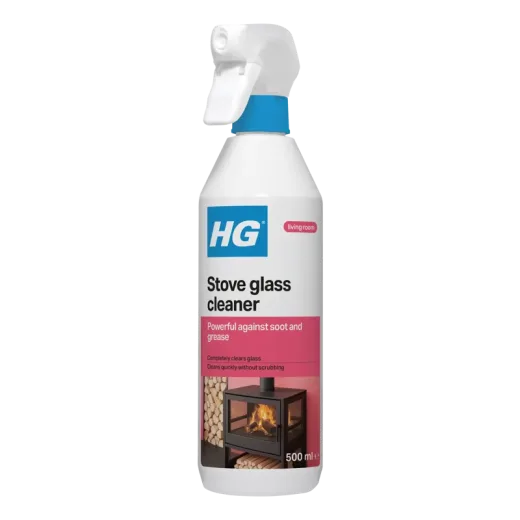
HG Stove Glass Cleaner, 500ml. Check price on Amazon UK.
Buy Vitcas if you burn most nights and wipe the glass weekly, so deposits never get thick, and you would rather have the bigger bottle.
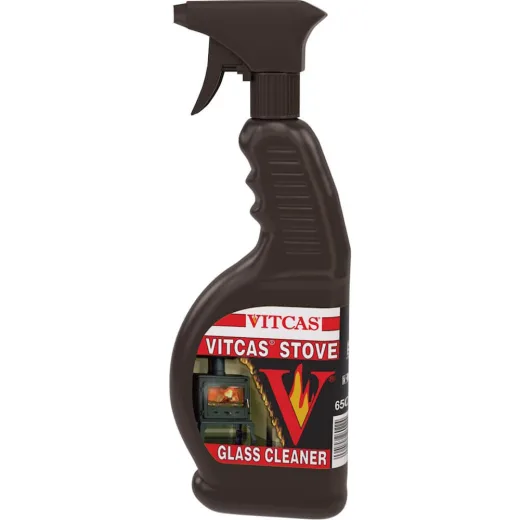
Vitcas Stove Glass Cleaner, 650ml. Check price on Amazon UK.
For years-old deposits that neither spray shifts, a paste is the next step; our Dirtbusters paste review covers one. And if the glass blackens every night whichever cleaner you use, the problem is the fire, not the cleaner: burn logs below 20% moisture (see what moisture firewood should be) and give the stove enough air to burn hot. For the makers’ own directions, see HG’s product page and Vitcas’s product page.
Frequently asked questions
Is HG or Vitcas stove glass cleaner better? HG is better on thick tar, because its foam clings to upright glass. Vitcas is better value for regular cleaning, with a 650ml bottle against HG’s 500ml.
Is Vitcas stove glass cleaner caustic? Vitcas does not name the active ingredient on its page, and calls the product non-toxic. The safety panel on its Amazon UK listing carries a DANGER warning for serious eye damage and skin irritation, so treat it as you would a caustic cleaner.
Which is safer, HG or Vitcas? Neither is safe to use bare-handed. HG is classed as causing severe skin burns and eye damage; Vitcas’s listing warns of serious eye damage and skin irritation. Use gloves and eye protection with both, on cold glass only.
How long do you leave HG and Vitcas on stove glass? HG says three to five minutes. Vitcas’s shop says a few minutes and its Amazon listing about 10. Start short and repeat rather than leaving either to dry on.
Can I use HG or Vitcas on a stone hearth? Keep both off stone where you can. HG specifically warns against marble and other chalky natural stone, so cover a limestone hearth with a towel before you spray.
Why does my stove glass go black again so fast? Damp wood or too little air. Cleaners treat the symptom; logs under 20% moisture and a hotter fire keep the glass clear for longer.
Want the seasoning calendar and our log-price watch in your inbox?
Join the Kindling List